Galvanized steel water pipe is steel coated with zinc, common in homes built before 1960 according to the City of Calgary. Once the zinc wears through, the pipe corrodes from the inside out, narrowing the bore, lowering pressure and flow, and raising leak risk. It can also accumulate lead from an old lead service upstream. Health Canada says any galvanized portion of a lead service should be replaced along with the lead.
- Galvanized steel is grey or silver, joined with threaded fittings, and a magnet sticks to it.
- It corrodes inside, so the bore shrinks while the outside looks almost normal.
- Signs include rust at joints, pitted rust spots, brownish water and falling flow.
- Galvanized pipe downstream of lead can collect lead and release it later, so test the water.
- Galvanized pipe is replaced, not cleaned; decide the order for the service and the house piping first.
01 /What is galvanized water pipe, and where is it found?
Galvanized pipe is ordinary steel pipe dipped in molten zinc. The zinc protects the steel for a while, and threaded joints made it quick to install, so it was widely used for water supply in older houses and for some service lines. The City of Calgary says galvanized steel waterline piping was commonly installed in homes before 1960, and identifies it by its silver or grey colour and threaded fittings at the joints. A magnet sticks to it firmly, which separates it from lead and copper.
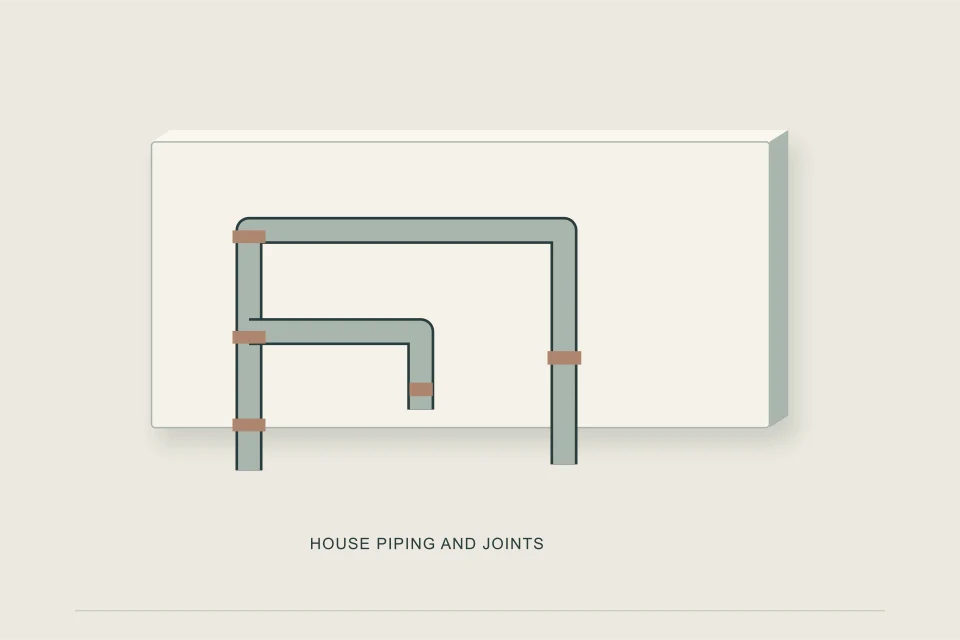
You may find galvanized pipe in two places: as the buried service from the curb stop to the house, and as the supply piping inside the house. They are different jobs with different owners and permits, and they fail the same way. It is also common to find a mix: a copper or plastic service feeding galvanized house piping, or a galvanized service joined to newer pipe inside the wall. Check the entry with how to identify a lead water pipe, which covers galvanized too.
02 /Why does galvanized pipe lose pressure?
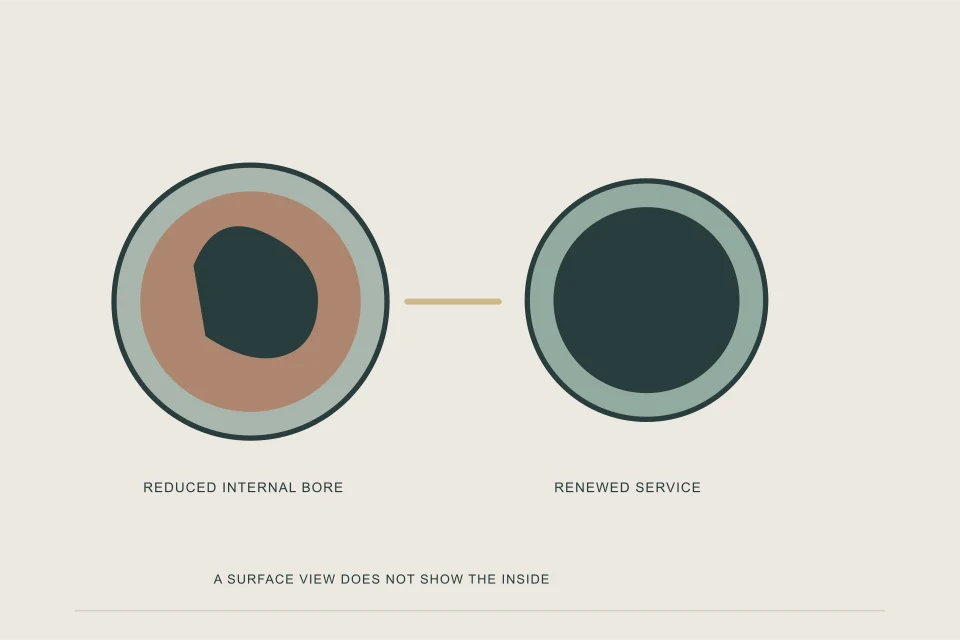
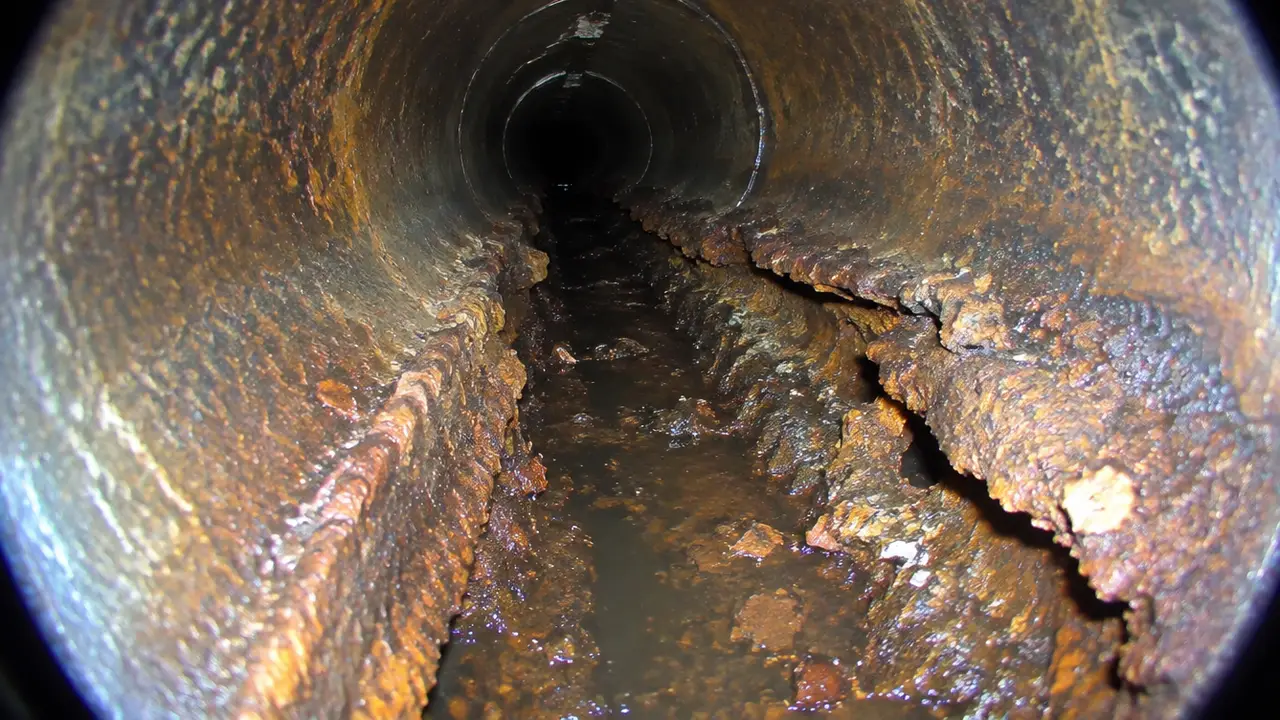
Because it closes up from the inside. Once the zinc coating is used up, the steel underneath rusts, and the rust builds into lumps and scale on the inner wall. Calgary describes galvanized piping as corroding from the inside out, resulting in reduced water pressure, restricted water flow and an increased risk of leaks. The outside of the pipe can look almost normal while the bore narrows to a fraction of its original size.
The effect on flow is bigger than the narrowing suggests. Flow area goes with the square of the diameter, so a bore reduced to half its diameter has only a quarter of its original open area, and the rough scale adds friction on top. That is why a galvanized house often has acceptable pressure at a single tap but a collapse in flow when the washing machine and a shower run together. The low water pressure guide shows how to measure the difference.
03 /What are the signs of failing galvanized pipe?
Calgary lists rust around pipe joints and pitted rust spots on the pipes, brownish water, and lower-than-usual water. Add these patterns that point to the same cause:
- Flow that falls over years, rather than suddenly.
- Rusty water after the water has sat, such as first thing in the morning or after a vacation, clearing as it runs.
- Weak flow at the farthest taps while taps near the meter are stronger.
- Pinhole leaks and weeping at threaded joints, where the threads cut the wall thinnest.
- Aerators that clog with rust flakes soon after cleaning.
04 /Can galvanized pipe hold lead?
Yes. The City of Calgary says galvanized piping has been found to accumulate lead that leached into the water from old lead service lines, and to release that built-up lead back into the water as it corrodes. Health Canada's corrosion guidance goes further for lead services: it says partial lead replacements are generally not recommended and that any portion of the service containing galvanized iron should also be replaced. So galvanized pipe that sits, or once sat, downstream of a lead service is a lead question as well as a flow question.
If your house has galvanized pipe and was built in your city's lead era, test the water, using a sequential sample if you can so the result shows where lead is coming from. See testing water for lead and the Lead Water Line Check, which flags galvanized at the entry with this note.
05 /Should I replace the galvanized service line or the house piping first?
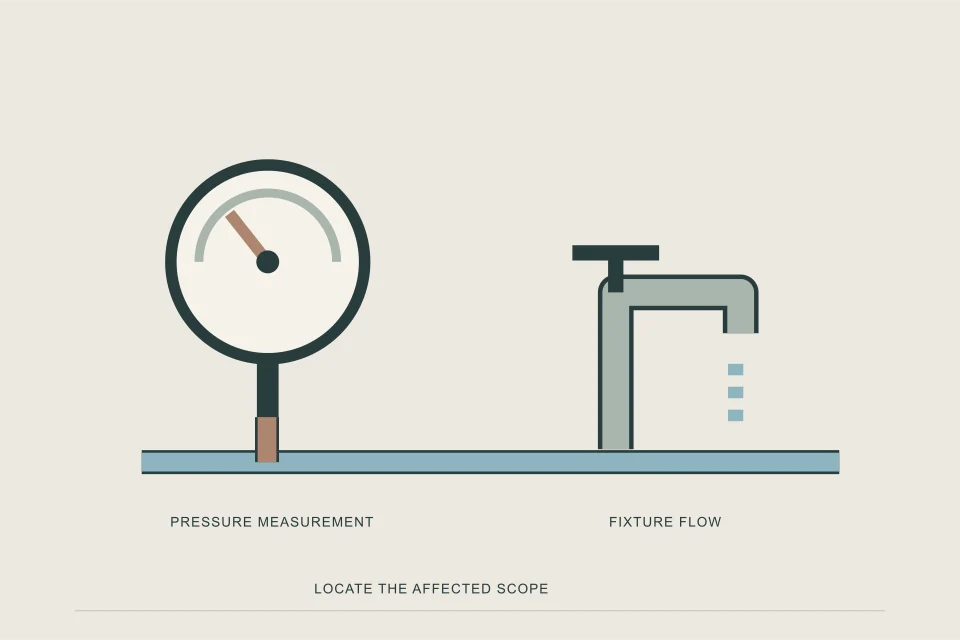
Measure before deciding. The order depends on where the restriction is, and a gauge and a bucket can usually tell you.
| What you measure | What it suggests | Usual order |
|---|---|---|
| Weak flow at the first tap after the meter | The service is restricting supply | Replace the service first |
| Strong flow at the meter end, weak at far taps | House piping is restricting | Repipe inside first |
| Weak everywhere, and the service is lead or galvanized | Both | Plan both; do the service first, then the house |
| Lead in water tests | A lead source somewhere | Replace lead and any galvanized in the service together |
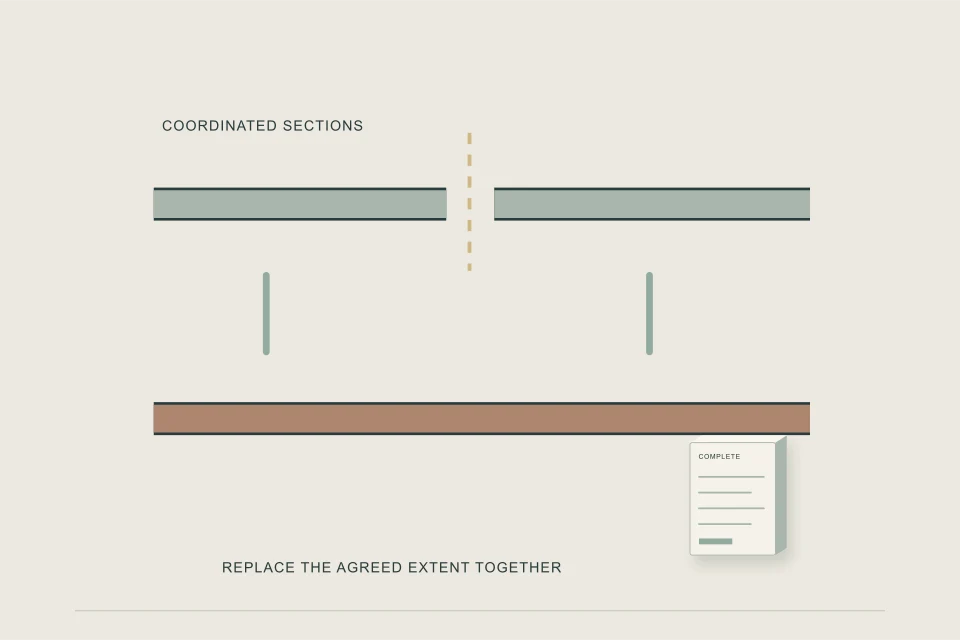
Doing the service first and the house second avoids pushing a new rush of flow through fragile old piping, and it lets the plumber size the new house piping for what the new service delivers. Doing only the house leaves an old service as the bottleneck. When the service is replaced, the new main shut-off and pressure-reducing valve are usually replaced too; see pressure-reducing valves.
06 /What replaces a galvanized service line?
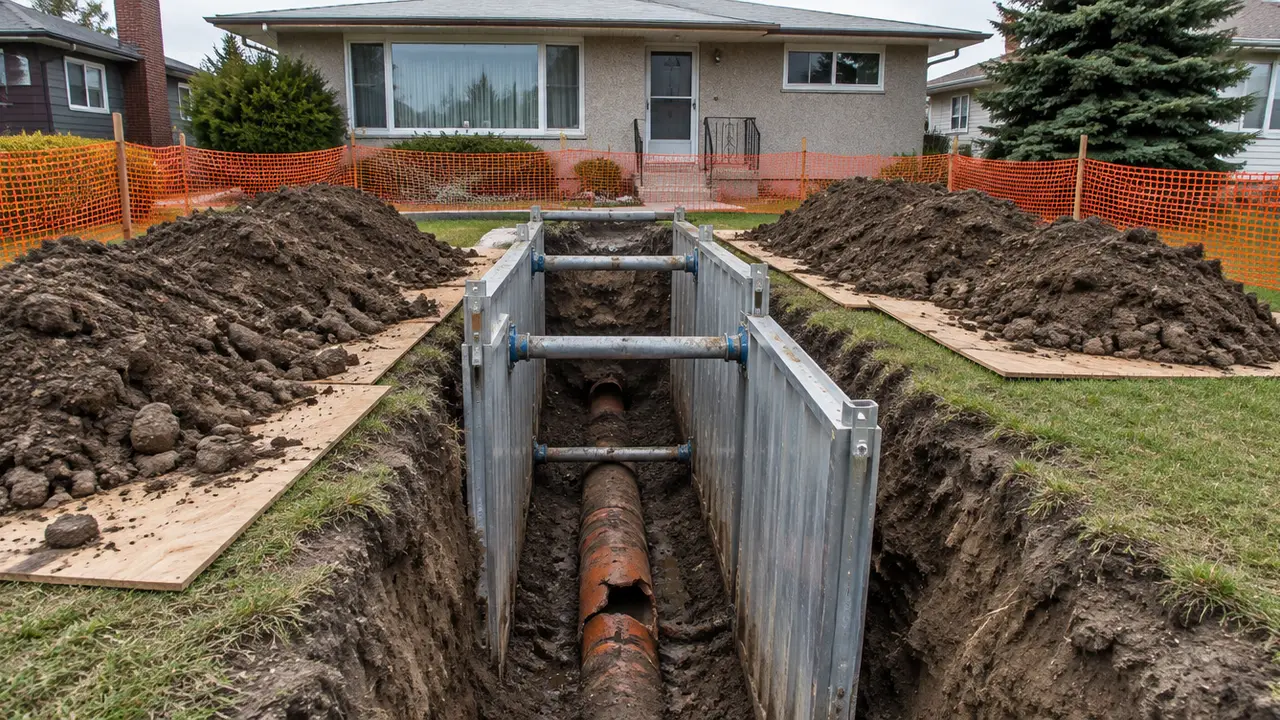
Type K copper, polyethylene or PEX, whichever your utility and provincial code approve for a buried service, sized to at least the code minimum of 3/4 inch and often larger. Calgary's infill rules call for at least 1 inch. Because galvanized steel is magnetic and threaded, it does not burst like cast iron; it is usually split, pulled out or abandoned in place while a new line is bored alongside. The methods are compared in trenchless water line replacement, and materials in copper, PEX or polyethylene.
- Electrical bonding: if the old metal service was part of the grounding, have an electrician confirm the arrangement when it becomes plastic.
- Dissimilar metals: where new copper meets remaining galvanized pipe, a dielectric fitting slows galvanic corrosion at the joint.
- Permits and locates: as for any service replacement; see the replacement process guide.
See the cost page for what drives the price, and send your details for quotes.
07 /What does a galvanized replacement change inside the house?
Usually more than the pipe. When a galvanized service is replaced, the old main shut-off, often a gate valve, is usually replaced with it, and a pressure-reducing valve and expansion tank may be checked or added. If the house piping stays galvanized for a while, the new flow can stir loose scale, so expect some discoloured water and clogged aerators for a period, and clean them.
- Flush after the work until the water runs clear, starting at the tap nearest the entry.
- Clean aerators and showerheads a few days later.
- Test for lead if the house was built in your city's lead era or the old service fed into galvanized pipe from lead.
- Plan the house piping if flow at far taps is still weak.
If the water heater has been starved of flow, its performance may also change; any hot-only problem afterwards is a water heater question for a plumber. The low water pressure guide explains how to measure before and after.
FAQQuestions people ask
How do I know if I have galvanized water pipes?
Galvanized steel is grey or silver, often rusty, joined with threaded fittings, and a magnet sticks to it. Calgary says it was common in homes built before 1960.
Can galvanized pipes be cleaned instead of replaced?
Not practically. The scale is corrosion of the pipe wall itself, so removing it leaves a thinner wall. Replacement is the usual fix.
Do galvanized pipes cause brown water?
They can. Calgary lists brownish water as a sign of failing galvanized piping, especially after water has sat in the pipes.
Are galvanized pipes a lead risk?
They can be. Calgary says galvanized piping can accumulate lead from old lead service lines and release it later; test the water.
Should galvanized pipe be replaced when the lead service is replaced?
Yes. Health Canada's corrosion guidance says any portion of the service containing galvanized iron should also be replaced.
Why is my water brown after replacing a galvanized service?
Stronger flow can loosen scale left in remaining galvanized house piping. Flush the cold taps and clean aerators; if it persists, the house piping is next.
NETWORKGo deeper across the HAUSE Sewer network
Galvanized, Orangeburg and concrete drain pipe: identifying and cleaning them
How to identify and clean galvanized steel, Orangeburg fibre and concrete drain pipe, which methods each can take, and when replacement is the better call.
SewerInspector.caCommon sewer defects, explained by what they do to the pipe
Common sewer defects explained: roots, cracks, fractures, offset and separated joints, sags, deposits, holes and collapse, with severity and usual next steps.
SewerRoots.caThe worst trees for sewer lines, ranked for Canadian yards
The worst trees for sewer lines in Canada: willow, poplar, silver maple, Manitoba maple and elm ranked by root risk, with distances and what to do next.