Short answer
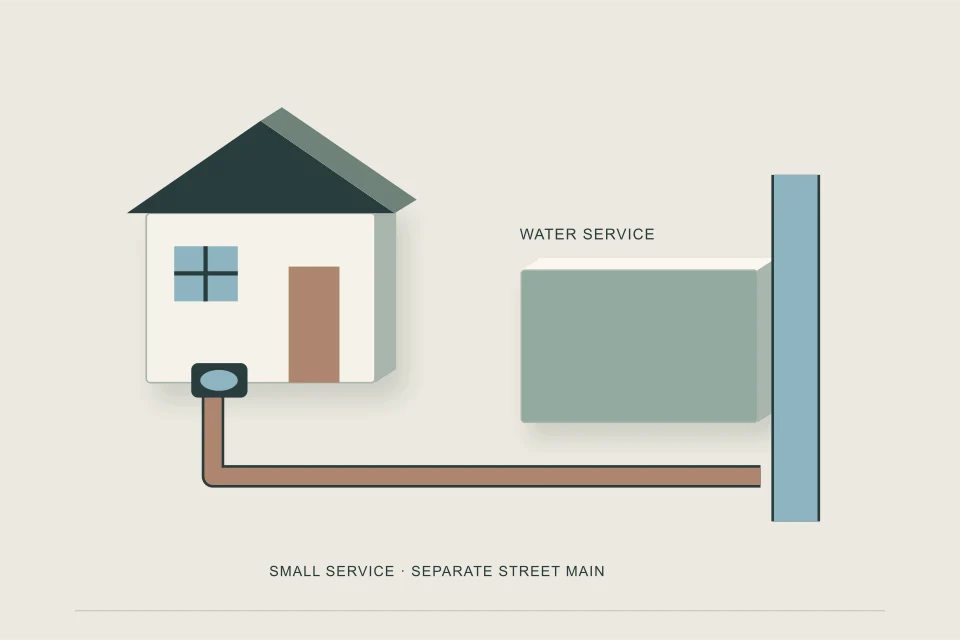
A water service line is the buried pipe that carries drinking water from the municipal water main to a building. This glossary defines the parts along that path (corporation stop, curb stop, main shut-off, meter), the materials found in the ground (lead, galvanized steel, copper, polyethylene, PEX, polybutylene), and the words used in pressure problems, lead testing and replacement quotes.
Key takeaways
- The corporation stop, curb stop and main shut-off are three different valves in three different places.
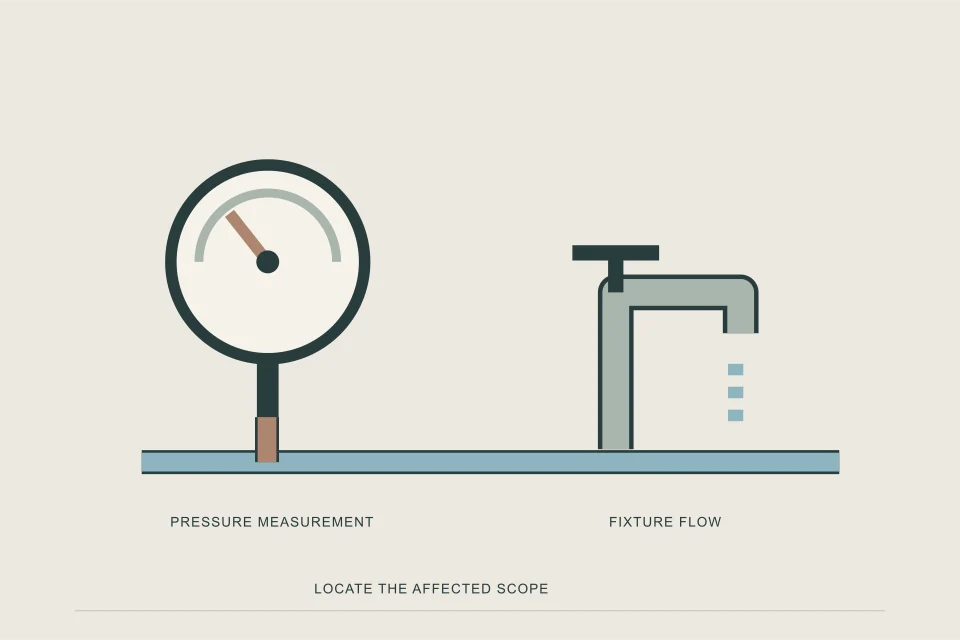
- Static pressure is measured with no water running; dynamic pressure is what is left while water flows.
- A lead service line is defined by the buried pipe, not by what you see inside the house.
- Terms like "partial replacement" and "full replacement" decide whether any lead stays in the ground.
01 /How to use this glossary
Terms are grouped alphabetically below. Where a word has a regional meaning, such as where a city's ownership stops, the definition says so and points you to confirm with your utility. For how the parts fit together, the water service line guide walks the path from the main to your tap, and the FAQ answers the questions people ask most.
A–ZTerms
- Aerator
- The small screen at the end of a faucet spout. Scale and pipe debris collect in it, so a single slow tap is often just a clogged aerator rather than a service problem.
- Backflow preventer
- A device that stops water from flowing backwards out of a building into the public system. Utilities require specific types for irrigation, boilers and commercial connections.
- Ball valve
- A quarter-turn valve with a drilled ball inside. Full open is a straight run with little pressure loss, which is why it is the usual choice when a main shut-off is replaced.
- Bonding (electrical)
- The connection that ties metal piping into a building's electrical grounding system. When a metal service is replaced with plastic, an electrician should confirm the grounding still meets code.
- Booster pump
- A pump that raises pressure inside a building when supply pressure is too low. It treats a symptom; it does not fix a scaled or undersized service line.
- Boulevard
- The strip of city land between the curb and the property line, often grassed. The curb stop and the utility-owned part of the service commonly sit under it.
- Compression fitting
- A joint sealed by tightening a nut that squeezes a ring or gasket onto the pipe. Common at meters and for joining polyethylene or copper service pipe underground where approved.
- Copper, type K
- The thickest-walled grade of copper water tube in ASTM B88, supplied in soft coils for buried services. Type L is thinner and more common inside the house.
- Corporation stop
- The valve that connects a service line to the water main, screwed into a tapped hole or a saddle on top of the main. Only the utility operates it.
- Cross-linked polyethylene (PEX)
- Flexible plastic pressure tubing made to CSA B137.5 in Canada. Used inside homes and, where the utility approves, for buried service lines.
- Curb box
- The vertical tube running from the curb stop up to a small cap at the surface, so a long key can reach down and turn the valve.
- Curb stop
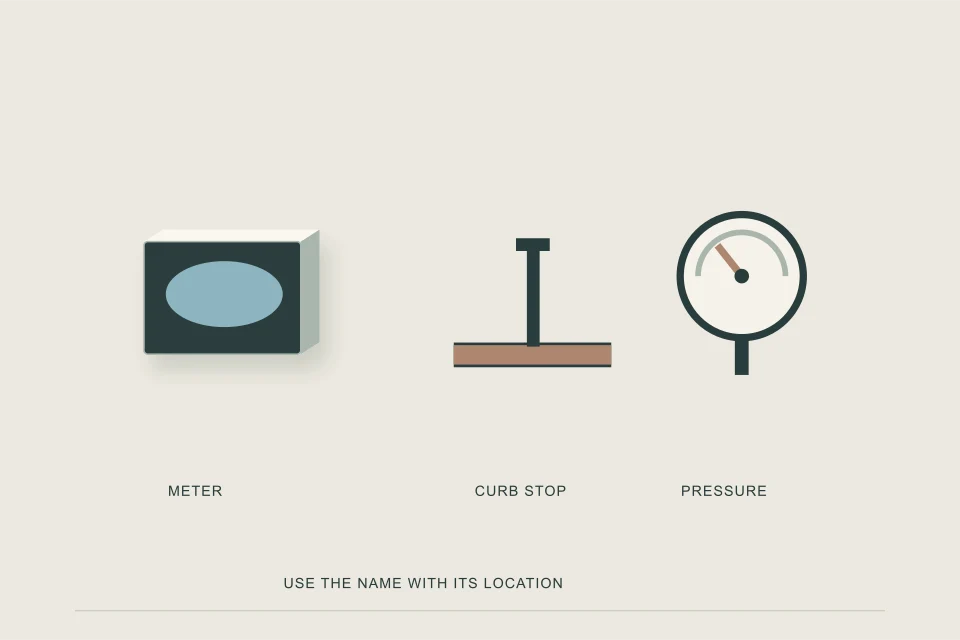
- A buried valve on the service line, usually near the property line, that the utility uses to shut water off to one property. In many cities it also marks where ownership changes.
- Dielectric union
- A fitting that separates two different metals, such as copper and galvanized steel, with an insulating gasket to slow galvanic corrosion at the joint.
- Dimension ratio (DR)
- For polyethylene pipe, the outside diameter divided by the wall thickness. A lower DR means a thicker wall and a higher pressure rating.
- Directional drilling
- A steerable boring method that drills a pilot hole, enlarges it and pulls the new pipe back through. Small rigs are used for long or deep water services.
- Disinfection
- Chlorinating new water pipe before it carries drinking water. Standard practice on mains; utilities set whether and how a new private service must be flushed or disinfected.
- Dynamic pressure
- Pressure measured while water is flowing. The difference between static and dynamic pressure shows how much the service and plumbing are losing to friction.
- Expansion tank
- A small tank with an air cushion that absorbs the extra volume of heated water when a check valve or pressure-reducing valve closes the system off from the main.
- Flushing
- Running cold water to clear standing water and loosened particles from the plumbing. After lead service work, follow the utility's specific flushing instructions.
- Frost depth
- How deep the ground freezes in a given winter. It varies with temperature, snow cover, soil and surface, which is why utilities set a minimum cover for water services.
- Frost-free hose bib
- An outdoor faucet whose valve seat sits inside the heated wall, so the part outside drains when closed. Low flow here alone usually points to the bib, not the service.
- Galvanic corrosion
- Accelerated corrosion where two different metals touch in water. A new copper section joined to old lead or steel can create one.
- Galvanized steel
- Steel pipe coated with zinc. Once the zinc wears through, the inside rusts and scales, which narrows the bore and lowers flow.
- Gate valve
- A multi-turn valve that lowers a wedge across the flow. Older main shut-offs are often gate valves that stick or will not seal after years untouched.
- Hazen-Williams equation
- A standard engineering formula for friction loss in water pipe. It uses a roughness factor, called C, that is high for smooth plastic and copper and falls as pipe scales.
- Hose bib
- An outdoor faucet. With nothing else running, it is a convenient point to attach a gauge and read the house's static pressure.
- Hydrostatic test
- A pressure test that fills a new pipe with water, raises the pressure and watches for a drop over a set time, proving the joints before the trench is closed.
- Lead service line
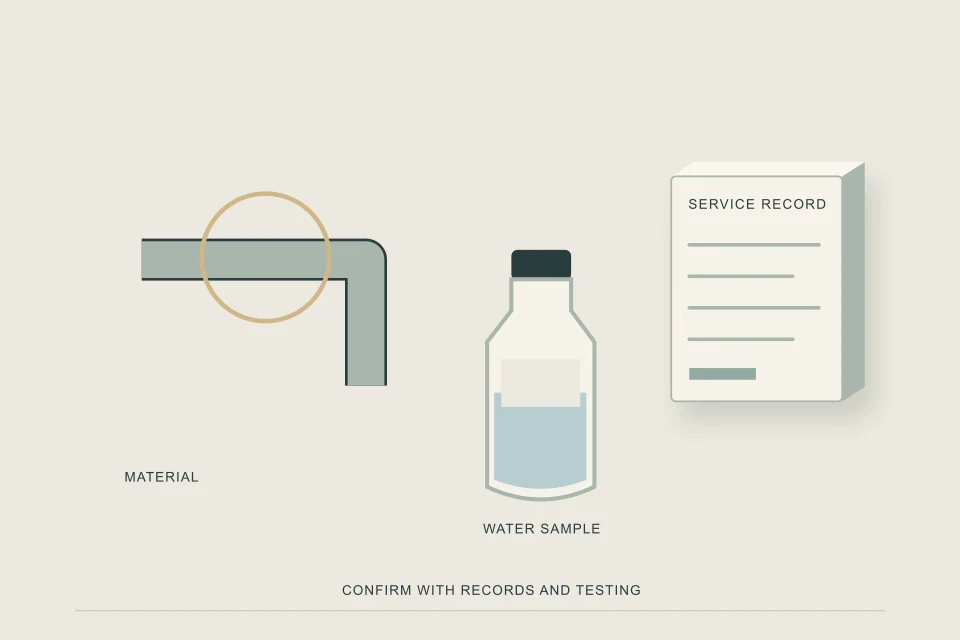
- A water service made wholly or partly of lead pipe. Health Canada identifies lead service lines as likely the most significant source of lead in drinking water where they are present.
- Lead solder
- Tin-lead solder once used to join copper plumbing. It is no longer allowed in drinking water systems, but it remains in the joints of older homes.
- Main shut-off valve
- The owner's valve inside the house, usually just after the service comes through the foundation wall and before the meter. It should shut the whole house off in an emergency.
- Maximum acceptable concentration (MAC)
- The health-based limit in the Guidelines for Canadian Drinking Water Quality. For lead it is 0.005 milligrams per litre (5 micrograms per litre).
- Meter
- The utility-owned device that measures water use, normally just inside the foundation wall. Reading it with every tap off is a simple leak test.
- Moling
- Driving a pneumatic piercing tool, or mole, through the soil from one pit to another to make a path for a new service without a trench.
- NSF/ANSI 53
- The standard for drinking water treatment devices that reduce health-related contaminants. Look for a certification that names lead reduction specifically.
- NSF/ANSI 58
- The standard for reverse-osmosis drinking water systems. Certified units can reduce lead as well as other contaminants.
- Partial lead service line replacement
- Replacing only one side of a lead service, usually the utility side, and leaving the rest. Health Canada warns lead issues may continue when only part is replaced.
- Pipe bursting
- A trenchless method that breaks the old pipe outward with a head while new pipe follows. Brittle pipe bursts; ductile service metals are split instead.
- Pipe splitting
- Cutting ductile pipe such as copper or lead lengthwise with a bladed head and spreading it open, so new pipe can follow in the same path.
- Polybutylene (poly-B)
- A grey plastic pressure pipe installed in homes for a period before it fell out of use. Concerns centre on the fittings and on insurer attitudes, not on every length failing.
- Polyethylene (PE)
- Flexible plastic pressure pipe made to CSA B137.1 for cold water services. Long coils mean few buried joints; it is joined with compression or fused fittings.
- Pressure-reducing valve (PRV)
- A spring-loaded valve after the meter that lowers high street pressure to a set value for the house. When it fails, pressure can drop sharply or creep too high.
- psi and kPa
- Units of pressure. One pound per square inch is about 6.9 kilopascals, so 60 psi is about 414 kPa.
- Pull-in replacement
- A trenchless method in which a cable grips the old service and draws it out of the ground while the new pipe is pulled into the same hole behind it.
- Residual pressure
- Another name for dynamic pressure: what remains at a point while a set flow is running.
- Service saddle
- A clamp that wraps around a water main and holds the corporation stop, used where the main's wall is too thin to tap directly.
- Sleeve
- A larger pipe set through the foundation wall so the service can pass through and be sealed. A new entry point needs its own sleeve and seal.
- Stagnation
- Water sitting still in the pipes, for example overnight. Lead levels in water from a lead service tend to rise the longer water stands in contact with it.
- Static pressure
- Pressure in the plumbing with no water flowing. It shows what the street and any pressure-reducing valve deliver before friction is counted.
- Thawing (electrical)
- Passing current through a frozen metal service to warm it. It only works on metal pipe and is done by utilities or specialists, never with household equipment.
- Tuberculation
- Lumps of rust and scale that grow on the inside of iron and steel pipe, rough enough to slow water and catch sediment.
- Utility locate
- Marking the buried gas, power, telecom and public water lines before digging, arranged through the provincial one-call service. Private lines are not marked.
- Water hammer
- A bang or shudder in the pipes when a valve closes quickly and the moving water stops. Loose pipes, high pressure and fast-closing valves make it worse.
- Water main
- The public pipe under the street that feeds hydrants and every service line on the block. Mains are the utility's responsibility.
- Water main break
- A split or hole in a public main. Pressure in nearby homes can drop or fail and the water may be discoloured for a while after repair.
- Water service line
- The pipe from the water main to the building. The public and private parts together make up one service, even when two owners are responsible.
- Watertight entry
- The sealed point where the service passes through the foundation, packed or sleeved so groundwater cannot follow the pipe into the basement.
- Well pressure tank
- On a private well, the tank that stores water under pressure between pump cycles. Low pressure on a well has different causes from low pressure on city water.