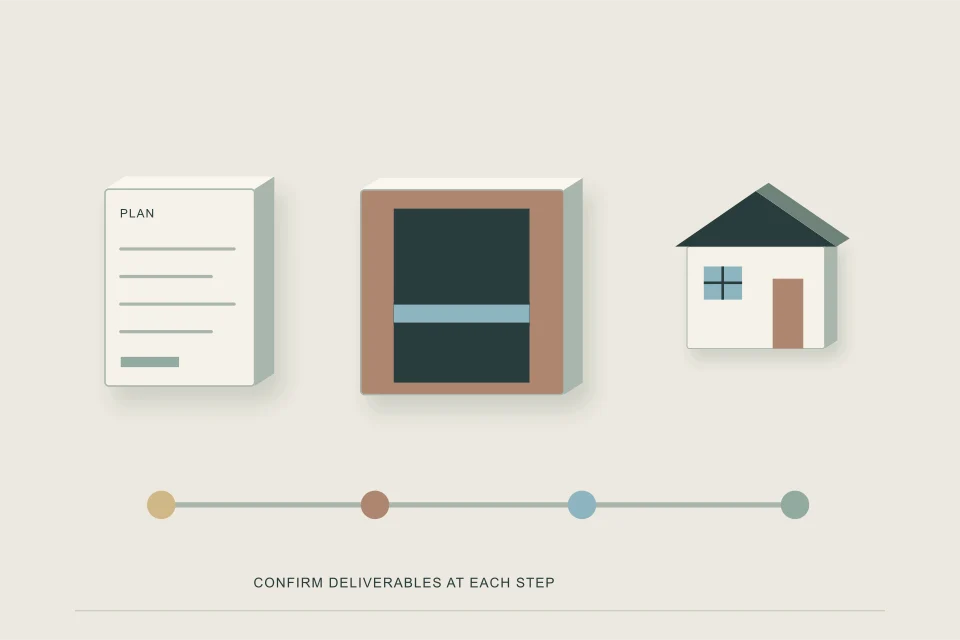
Replacing a water service line runs in a set order: confirm the material and the ownership split, check your city's program rules, get written quotes, obtain the permit, request utility locates, book the curb stop shut-off with the utility, replace and connect the line with a new main shut-off, test and flush it, then restore the surface and keep the records. Most house services are done in a day once the paperwork is in place.
- Program rules come before contractors: several cities require approval or a permit before work to qualify for help.
- The curb stop is the utility's valve; the utility or its approved contractor usually operates it.
- Public utilities are located through the provincial one-call service; your private line is not.
- A new main shut-off valve at the entry is cheap insurance while the wall is open.
- After lead work, flush thoroughly and keep testing until results settle.
01 /What has to happen before any digging?
Paperwork and information, in this order, because each step changes the next. Skipping the program check is the costliest mistake: a replacement done before an approval can lose a grant, a loan or a free city-side replacement.
- Confirm the material and route
The utility's record for its side, a look at the entry pipe, and the curb stop location. See how to identify a lead water pipe.
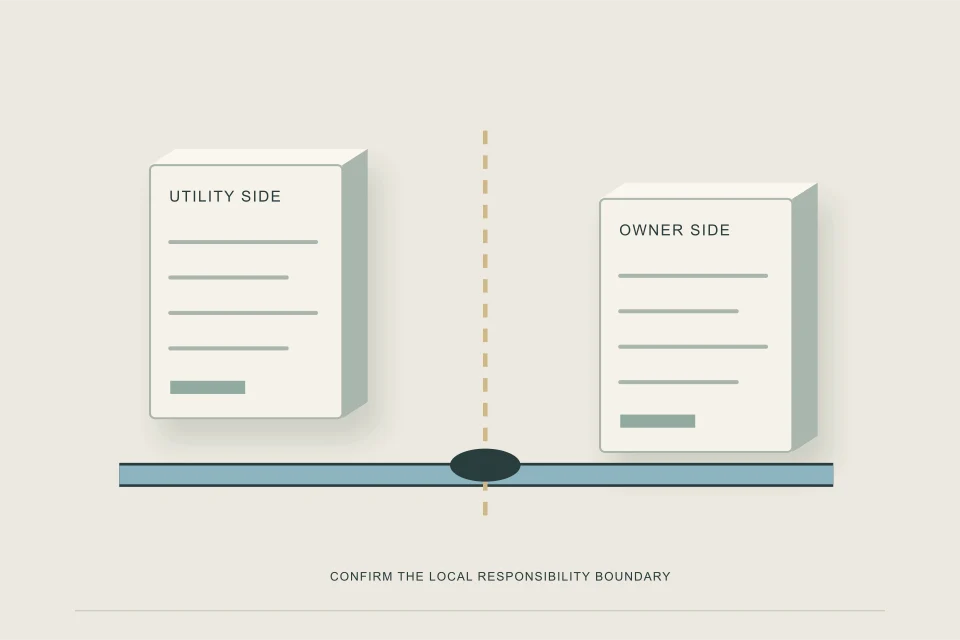
- Confirm who owns what
Property line or curb stop, and whether the utility owns the valve and meter. See who pays for water line repair.
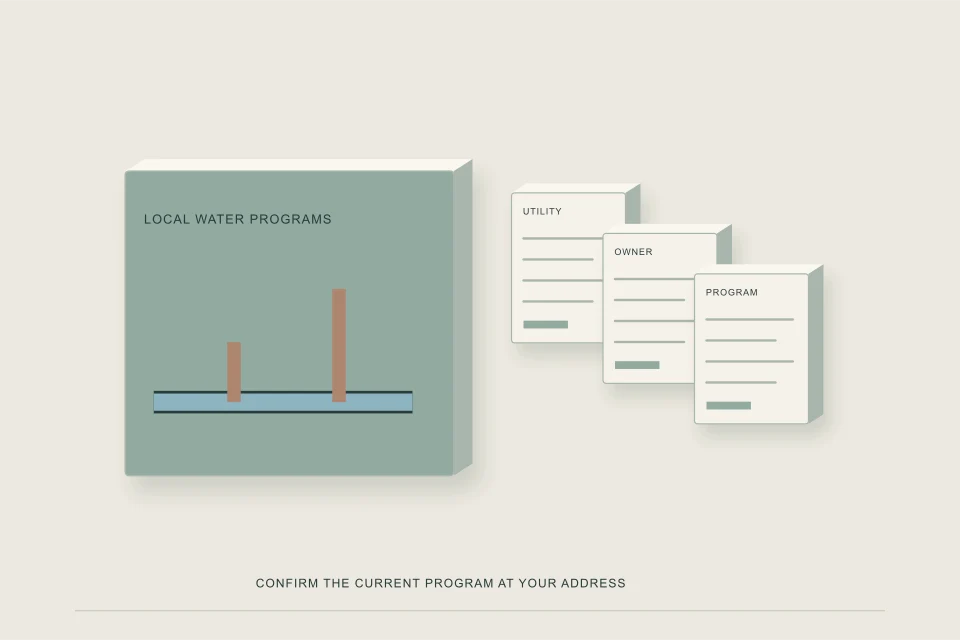
- Read your city's program
Order of work, approvals, permits, approved contractors, inspection before backfill, and deadlines. See city programs.
- Get written quotes
Two or three, for the same scope, naming method, pipe, size, length, depth, entry point, valves and restoration.
- Apply for help, then the permit
Where a program requires approval first, wait for it before booking.
| City | Requirement |
|---|---|
| Guelph | Grant approval and a building permit before work; start within 90 days of approval |
| Halifax | Halifax Water inspection before backfill for the rebate |
| Hamilton | Water service replacement permit; meter properly installed; shared-service interconnections removed; inspection |
| Regina | Three-way agreement; roster contractor and three quotes if using City financing |
| Winnipeg | City-licensed water contractor and a water connection service permit |
| London | Plumbing permits; loan not available for work already done |
02 /Who arranges locates and the water shut-off?
Your contractor usually arranges both, but you should know how each works. Before any excavation, buried public utilities such as gas, power and telecom are located and marked through the provincial one-call service, such as Utility Safety Partners in Alberta or Ontario One Call in Ontario, with the notice those services require. They do not mark private lines, so your water service, and any private lines such as a garage feed, need a private locate or records.
The curb stop belongs to the utility in most cities, even where it sits on private land; Calgary and EPCOR both say so. The utility or its approved contractor usually turns it off and on. Ask the utility to confirm the curb stop works before the job day, because a seized or buried curb stop can stop the work until the utility repairs it.
03 /What happens on the day of the replacement?
For a single house, most of the work happens in one working day, though deep pits, frozen ground or a difficult entry can stretch it. The water is off for part of that time.
- Set up and protect the work area; confirm locates are visible.
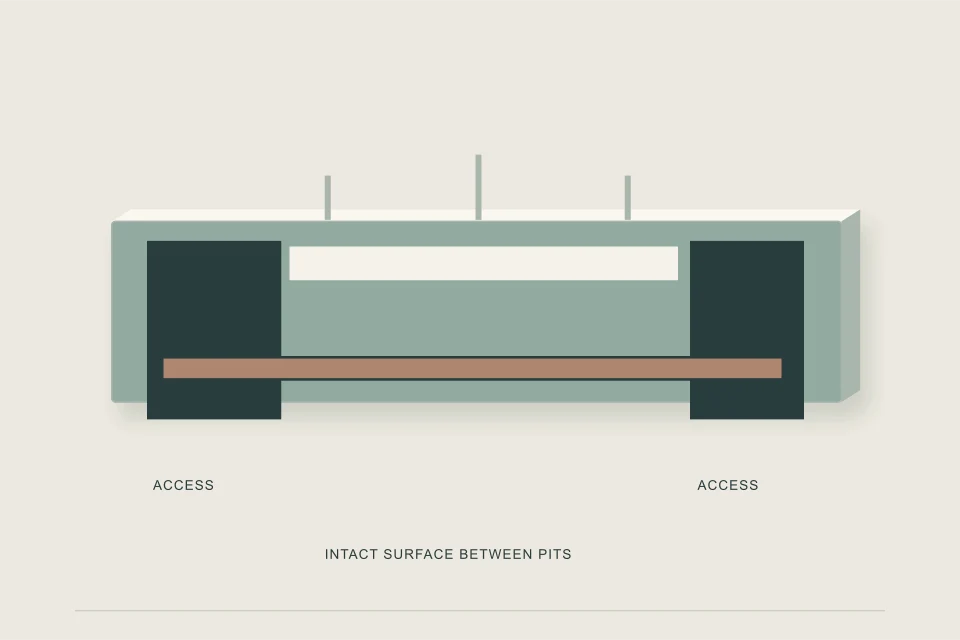
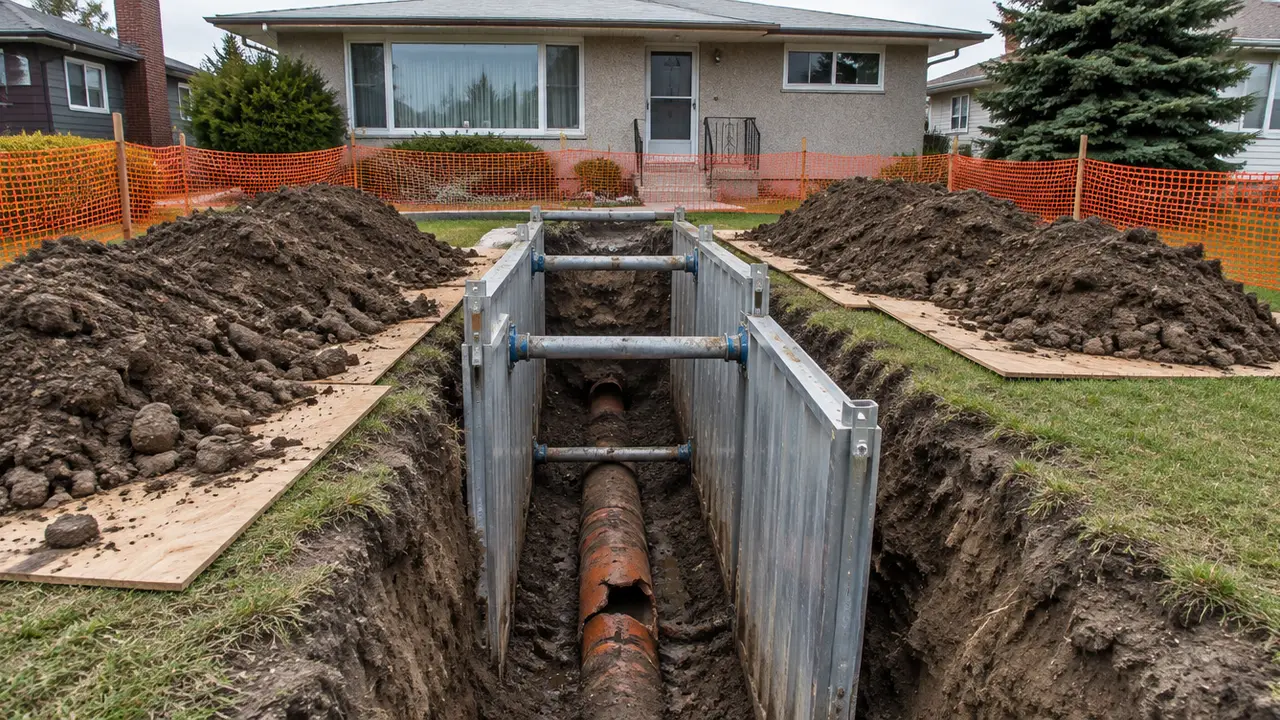
- Excavate the pit at the curb stop and open the entry at the foundation, with shoring where depth requires.
- Shut the water off at the curb stop.
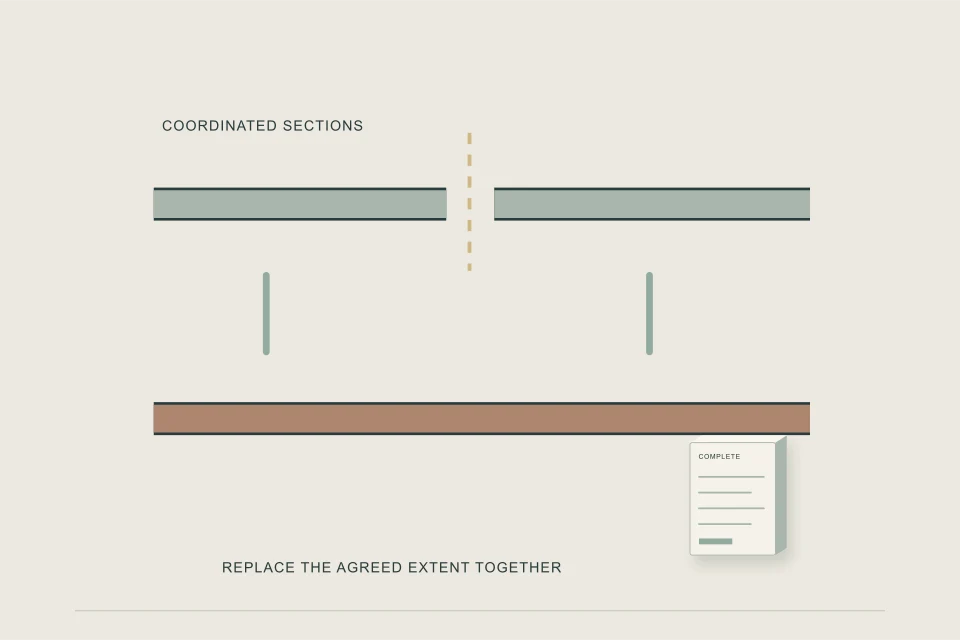
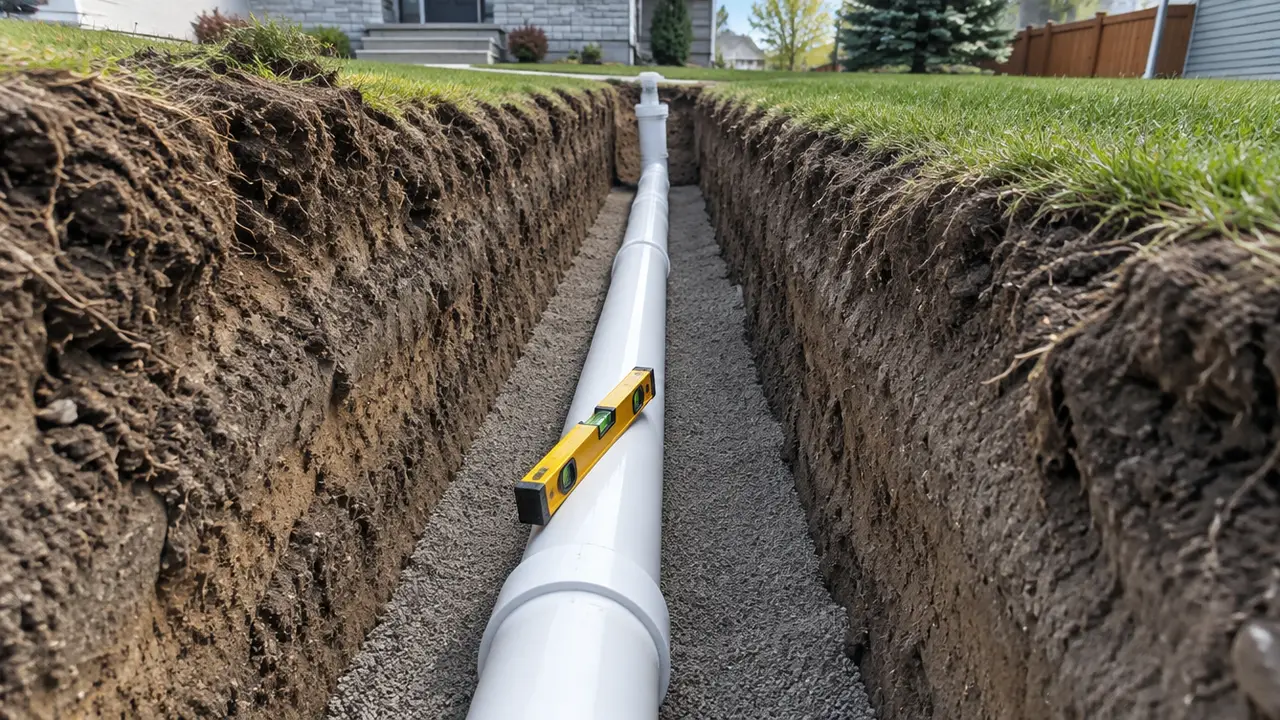
- Remove or cut the old line and install the new one, by trench or trenchlessly.
- Connect at the curb stop, bring the pipe through a sealed foundation entry, and fit a new main shut-off valve.
- Reconnect to the meter and house plumbing, adding a check valve where a plastic service rated for cold water only requires one.
- Test the new line for leaks under pressure, then flush it.
- Backfill in compacted layers and restore surfaces as the contract says.
If the old service was metal and the new one is plastic, have an electrician confirm the electrical grounding. The trenchless options are compared in trenchless water line replacement.
04 /Why replace the main shut-off valve at the same time?
Because it is right there, cheap compared with the rest, and often the worst valve in the house. The plumbing code requires an accessible shut-off valve as close as possible to where the service enters the building. Old gate valves at that point often stick, fail to seal, or break internally and stay partly closed, which is one of the most common causes of low whole-house pressure. A new full-bore ball valve turns off with a quarter turn when you need it.
- Ask for it as a line item on the quote so you can see its price.
- Check the pressure-reducing valve while the plumber is there; see pressure-reducing valves.
- Confirm the expansion tank where a PRV or check valve closes the system off.
05 /What testing and flushing follow?
Every new service is tested for leaks before it is covered, and flushed before the water is used. After lead work, Health Canada's guidance calls for extensive flushing of the cold water and frequent sampling at the tap, weekly or every two weeks, until lead levels stabilise. Calgary samples within one month of replacing its side and again after three to six months. Follow whatever flushing instructions your utility gives, because they may be specific.
The testing guide explains sampling. Restoration then follows the contract; some cities restore their own side on their own schedule, and Toronto, for example, says permanent restoration of its work is made within 18 to 24 months.
06 /What records should I keep?
- Permit and inspection sign-off.
- Invoice naming the material, size, length, method and date.
- Photos of the pipe at the entry before and after, and of the pits if possible.
- Program paperwork: approval letters, rebate or loan documents.
- Test results after the work.
- A sketch of the route and depth, and where the curb stop is.
Buyers, insurers and future contractors all ask for these. For costs, see the cost page; for a first read on your line, the Lead Water Line Check. When you are ready for quotes, send your details.
07 /How do I compare quotes for a water service replacement?
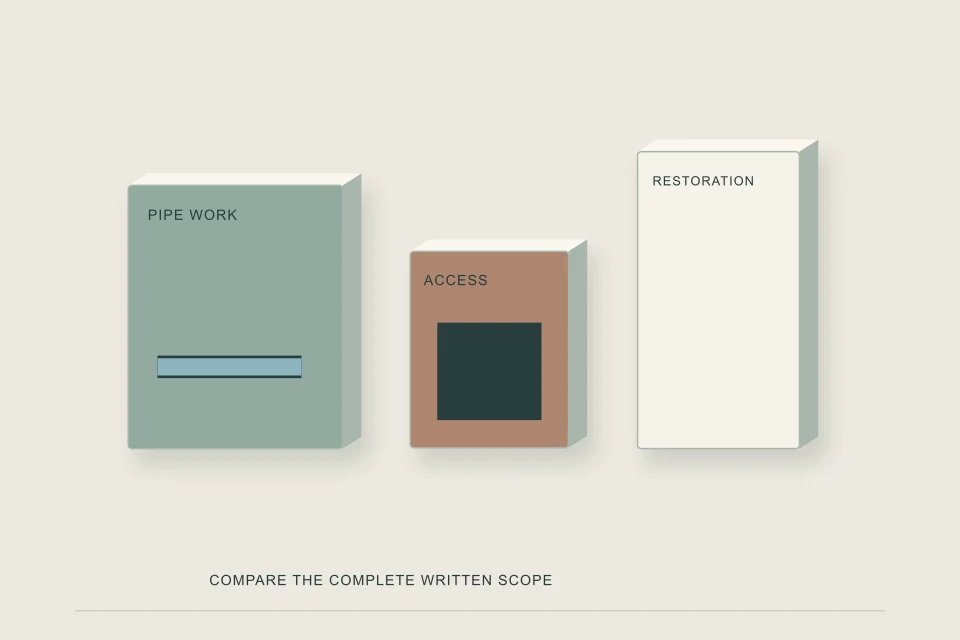
Make every contractor price the same scope, then compare line by line. Quotes that look far apart often differ only in what is included.
| Item | What to look for |
|---|---|
| Method | Trench, pull, split or bore, with pit locations |
| Pipe | Material, standard, size, and utility approval |
| Length and depth | Measured, not estimated |
| Connections | Curb stop fitting, foundation entry and seal, new main shut-off |
| Code items | Check valve for cold-only plastic, thermal expansion protection |
| Permits and locates | Who applies, who books the utility shut-off |
| Testing and flushing | Pressure test, flushing, and sampling after lead work |
| Restoration | Which surfaces, to what standard |
| Program paperwork | Help with grant, loan or rebate forms and inspections |
| Exclusions and extras | City side, rock, extra pits, winter work |
Ask each contractor how an unplanned pit or a seized curb stop is handled and priced. Those two events cause most day-of surprises on service jobs.
FAQQuestions people ask
Do I need a permit to replace my water line?
In most municipalities, yes, and several lead programs require the permit, or an approval, before work starts. Confirm with your municipality.
Who turns off the water at the curb stop?
Usually the utility or its approved contractor, since the curb stop belongs to the utility in most cities.
How long does it take to replace a water service line?
For one house, usually a working day on site once permits, locates and the shut-off are arranged. Deep pits or frozen ground add time.
Should the main shut-off valve be replaced with the water line?
It is a good idea. Old gate valves often stick or stay partly closed, and the wall is already open.
Will my yard be restored after a water line replacement?
Restoration is whatever the contract states. City programs often restore their own side to a basic standard; read the quote carefully.
Do I have to be home during a water line replacement?
Usually yes, or someone with access, because the crew needs the basement entry, the main shut-off and the meter, and the water is off for part of the day.
What if the crew hits rock or an unmarked pipe?
Work pauses while the situation is assessed. A good quote says how unplanned pits, rock and extra time are priced.
NETWORKGo deeper across the HAUSE Sewer network
What causes sewer backup, and how to tell which cause is yours
What causes sewer backup: roots, grease, wipes, sags, broken pipe, frozen lines and rain-overloaded city sewers, plus how to tell which one caused yours.
SewerQuotes.comBackwater valve installation cost and municipal subsidies
Backwater valve installation cost in Canada for 2026: CAD ranges for unfinished and finished basements, line items, subsidy program patterns and insurance angles.
SewerInspector.caRenting a sewer camera and scoping your own line
Can you rent a sewer inspection camera and scope your own line? What rental and consumer cameras do, how to use one safely, and where DIY falls short.