Poly-B, or polybutylene, is a light grey flexible plastic water piping installed in homes between 1978 and 1995, according to the City of Calgary. The City says most Poly-B problems were reported in the United States, with few cases in Canada, and that it is not necessary to replace Poly-B if you have had no problems. It suggests checking joints, keeping pressure at 40 to 60 psi and keeping it away from the water heater.
- Poly-B is light grey flexible plastic with permanent markings on the tubing, installed from 1978 to 1995 per the City of Calgary.
- The fittings are the usual worry; Calgary suggests changing plastic fittings to copper or brass.
- Keep household pressure between 40 and 60 psi to reduce stress on pipes and fittings.
- Poly-B should not connect directly to a water heater, and the tank should be set below 82 °C.
- Some insurers ask about Poly-B; the insurer's written position matters as much as the pipe's condition.
01 /What is Poly-B, and how do I recognise it?
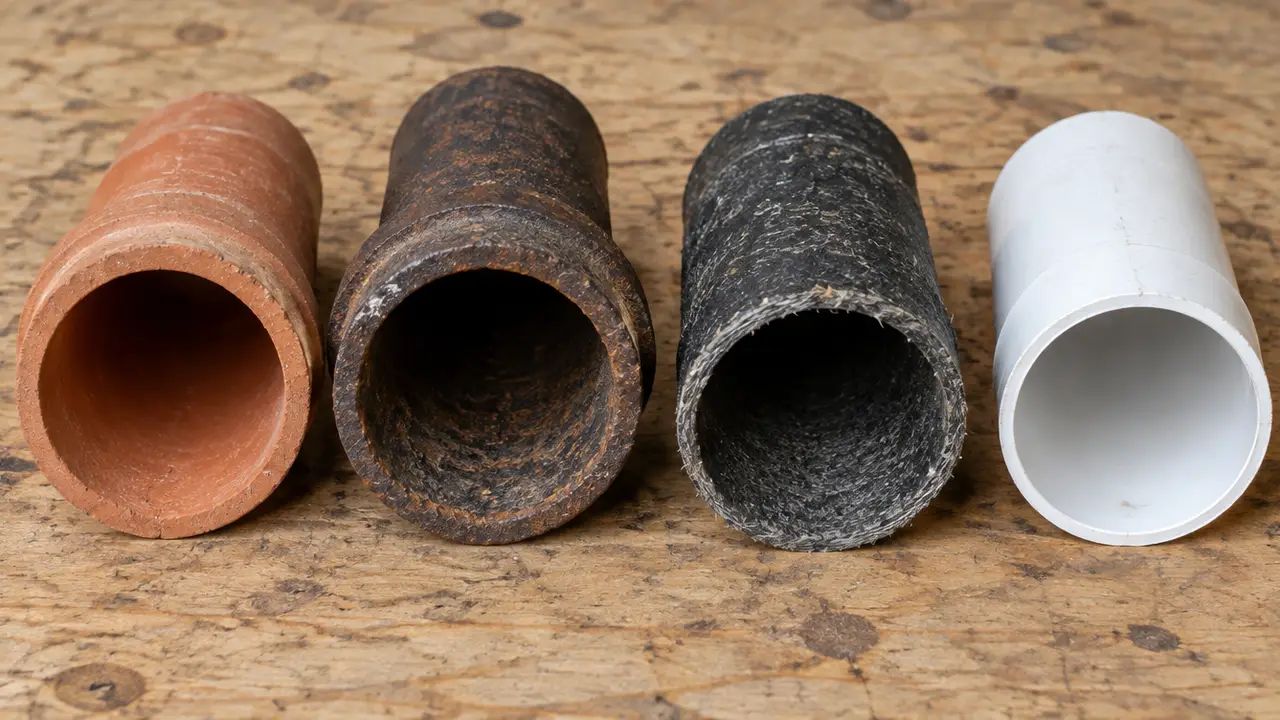
Poly-B is short for polybutylene, a flexible plastic used for hot and cold water supply piping in houses from the late 1970s to the mid-1990s. The City of Calgary says it was installed between 1978 and 1995, and that you can identify it by its light grey colour and the permanent markings printed on the tubing. It is usually found inside the house, running from the main shut-off to fixtures and the water heater.
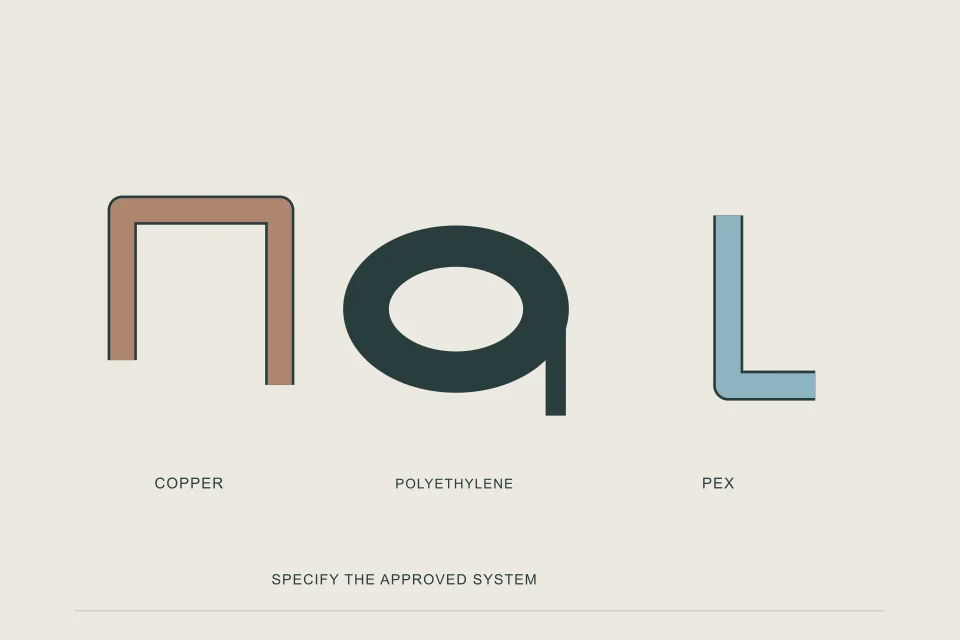
| Pipe | Look | Status |
|---|---|---|
| Polybutylene (Poly-B) | Light grey, flexible, printed markings | Historic; installed 1978–1995 per Calgary |
| PEX (cross-linked polyethylene) | Usually white, red or blue | Current; made to CSA B137.5 |
| Polyethylene (PE) | Usually black or blue, often a buried service | Current; made to CSA B137.1 |
The printed markings are the reliable check: read what is printed along the pipe. If you cannot find markings, a plumber can identify it. The materials guide covers the current options.
02 /Is Poly-B dangerous or likely to fail?
Not usually, by the City of Calgary's account. It says the vast majority of Poly-B related issues were reported in the United States, with few cases reported in Canada, and that it is not necessary to replace Poly-B piping in your home if you have not had any problems. The failures that gave Poly-B its reputation were mostly at fittings and connections, which is why Calgary's tips focus on joints, pressure and heat rather than on the tubing itself.
Poly-B is not a health concern in the way lead is; it is a leak and insurance concern. A Poly-B leak inside the house is water damage, so the questions are how likely a leak is, how quickly you would catch it, and what your insurer says.
03 /How do I make Poly-B last longer?
The City of Calgary lists practical steps for prolonging the life of Poly-B piping. Each one reduces stress on the joints or on the plastic.
- Check visible joints
Look at every visible joint for leaks or cracks, and consider changing plastic fittings to copper or brass.
- Control pressure
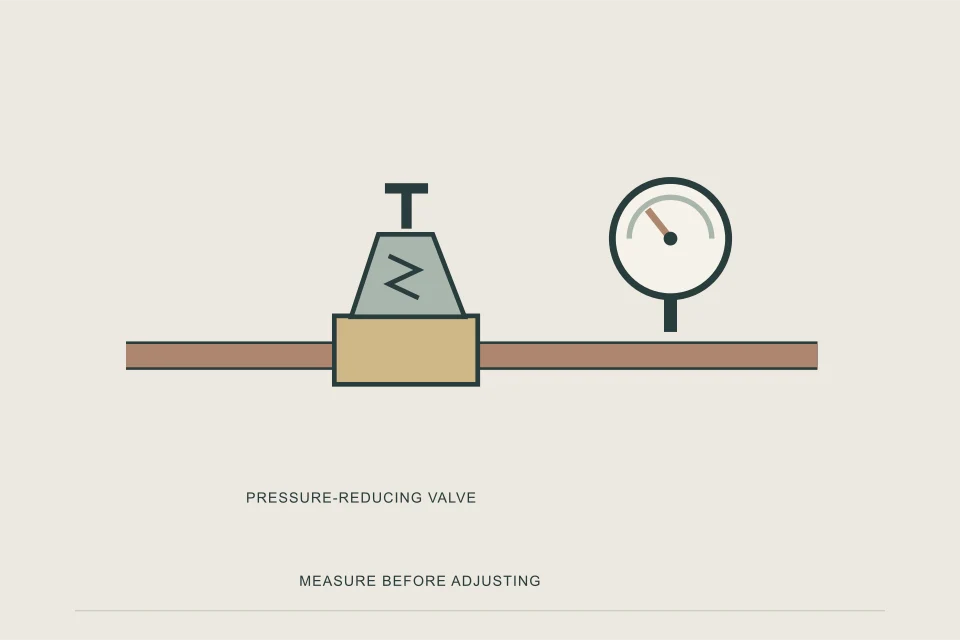
Keep the home's water pressure between 40 and 60 psi. A gauge on a hose bib tells you where you are; a pressure-reducing valve sets it.
- Consider chlorine
If you live where chlorine levels are very high, consider a water filter close to where the water enters the home.
- Limit heat
If the Poly-B carries hot water, keep the water heater set below 82 °C.
- Keep it off the heater
No Poly-B pipe should connect directly to the water heater.
Pressure is the easiest to control and the most often ignored. If your gauge reads well above 60 psi, have the pressure-reducing valve checked or adjusted; if it reads above 80 psi with no PRV, the plumbing code calls for one. The Low Water Pressure Diagnosis shows Calgary's Poly-B note when you tick Poly-B.
04 /Will my insurer care about Poly-B?
Some do. Insurers set their own underwriting rules, and some ask about Poly-B when quoting or renewing, which can affect coverage or the premium. Because the rules are the insurer's, not the government's, the only reliable answer is your insurer's, in writing. If you are buying a house with Poly-B, ask for the insurance quote before your conditions expire.
- Ask directly: does Poly-B affect eligibility, the premium or the water damage coverage?
- Ask what would change it: replacing fittings, replacing all Poly-B, or a plumber's inspection letter.
- Keep records of any fitting changes or partial replacements, with dates and invoices.
05 /When is it worth replacing Poly-B?
When it has leaked, when an insurer requires it, or when you are already opening walls or replacing the service. Calgary's advice not to replace problem-free Poly-B is about the pipe's condition; the insurance and renovation reasons are separate. Replacing house piping is a repipe inside the walls; replacing a Poly-B service is a service line job from the curb stop to the foundation. They can be done together, and doing the service first lets the plumber size the new house piping properly.
| Situation | Leaning |
|---|---|
| No leaks, pressure 40–60 psi, fittings metal, insurer content | Keep, check joints yearly |
| Plastic fittings, no leaks | Change fittings to copper or brass |
| A leak at a fitting or in the tubing | Repair, then plan replacement |
| Insurer requires removal | Replace |
| Renovation already opening walls | Replace the exposed runs |
If the buried service itself is an old material, see the cost page and galvanized water lines for the parallel case. For quotes, send your details.
06 /How do I check Poly-B fittings and joints?
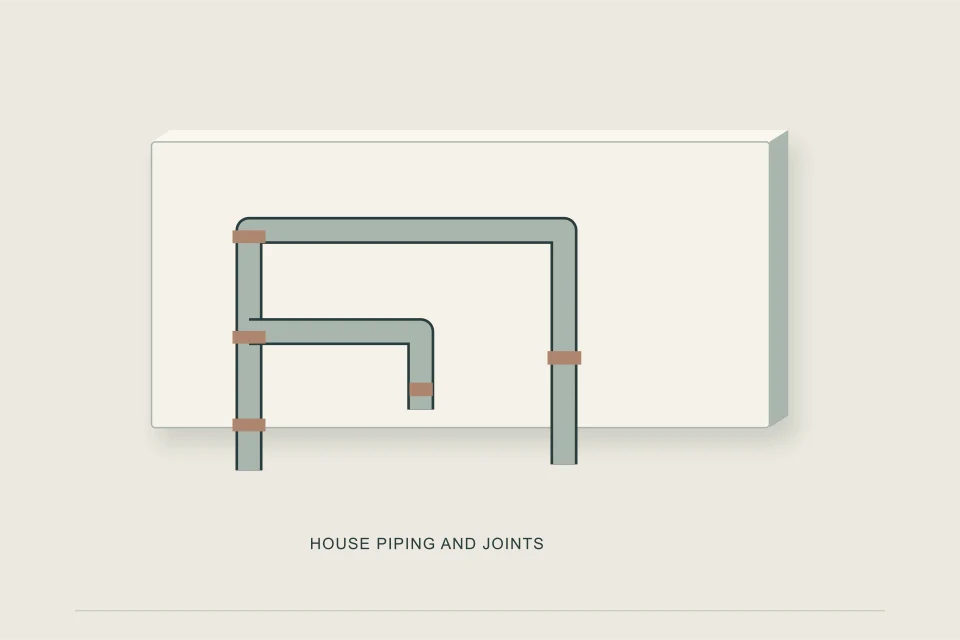
Look where the pipe joins something: valves, tees, elbows, the water heater, toilets and faucets. Calgary's first tip is to check every visible joint for leaks or cracks, and to consider changing plastic fittings to copper or brass. Metal insert fittings with crimped rings look different from plastic fittings, and a plumber can tell them apart quickly.
- Find the runs
Start at the main shut-off and follow the grey pipe through the unfinished parts of the basement and to the water heater.
- Look at each joint
Check for white mineral crust, dampness, discoloration, cracks in plastic fittings, or rings that look corroded.
- Check the water heater connections
Calgary says no Poly-B should connect directly to the water heater; a short metal connector should sit between them.
- Read the pressure
Put a gauge on a hose bib; above 60 psi, have the pressure-reducing valve adjusted or checked.
- Write it down
Note the date, what you found and what was changed. Insurers and buyers ask.
Joint checks are worth repeating once a year and after any plumbing work, since a plumber working elsewhere can disturb a fitting. If you find a weeping joint, shut off the water to that section and have it repaired rather than tightening it yourself.
07 /How is Poly-B different from the lead and galvanized problems?
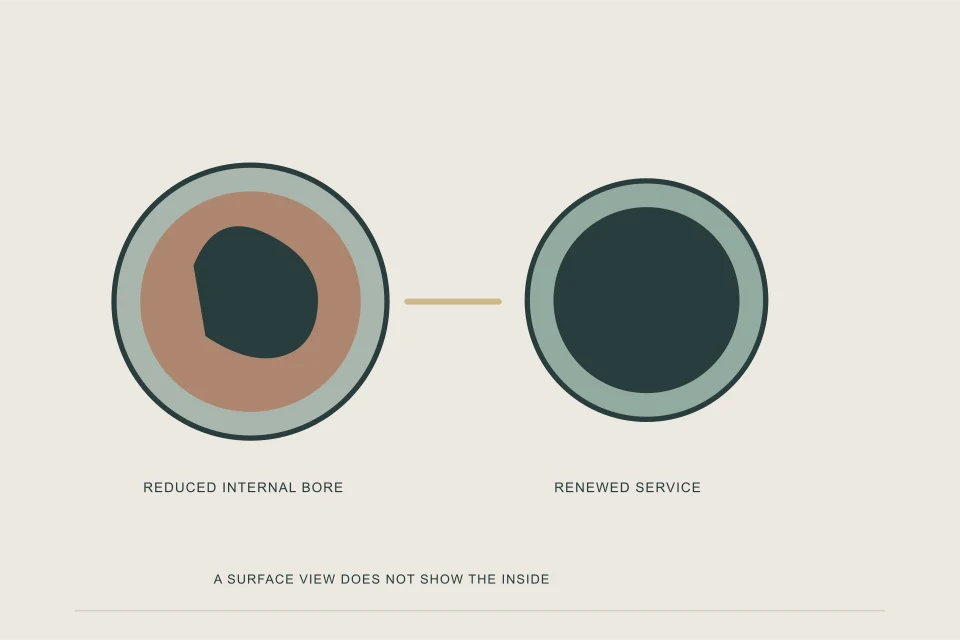
Poly-B is a leak risk, not a water quality risk in the way lead is, and it does not close up inside the way galvanized steel does. That changes what matters. With lead, the goal is removal, and Health Canada calls replacement the best permanent solution. With galvanized steel, the goal is restoring flow and removing a possible lead reservoir. With Poly-B, the goal is avoiding water damage, which is managed by fittings, pressure, heat and quick leak detection, and by knowing your insurer's position.
| Material | Main concern | What reduces it |
|---|---|---|
| Lead service | Lead in drinking water | Full replacement; filters and flushing meanwhile |
| Galvanized steel | Lost flow, leaks, stored lead | Replacement; test the water |
| Poly-B | Leaks at fittings; insurance | Metal fittings, 40–60 psi, heat limits, leak checks |
See lead water service lines and galvanized water lines for the other two.
FAQQuestions people ask
What years was Poly-B installed in Canadian homes?
The City of Calgary says Poly-B was installed in homes between 1978 and 1995.
Do I have to replace Poly-B pipes?
Not if you have had no problems, according to the City of Calgary. Your insurer may have its own requirements.
What colour is Poly-B pipe?
Calgary describes it as light grey, with permanent markings on the tubing. Check the printed markings to be sure.
What water pressure is best for Poly-B?
Calgary suggests keeping household pressure between 40 and 60 psi to reduce stress on pipes and fittings.
Can Poly-B connect to a water heater?
Calgary says no Poly-B pipe should be connected directly to a hot water heater, and the tank should be set below 82 °C.
Should I replace plastic Poly-B fittings with metal?
The City of Calgary suggests considering changing plastic fittings to copper or brass, since fittings are the usual weak point.
NETWORKGo deeper across the HAUSE Sewer network
What is hydro jetting in oil and gas, and how does it differ from sewer jetting?
What is hydro jetting in oil and gas? How industrial hydro blasting differs from sewer jetting in pressure, tools and safety, plus hydrovac and sewer careers.
PipeCleaning.caWhat pipe do I have? Identify your drain pipe material
What pipe do I have? Identify a drain pipe from its look, joints, markings and house age, with a confidence rating, safe cleaning methods and camera advice.
SewerCleaners.caHow to hire a sewer cleaner: the checklist, the questions and the paperwork
How to hire a sewer cleaner in Canada: questions to ask, insurance and WCB coverage in Alberta, a written scope template, red flags, and how to compare quotes.