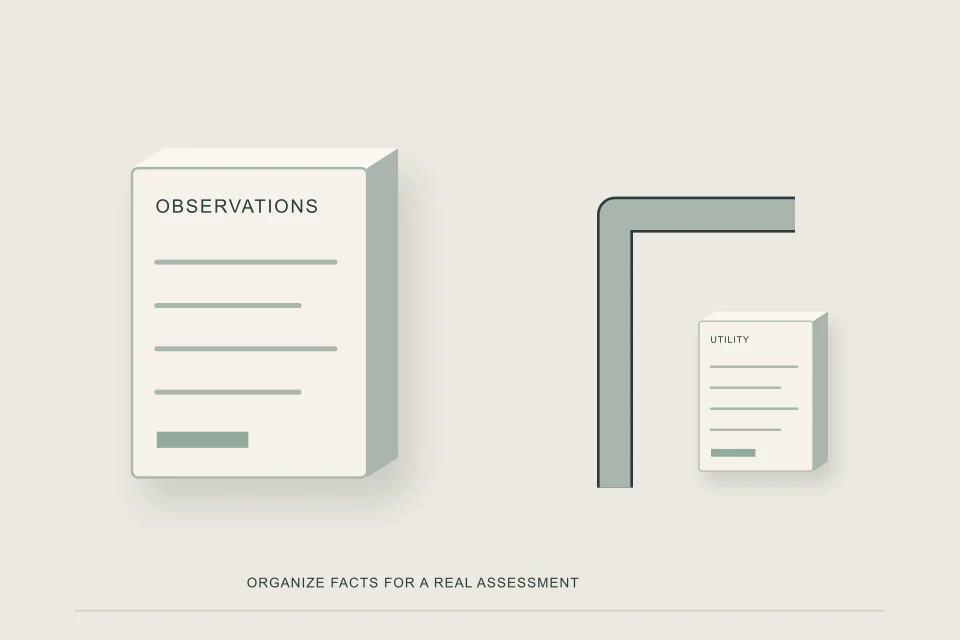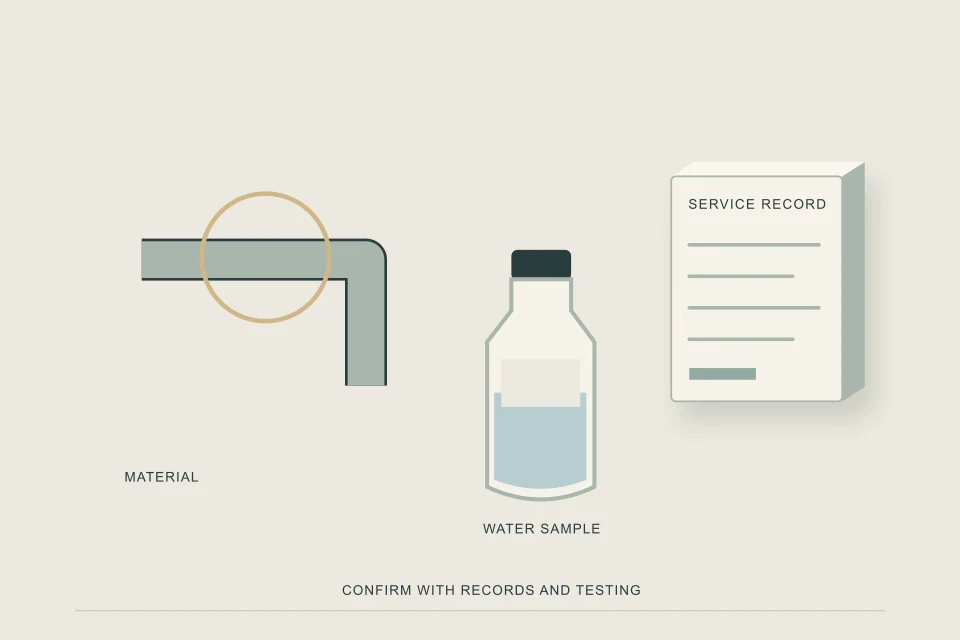
Look at the service pipe where it comes through the basement floor or wall, before the main shut-off and meter. Lead is dull grey or greyish-black, soft, and shows shiny silver when scratched lightly with a key or coin; a magnet will not stick to it, and joints are often a rounded bulb. Then ask your utility what its records show, because the buried pipe can differ from what you see.
- Check the short length between the floor and the first valve: that is the only part of the service most people can see.
- Health Canada describes lead pipe as greyish-black and soft or easily dented when scraped.
- A magnet sticks to galvanized steel but not to lead or copper; the scratch colour separates those two.
- Utility records often cover only the public side; EPCOR, for example, keeps no record of the owner's portion.
- A visual check does not replace a water test, and a water test does not replace knowing the pipe.
01 /Where do I look for the water service pipe?
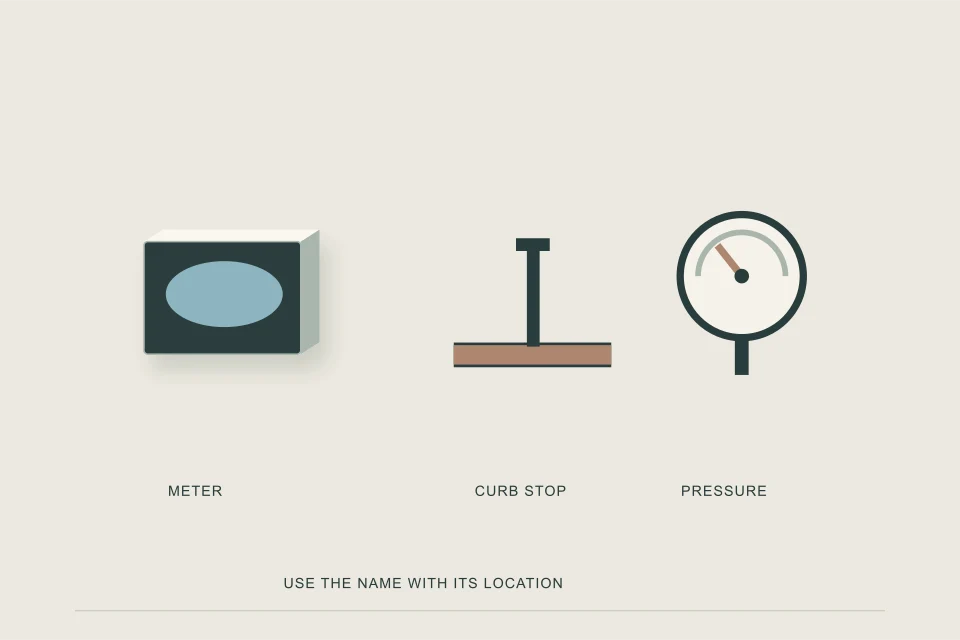
In the basement or crawl space, at the point where the water supply enters the house. It usually comes up through the floor or out of the front foundation wall facing the street, and runs a short distance to the main shut-off valve and the water meter. Calgary and EPCOR both describe the main shut-off as close to the water heater, near the floor, or below the meter where the main line enters. The pipe between the floor or wall and that first valve is the end of your service line.
- Clear access: move storage away and use a bright light; the pipe is often behind a finished wall with an access panel.
- Do not touch the meter seals or open the meter; it belongs to the utility.
- Photograph it from two angles, including the joint nearest the floor. Utilities and contractors can often identify lead from a clear photo.
02 /What does a lead water pipe look like?
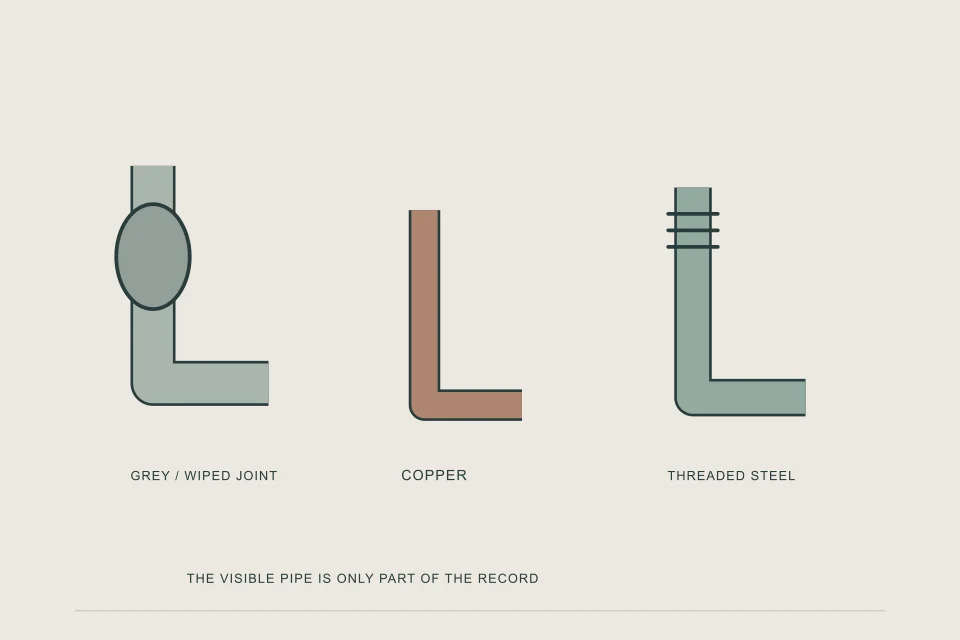
Lead looks different from the other service materials once you know what to compare. Health Canada says a pipe might be lead, or contain lead, if it is greyish-black and soft or easily dented when scraped. In practice, lead service pipe is dull, matte grey, often with an uneven surface, and noticeably thick for its size. Where it joins the valve or a newer pipe you may see a rounded, bulb-shaped joint where the lead was shaped around the fitting.
| Material | Colour | Light scratch | Magnet | Typical joint |
|---|---|---|---|---|
| Lead | Dull grey or greyish-black | Shiny silver | Does not stick | Rounded bulb |
| Copper | Brown like a penny, may show green | Bright copper | Does not stick | Soldered, flared or compression |
| Galvanized steel | Grey or silver, often rusty | Grey metal | Sticks | Threaded |
| Polyethylene or PEX | Black, blue, white or red | Not needed | Does not stick | Plastic or brass fittings, crimp rings |
| Polybutylene | Light grey plastic | Not needed | Does not stick | Crimp rings, printed markings |
03 /How do I do the scratch and magnet tests safely?
Gently, and only on bare pipe. The scratch test tells lead from galvanized steel and copper; the magnet test tells steel from everything else. Together they are enough to rule lead in or out at the point you checked.
- Pick a bare spot
Choose a section of pipe between the floor and the valve, free of paint or tape.
- Scratch lightly
Use the edge of a key or a coin to scrape a small patch. Do not cut, file or saw the pipe, and never scratch a pipe that is leaking.
- Read the colour
Shiny silver under dull grey suggests lead; bright copper colour means copper; dull grey that stays dull, with rust nearby, suggests galvanized steel.
- Try a magnet
A fridge magnet sticks firmly to galvanized steel. If it does not stick and the scratch was silver, lead is likely.
- Wash your hands
Wash after touching any old pipe, especially one you suspect is lead.
04 /Can the pipe I see be different from the buried pipe?
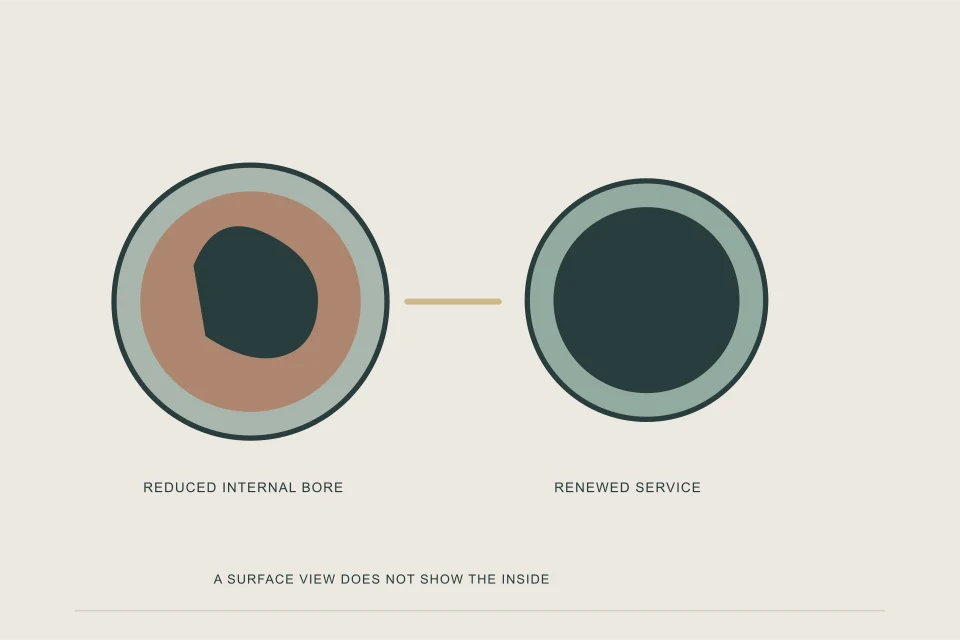
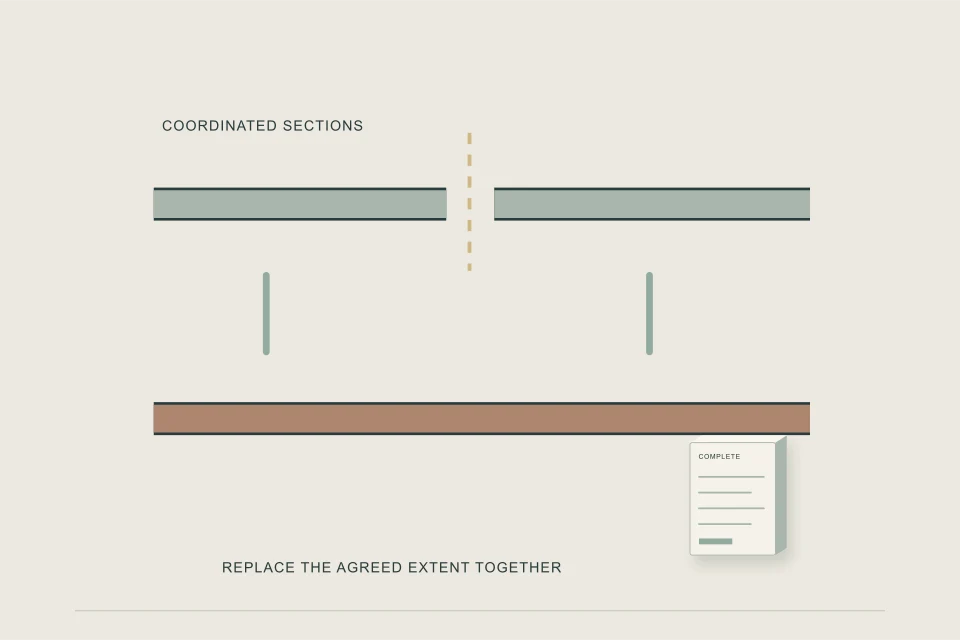
Yes, and this is the most common trap. A plumber replacing a leaking valve or meter may have replaced the first metre of pipe inside the wall with copper and joined it to the old buried line. The utility may have replaced its side in copper and left your side lead, or the reverse. And a service can change material more than once along its length, for example at an old repair under the lawn.
- Ask the utility for its record. Calgary publishes its public-side service materials as open data; EPCOR sends an annual notice when its records show the utility portion is lead, and notes that when its portion is lead the private portion often is too.
- Ask for an inspection where offered. Hamilton offers a free Check Size and Type Inspection; Montréal offers free screening for older small buildings.
- Expose the line at the curb stop or at the wall during a contractor's quote visit, if records are missing.
Utility records have limits. EPCOR says it does not maintain records for the homeowner's portion, and Winnipeg says it does not trace private water pipes. When the records are silent, the pipe itself is the evidence.
05 /Do lead pipe detectors or test kits work?
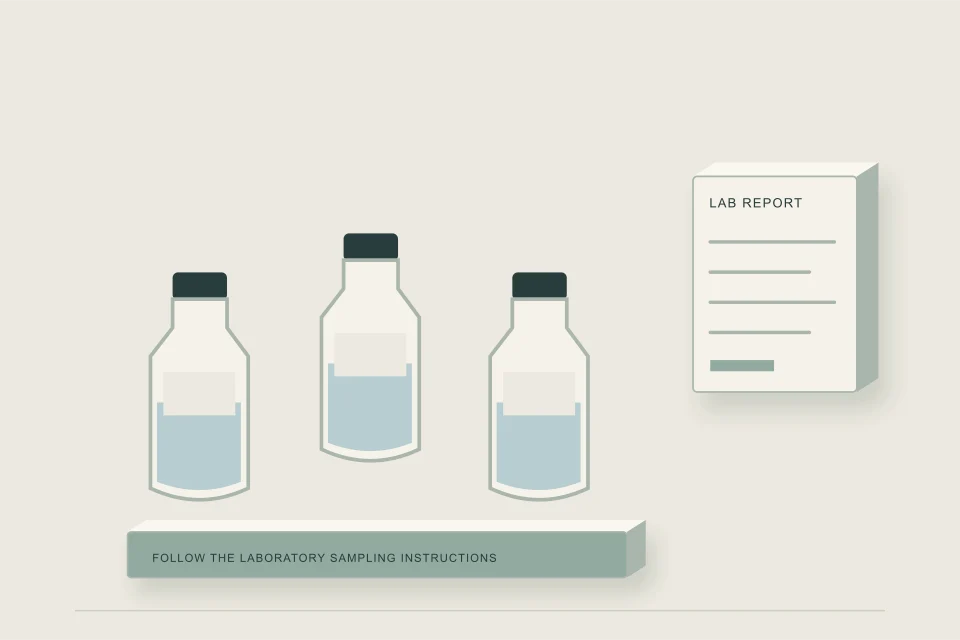
Swab-style lead test kits and handheld detectors are sold for surfaces, but they do not tell you what the buried service is made of, and they cannot tell you how much lead is in your water. The two checks that matter are the material of the pipe, established by the look, scratch, magnet and records, and the lead level in the water, measured by a proper sample analysed by a laboratory. Many utilities offer the second for free; see testing water for lead.
A water test is also how you catch lead from sources other than the service: solder in copper plumbing, which Health Canada says the code allowed until 1986, and brass fittings and fixtures. A copper service with old solder can still produce a lead result.
06 /What should I do once I know?
If the pipe is lead or likely lead, filter your drinking water, test, and plan a full replacement with your utility. If it is galvanized, read galvanized water lines: Health Canada says galvanized portions of a service should be replaced along with lead, and Calgary notes galvanized pipe can accumulate lead released from an old lead line upstream. If it is copper or plastic at the entry and the utility confirms no lead on its side, a test is still worthwhile in older homes.
- Enter what you found in the Lead Water Line Check for a likelihood and your city's program.
- Read the lead service line guide for the health background.
- See lead service line replacement for how full replacement works.
If you want contractors to confirm the material and quote, send your details with the photos you took.
07 /What if I cannot reach or see the pipe?
It is common: finished basements, cabinets and insulation often hide the entry. You still have options before opening anything.
- Look for an access panel near the meter, which most utilities need to read or change it.
- Check the pipe right beside the meter or main shut-off, even if the section below is hidden.
- Ask the utility for its record of the public side and any inspection offer; Hamilton's free Check Size and Type Inspection is one example.
- Test the water with a sequential sample, which can suggest whether lead comes from the service.
- Ask a plumber to identify it during a visit; a quick look behind a panel is usually enough.
Do not remove drywall or cut into a finished wall near a suspected lead line without a plan; disturbance is a concern in itself. The Lead Water Line Check accepts "I can't see it" and tells you which evidence would help most.
FAQQuestions people ask
What does a lead water pipe look like?
Dull grey or greyish-black, soft, and often thick, with rounded bulb-shaped joints. A light scratch shows shiny silver.
Does a magnet stick to a lead pipe?
No. A magnet sticks to galvanized steel but not to lead or copper; use the scratch colour to tell lead from copper.
Where does the water line come into my house?
Usually through the basement floor or the front foundation wall, running to the main shut-off valve and the meter.
Can my city tell me if my water line is lead?
Often for its own side. Records for the private side are rare; EPCOR, for example, keeps none for the owner's portion.
Is it safe to scratch a lead pipe?
A light scratch on bare pipe is fine; wash your hands afterwards. Do not cut, file, bend or tighten a suspected lead pipe.
Can a home inspector tell if my water line is lead?
Often, at the entry pipe. Toronto accepts a home inspector's report as proof of private-side replacement for its Priority program, which shows how such reports are used.
NETWORKGo deeper across the HAUSE Sewer network
Sewer backup insurance in Canada: coverage, deductibles, condos and claims
Sewer backup insurance in Canada explained: what the endorsement covers, deductibles and limits, flood vs backup, condos, septic, and whether it is worth it.
PipeCleaning.caChemical drain cleaners: why they damage pipes and harm people
Chemical drain cleaners explained: how caustic, acid and bleach openers work, how they damage pipes, their burn and gas hazards, and what to do instead.
DrainAugering.caToilet auger, plunger or drain snake: which one fits your clog
Toilet auger vs plunger vs drain snake: what each tool does, which to try first on a toilet, sink or shower, and why a toilet auger will not clear a sink.