Published Canadian figures put a private-side water service replacement from about $2,000 to $3,000 for a typical Toronto job (2020 figure) up to $1,200 to $1,400 per metre in Montréal (2022–2025 data), which is roughly $7,000 to $17,000 for a 6 to 12 metre setback. Replacing both sides with restoration can approach Halifax Water's $20,000 per-replacement funding ceiling. Length, depth, surfaces and method drive the spread.
- Only two Canadian cities we checked publish a typical cost: Toronto ($2,000–$3,000 private side, 2020) and Montréal ($1,200–$1,400 per metre, 2022–2025).
- Length from the foundation to the property line, and depth below frost, drive most of the difference between jobs.
- Trenchless methods cut restoration cost where the route crosses driveways, trees or landscaping.
- Grants, loans and cost shares in many cities change what the owner pays far more than contractor choice does.
- Interior work, such as a new main shut-off valve or electrical bonding, is often priced separately.
01 /What does the water line from the street to the house cost to replace?
There is no national price, and very few utilities publish one. The planning ranges below are built only from figures Canadian cities have published about real replacements, dated and labelled. Use them to sense-check a quote, not to replace one.
| Scenario | Planning range | Basis |
|---|---|---|
| Private side, typical urban lot | $2,000–$3,000, with outliers either way; treat as a floor in 2026 | Toronto council report, June 2020 |
| Private side, priced by the metre | $1,200–$1,400 per metre, foundation to property line, including administration | Ville de Montréal, 2022–2025 data |
| 6 m setback at the Montréal average | $7,200–$8,400 | Worked from the Montréal average |
| 12 m setback at the Montréal average | $14,400–$16,800 | Worked from the Montréal average |
| Both sides with reinstatement, upper bound | Up to about $20,000 | Halifax Water's per-replacement funding ceiling (a limit, not a typical price) |
The two anchor figures differ because they describe different jobs. Toronto's is a typical private-side replacement in a city where the house often sits close to the property line; Montréal's is an administered municipal program that bills per metre and includes its administrative fees. Most private-side quotes in older neighbourhoods will fall somewhere across that span, with long setbacks, deep services and hard surfaces pushing toward the top.
02 /What drives the price of a water line replacement?
Five things decide most of a quote: how long the private line is, how deep it is, what it runs under, how it will be replaced, and what has to change inside the house.
| Driver | Lower cost | Higher cost |
|---|---|---|
| Length | House close to the property line | Long setback, or a curb stop at the back lane |
| Depth | Mild-climate cover | Prairie cover of about 2.1 to 2.9 m, needing shoring for a trench |
| Surface | Lawn | Driveway, walkway, retaining wall, mature trees |
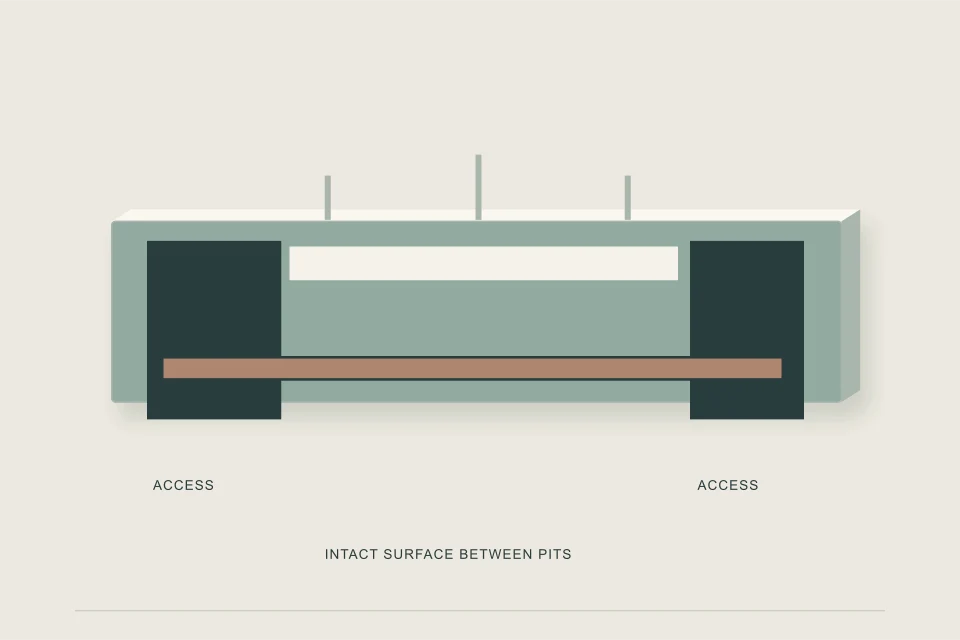
| Method | Short pull between two pits | Full-length open trench with hard-surface restoration |
| Basement entry | New pipe through the old hole | New entry point, finished wall or floor to open |
| Interior | Existing valve reused | New main shut-off, meter relocation, bonding check by an electrician |
| Season | Summer | Frozen ground |
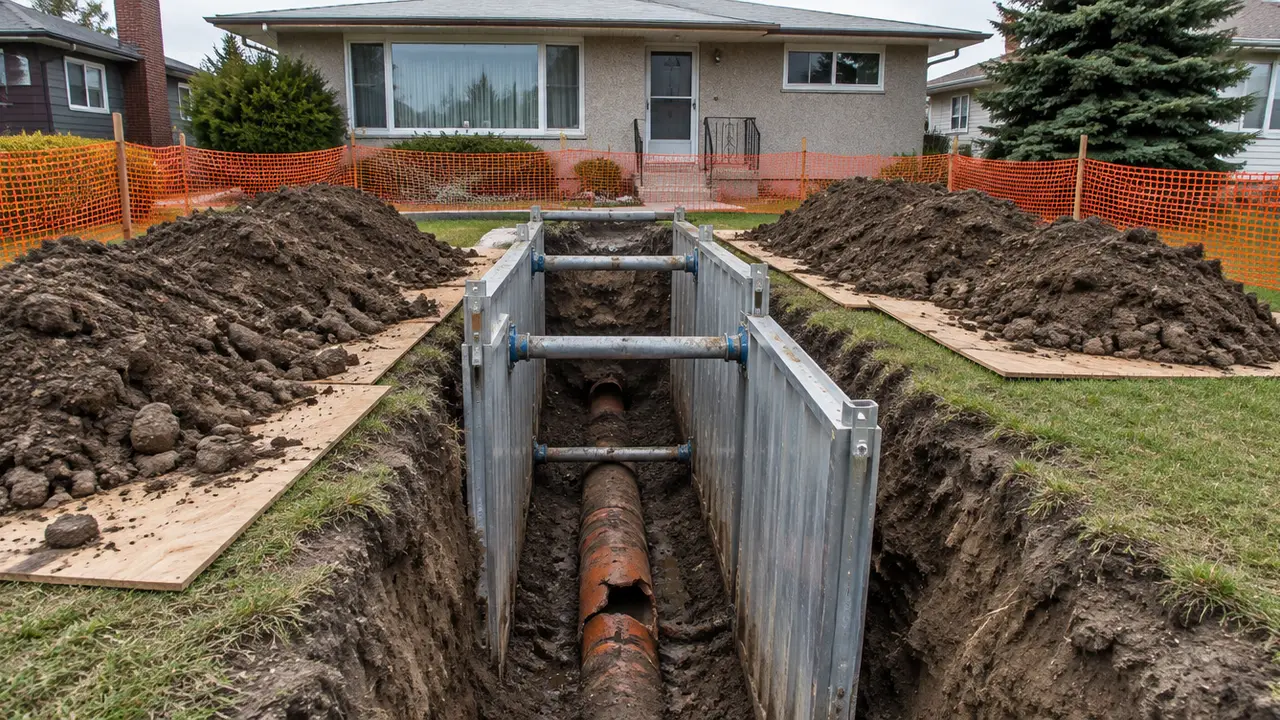
Depth deserves its own mention in cold cities. Calgary's infill rules call for 8.5 feet of cover over water services, EPCOR's service guidelines put a new Edmonton service 2.59 to 2.89 metres below grade at the property line, and Regina's specification calls for at least 2.7 metres of cover. A trench that deep needs protective systems, which is one reason trenchless methods are common for water services on the prairies. Depth rules are in the frost depth guide.
03 /How much do city programs take off the owner's share?
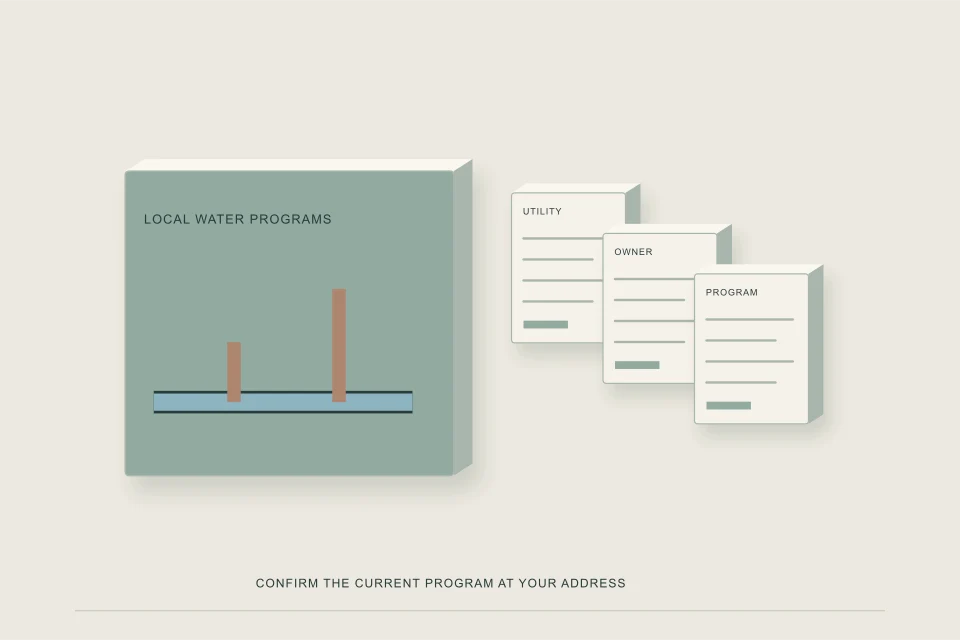
Often more than shopping around does. The help on offer ranges from full funding to interest-free deferral, and several programs require approval before work starts.
| City | Help | Terms |
|---|---|---|
| Halifax | Both sides replaced at no cost | Up to $20,000 per replacement; or a 25% rebate up to $5,000 if you go first; Lateral Loan up to $10,000 less rebates at prime plus 2% |
| Québec City | Grant | 100% of eligible costs up to $2,500 per private connection |
| Guelph | Grant | Up to $2,000 (up to $1,000 with City work), usually about 80% of cost |
| Regina | Deferred payment | Up to $10,000 interest-free over 5 or 10 years |
| Montréal | Payment plan | City bill payable once without interest or over 15 years at the City's borrowing rate |
| Hamilton | Loan | $3,000 on the water bill, up to 10 years; interest-free for LEAP or OESP households |
| London | Loan | On the property tax bill over 10 years; homes of up to three units |
| Saskatoon | Cost share | Owner pays 40% of the total when the City replaces both sides |
| Toronto, Calgary, Edmonton, Winnipeg | City side only | Owner pays the private side |
The full rules for each are on the city programs page. The Lead Water Line Check summarises your city's help in its result.
04 /What should a water line quote include?
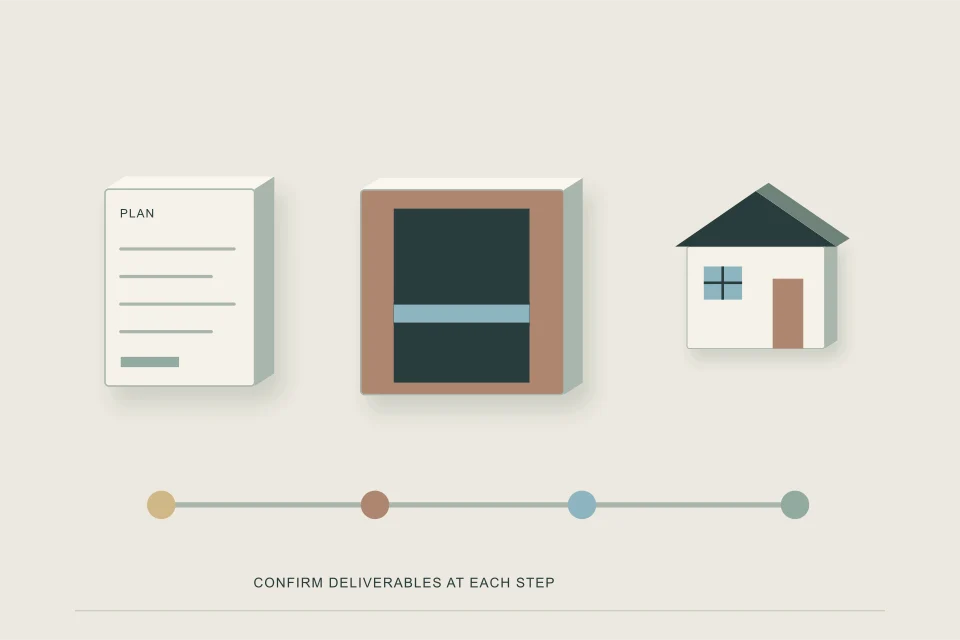
A quote you can compare names the method and the pipe, and splits the work into lines. Ask for each of these in writing.
- Method and route: trench, pull, split or bore, and where each pit goes.
- Pipe: material, size and the standard it meets, such as type K copper, or polyethylene to CSA B137.1.
- Length and depth: measured, not guessed, from the curb stop or property line to the entry.
- Connections: at the curb stop, and inside with a new main shut-off valve if the old one is worn.
- Permits, locates and utility coordination, including who books the curb stop shut-off.
- Testing and flushing before the line is put in service.
- Restoration: exactly which surfaces are restored, and to what standard.
- Electrical bonding: if a metal service is replaced with plastic, a note to have an electrician confirm grounding.
- Exclusions: what is not included, such as the city side, landscaping or interior finishes.
Material choices are compared in copper, PEX or polyethylene. Leak-driven replacements have their own questions about responsibility and insurance in who pays for water line repair.
05 /Is it cheaper to repair a leaking water line than replace it?
A single leak on sound copper or plastic is usually repaired, since one small excavation costs far less than a new line. A leak on lead is different: the City of Winnipeg, for example, advises replacing a lead water pipe rather than repairing the leak. A leak on corroded galvanized steel tends to be the first of several. The City of Vancouver lists a service call rate of $126 an hour, or $252 after hours, billed to the owner when a leak turns out to be on private property, which is a reminder to confirm the location before calling a crew.
If you are weighing repair against replacement for low flow rather than a leak, run the Low Water Pressure Diagnosis first; a partly closed valve or a failed pressure-reducing valve is far cheaper than a new line. When you want real numbers, send your details with the length, depth if known, and a photo of the pipe at the meter.
FAQQuestions people ask
How much does it cost to replace a water line from the street to the house in Canada?
Published figures run from about $2,000–$3,000 for a typical Toronto private side (2020) to $1,200–$1,400 per metre in Montréal (2022–2025). Length, depth and surfaces set where your job falls.
Is trenchless water line replacement cheaper?
Often, when the route crosses driveways, trees or landscaping, because only two pits need restoration. On a short lawn run a trench can cost the same or less.
Does home insurance pay to replace an old water service line?
Standard policies generally do not pay to replace a worn-out pipe. Some insurers sell service line coverage; read the wording and ask in writing.
Who pays for the city side of the water line?
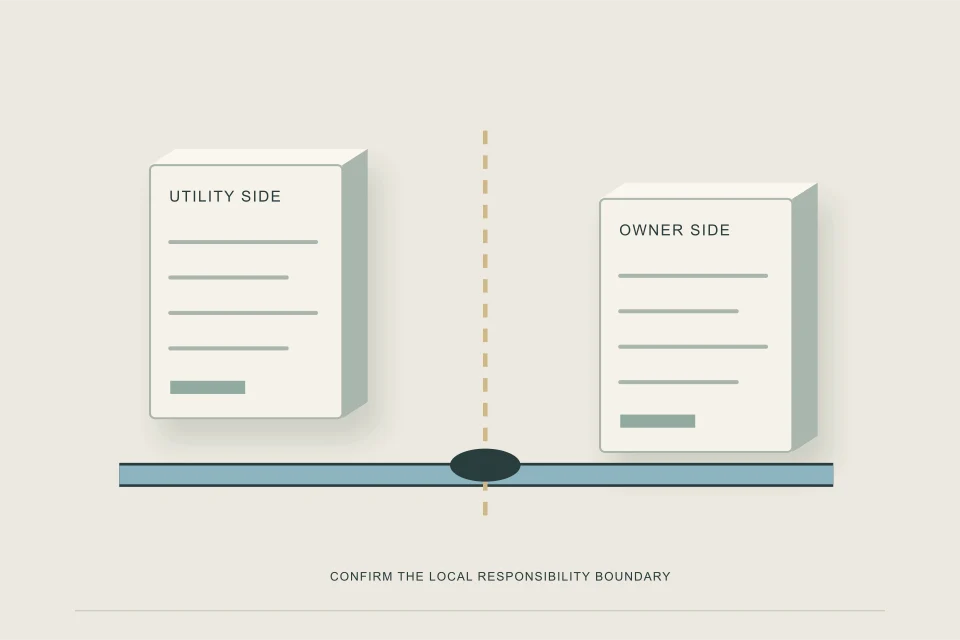
Usually the utility. Most Canadian cities replace their portion at their own cost, sometimes only when the owner replaces the private side.
Why do water line quotes vary so much?
Different methods, depths, restoration scope and interior work. Ask each contractor to price the same scope line by line.
NETWORKGo deeper across the HAUSE Sewer network
Sewer line replacement cost: open-cut vs trenchless, line by line
Sewer line replacement cost in Canada for 2026: open-cut, CIPP lining and pipe bursting planning ranges in CAD, per-metre math, line items and what moves price.
SewerInspector.caScope the sewer before you renovate, finish the basement or landscape
Why to get a sewer inspection before renovation, basement development, a suite or landscaping: what to check, when to book it, and how findings change plans.
SewerRoots.caWhose tree, whose pipe: who pays when roots block a sewer line
Who is responsible when a city or neighbour's tree sends roots into your sewer line: the general Canadian pattern, the evidence, and how to raise it.