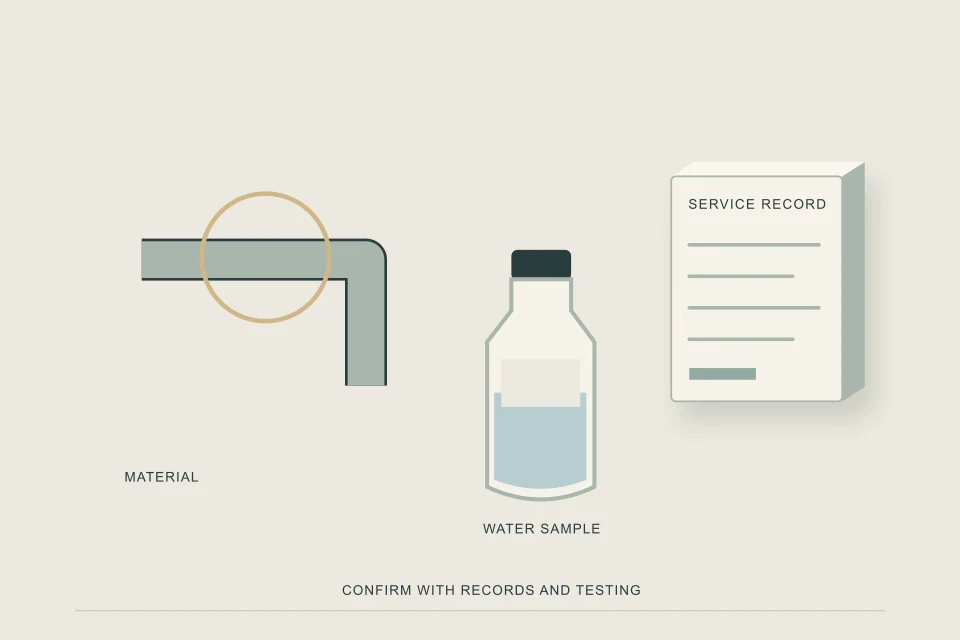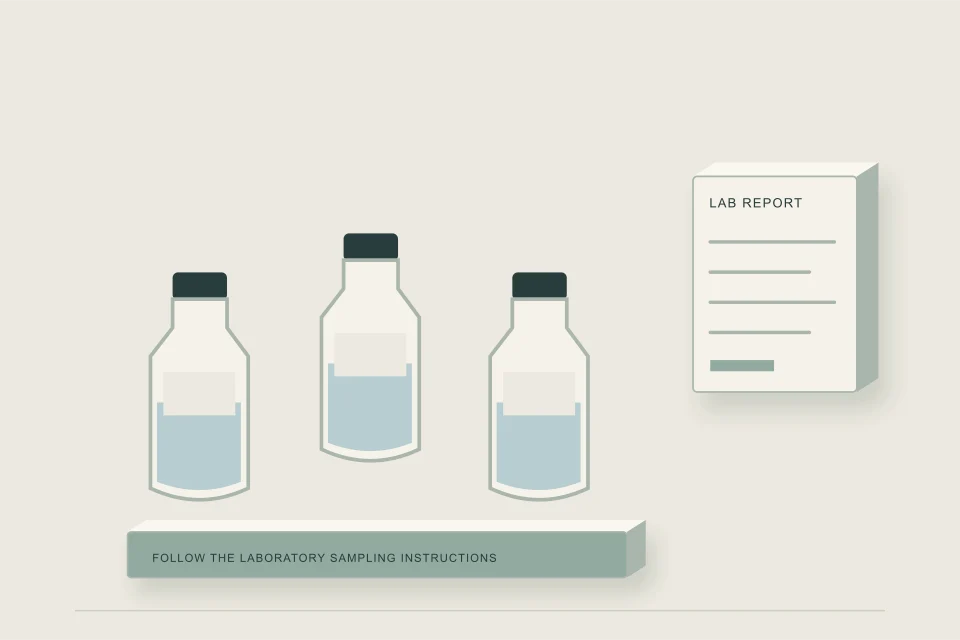
To test tap water for lead, use your utility's free program where one exists, or an accredited laboratory, and follow the sampling instructions exactly, because lead levels depend on how long water stood in the pipes. Results are reported in micrograms per litre; Health Canada's guideline is 5 µg/L (0.005 mg/L). A single low result does not clear a lead service line, so test more than once if lead is suspected.
- Health Canada's maximum acceptable concentration for lead is 5 µg/L, the same as 5 parts per billion or 0.005 mg/L.
- Sampling rules matter: a first draw after stagnation shows the most lead, a flushed sample the least.
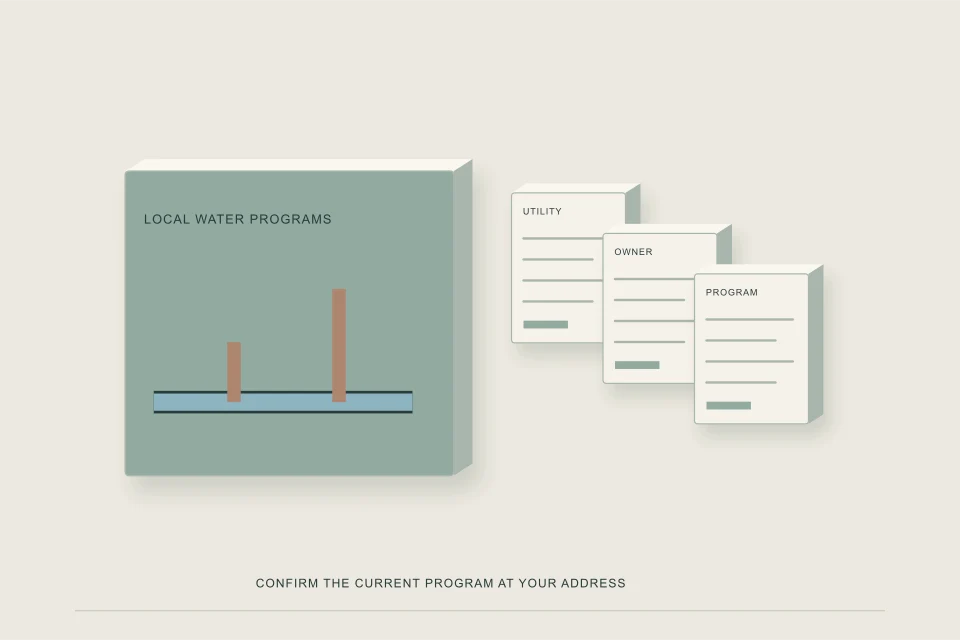
- Toronto, Calgary, Edmonton, London, Guelph, Halifax, Winnipeg and Québec City offer free testing in some form; some cities do not.
- Health Canada recommends frequent sampling after a lead service is replaced, until levels stabilise.
- While you wait, run the tap until cold and use a filter certified for lead reduction.
01 /Where can I get my water tested for lead?
Start with your utility, because many test for free and their results feed their own programs. Where no free test exists, your public health unit can point you to an accredited laboratory, which is Health Canada's advice. Home dipstick kits are not a substitute for a lab analysis of a properly collected sample.
| City | What is offered |
|---|---|
| Toronto | Free lab analysis of a submitted sample; kits through 311 |
| Calgary | Free annual Tap Water Sampling Program, May 1 to September 30, through 311 |
| Edmonton (EPCOR) | Free annual testing for customers with lead service lines |
| Ottawa | Water quality test on request; free filters if 5 ppb or more |
| London (Ont.) | Free testing for older homes |
| Guelph | Free test for buildings from before the mid-1950s; results in about a week |
| Halifax | Free sampling for customers with a lead service line |
| Winnipeg | Lead testing program with a volunteer waitlist; no door-to-door testing |
| Montréal | Free screening June to October for older small buildings |
| Québec City | Sampling and analysis paid by the City; up to 60 working days |
| Hamilton, Saskatoon | Use a private accredited laboratory |
Details and contacts are on each city's page under city programs.
02 /How are lead samples taken?
By a written protocol, and the protocol changes the result. Health Canada's corrosion guidance describes several for homes. They differ mainly in how long the water sits in the pipes before sampling and how many litres are collected.
| Protocol | How it is done | What it shows |
|---|---|---|
| Random daytime | A first-draw 1 L sample from the cold drinking tap at a random time of day, aerator left on | A snapshot of typical exposure |
| 30-minute stagnation | Flush 5 minutes, let the water stand 30 minutes, then take two 1 L samples | A more repeatable comparison between homes |
| Extended stagnation, sequential | After at least 6 hours of stagnation, four or more consecutive 1 L samples | Where along the plumbing the lead is coming from |
The sequential method is the useful one for a homeowner trying to find the source. The first litre sits in the tap and nearby fittings; later litres come from further back in the plumbing and then from the service line itself. A result that rises in the later litres points at the service; one that is high only in the first litre points at the faucet or nearby solder.
03 /What does my lead result mean?
Results are usually reported in micrograms per litre (µg/L), which is the same as parts per billion (ppb). Health Canada's maximum acceptable concentration is 0.005 mg/L, which is 5 µg/L or 5 ppb. Ottawa, for example, gives free filters when its test finds 5 ppb or more.
- At or above 5 µg/L: act now: filter or use bottled water for drinking and cooking, tell your utility, and plan to remove the source.
- Below 5 µg/L with a known lead service: reassuring for that sample, but not a clearance. Levels vary with stagnation, season, water use and disturbance.
- Below 5 µg/L with no lead service: good. In a pre-1990 home, lead solder or fittings can still contribute occasionally.
- Non-detect: below the lab's reporting limit for that sample.
If a result surprises you in either direction, test again using the same protocol. The Lead Water Line Check treats a result at or above 5 µg/L as strong evidence and a low result as neutral, for exactly this reason.
04 /What should I do while waiting for results?
Reduce exposure as if the result will be high. Health Canada's advice is simple: after water has been sitting in the pipes for a few hours, run the tap until the water is cold, about one minute, before using it for drinking or cooking, and use cold water rather than hot. Use a drinking water filter certified to the NSF standard for lead removal; NSF/ANSI 53 covers filters that reduce health-related contaminants, and NSF/ANSI 58 covers reverse osmosis systems. Check that the certification names lead, not just taste and odour.
- Morning routine
Run the cold tap until it is cold, or use the water for flushing toilets and watering first.
- Drinking and formula
Use filtered or bottled water, especially for infants, children and during pregnancy.
- Filter care
Replace cartridges on the maker's schedule; an expired cartridge stops reducing lead.
- Aerators
Clean them; particles collect in the screens.
Several cities help pay for filters: Toronto's rebate for eligible households, Guelph's rebate of up to $100 a year, Regina's rebate of up to $200, and free filters from Ottawa, EPCOR, Halifax Water and Montréal in the circumstances each describes.
05 /Should I test again after the service is replaced?
Yes. Health Canada's guidance says that when lead service lines are replaced, consumers should be encouraged to flush the cold water extensively, and that weekly or biweekly sampling at the tap should continue until lead levels stabilise. Calgary, for example, samples within one month of replacing the public service pipe and again after three to six months. Guelph's grant requires post-replacement sampling.
If only one side was replaced, keep filtering until both are done, because Health Canada says particles may detach from remaining lead pipe for two to three months after a disturbance. The lead service line replacement guide explains the sequence, and the lead service line guide covers why children and pregnancy are the priority.
06 /Can a test tell me whether my service line is lead?
Not on its own. A high result says there is lead somewhere in the path; a sequential sample can suggest where; but only the pipe, or the utility's record, confirms the material. Use the test together with a look at the pipe using how to identify a lead water pipe. If the answer is lead, see the cost page and your city's program, or send your details for quotes.
07 /What else in the house can put lead in the water?
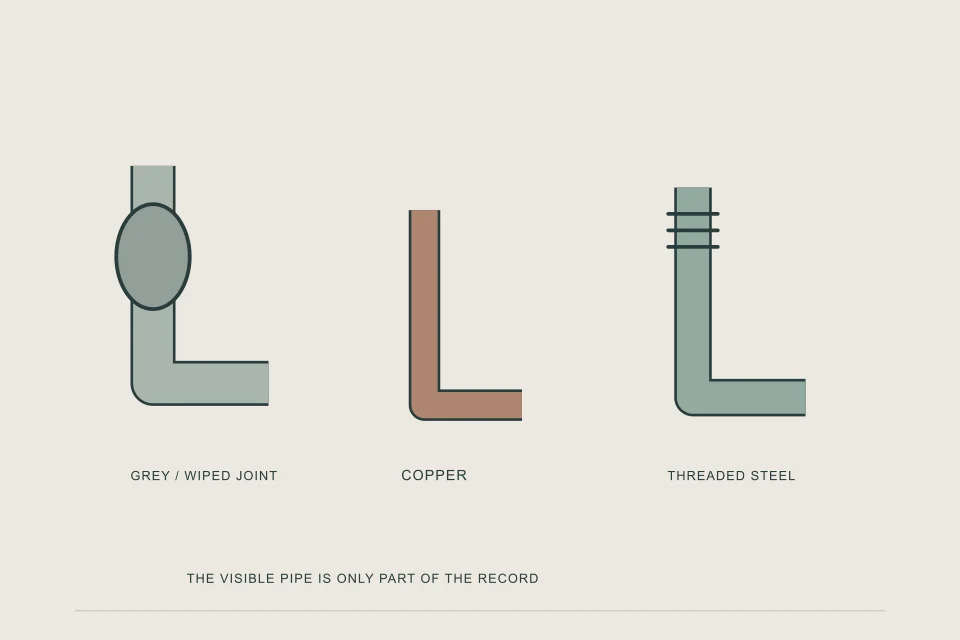
The service line is the biggest source where it exists, but not the only one. Health Canada says the plumbing code allowed lead in solder until 1986, so copper plumbing joined before then can contribute. EPCOR, quoting Health Canada, notes lead can also be found in brass and bronze fittings such as faucets and valves. A sequential sample helps separate these: lead concentrated in the first litre tends to come from the faucet and nearby fittings, while lead that appears in later litres suggests the service line.
- Faucets: replacing an old faucet at the drinking tap can reduce lead from that source.
- Solder: older soldered copper joints; flushing reduces what they add.
- Galvanized pipe: can hold lead released from an upstream lead service.
- Aerators: trap particles; clean them regularly.
This is why a copper service can still produce a lead result in an older home, and why testing is worthwhile even when the Lead Water Line Check says lead in the service is unlikely.
FAQQuestions people ask
What is a safe level of lead in drinking water in Canada?
Health Canada's guideline, the maximum acceptable concentration, is 0.005 mg/L, or 5 µg/L. It recommends keeping levels as low as reasonably achievable.
Is lead testing free?
In many cities, yes: Toronto, Calgary, Guelph, London, Halifax and others offer free testing in some form. Elsewhere, use an accredited laboratory.
Why was my lead result low if my pipe is lead?
Lead levels vary with how long the water stood, water chemistry, season and disturbance. Test again with the same protocol.
How long should I run the tap before drinking?
Health Canada suggests running it until it is cold, about one minute, after water has been sitting for a few hours.
Which filter removes lead?
One certified to the NSF standard for lead reduction, such as NSF/ANSI 53 for filters or NSF/ANSI 58 for reverse osmosis. Check the certification lists lead.
NETWORKGo deeper across the HAUSE Sewer network
Sewer line replacement cost by city: why local quotes differ
Sewer line replacement cost by city: why Calgary, Edmonton, Regina and other Canadian markets quote differently, GST/HST by province, and local drivers.
SewerCleaners.caIs sewer backup dangerous? Health risks, what it smells like and what it looks like
Is sewer backup dangerous? How sewage can make you sick, what sewer backup smells and looks like, when the smell is harmful, and who should stay away.
SewerInspector.caInspection report decoder: sewer defect codes in plain language
Decode a sewer inspection report: search NASSCO PACP-style codes for roots, cracks, offsets, deposits, sags and collapse for meaning, severity and next step.