The Lead Water Line Check scores how likely it is that your water service line is lead. It weighs your house's build year against your city's own statement of when lead was used, what the pipe looks like where it enters, a scratch and magnet test, the utility's record and any water test. It returns a likelihood band, the reasons behind it, your city's program and next steps based on Health Canada advice.
- The pipe itself is the strongest evidence you can collect at home: a scratch that shows shiny silver on a soft grey pipe that a magnet ignores.
- Build year counts only against the era your own city states, because lead stopped being used at different times in different places.
- A utility record showing lead outweighs everything else you can see from the basement.
- A low lead test lowers concern but does not clear a lead pipe, because results depend on how long water stood.
- Every result that is not "unlikely" comes with Health Canada's interim steps: run the tap until cold and use a certified filter.
Lead Water Line Check
01 /What does the Lead Water Line Check tell me?
It gives you a likelihood that the buried pipe carrying water into your house is lead, with the reasons written out, so you can decide what to do next: test, ask the utility, look again, or plan a replacement. It does not test anything and cannot see the buried pipe. It organises the evidence that homeowners can actually collect, and it tells you which piece of missing evidence would change the answer most.
Lead in drinking water is a health question, and Health Canada identifies lead service lines as likely the most significant source where they exist. Its guideline, the maximum acceptable concentration, is 0.005 milligrams per litre, or 5 micrograms per litre. The tool uses that value when you tell it about a water test. Everything else in the result is labelled as editorial scoring.
02 /Which inputs does it use, and what does each one add?
There are eight inputs. Each adds or subtracts points, and the result lists every point so you can see why you got the band you did.
| Input | Answer | Points |
|---|---|---|
| Build year vs your city's stated era | Inside the era the city names | +2 |
| Overlapping the end of that era | +1 | |
| After the city's era but by 1975 | −1 | |
| After 1975 (the National Plumbing Code stopped allowing lead pipe then, per Health Canada) | −2 | |
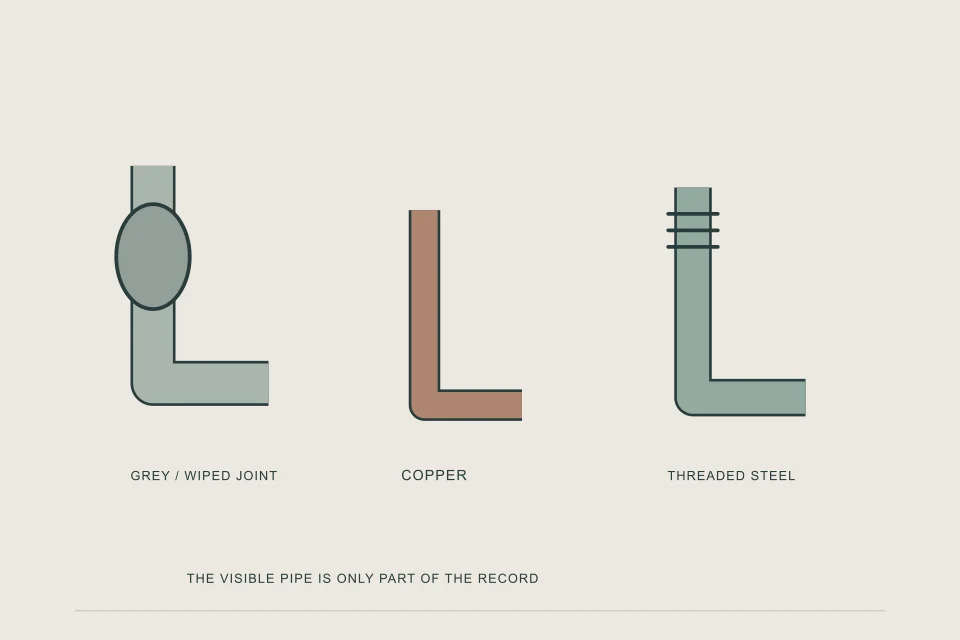
| Look at the entry | Dull grey, soft-looking metal | +1 |
| Scratch test | Shiny silver shows | +2 |
| Magnet | Does not stick, on a grey or silver-scratching pipe | +1 |
| Joint | Rounded, bulb-shaped swelling | +1 |
| Galvanized signs | Magnet sticks, threads or rust | −1 |
| Copper signs | Penny-coloured, or scratch shows copper | −2 |
| Plastic signs | Plastic pipe or fitting | −2 |
| Utility record | Shows lead | +3 |
| Shows no lead on its side | −1 | |
| Utility already replaced its side | 0, with a note | |
| Water test | At or above 5 µg/L | +2 |
| Below 5 µg/L | 0, with a note |
Copper and plastic count against lead only once each, however many of their signs you tick, and all pipe signs are summed before the verdict. A copper look combined with a silver scratch, which is contradictory, simply nets out, which is the tool's way of telling you to look again.
03 /How does it use my city?
Lead stopped being used for services at different times across Canada, and each utility describes its own era. The tool stores the statement each city publishes and compares your build-year band with it. Toronto, Hamilton, Guelph and Winnipeg point to houses built before the mid-1950s; Ottawa to the 1950s, with homes after 1958 at little or no risk; London to houses up to 1952; Regina, Halifax and Edmonton to before 1960; Saskatoon to before 1950; Montréal screens pre-1970 buildings of eight dwellings or fewer; Québec City's program covers buildings before 1980; Calgary says lead services were used mainly between 1939 and 1947. Anywhere else, the tool uses Health Canada's national marker: the plumbing code allowed lead pipe until 1975.
Calgary is handled differently because its era has a start as well as an end. A 1940s house there gets the full two points and a house from before 1940 gets one; a house from 1950 onward loses a point, and the result repeats the City's reminder that most services, including those of pre-1950 homes, are copper. Your city's program line in the result is a one-sentence summary; the full picture, with sources, is on the city programs page.
04 /How is the likelihood band decided?
The points are added and read against four bands: 4 or more is "likely", 2 or 3 is "possible", 0 or 1 is "uncertain", and below 0 is "unlikely". If you enter no pipe evidence, no record, no test and no build year, the tool says there is not enough to go on and asks you to look at the pipe. The thresholds are editorial: they are set so that a single strong sign, such as a silver scratch, together with a matching build year reaches "likely", while a build year alone never does.
- Likely
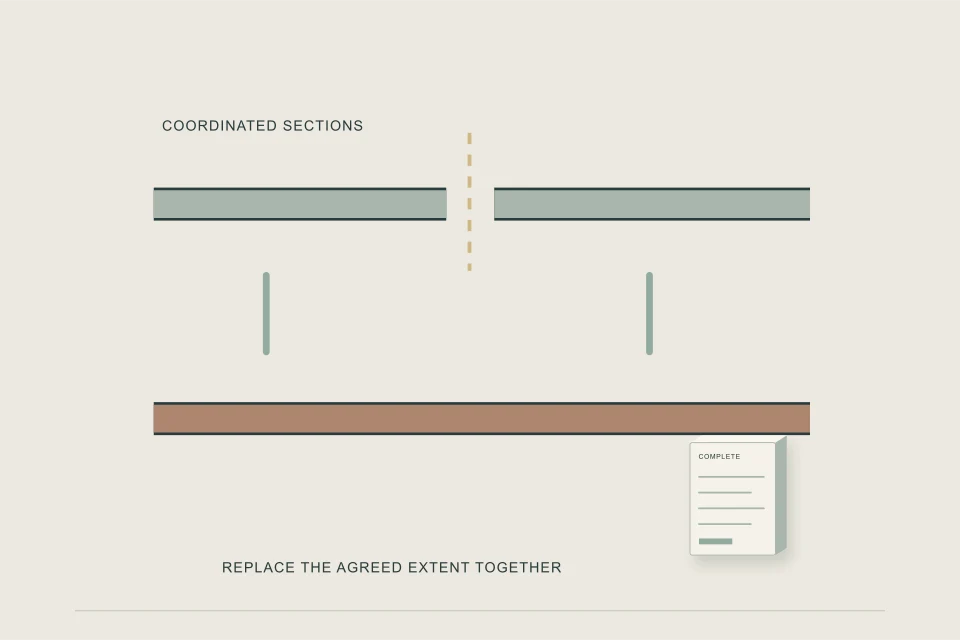
Filter or use bottled water now, test, and plan a full replacement of both sides with your utility's program.
- Possible
Filter and test, and confirm the material with the utility or a look at the pipe.
- Uncertain
Collect the missing evidence the result names; the pipe at the entry is the fastest.
- Unlikely
No lead signs from what you entered; lead solder in older copper plumbing can still add lead, so a test is still worthwhile in older homes.
05 /What notes and next steps does it add?
Several notes are triggered by particular answers, because they change what you should do even when the score does not move much.
- Galvanized at the entry: Health Canada says galvanized portions of a service should be replaced along with lead, and the City of Calgary notes galvanized pipe can accumulate lead released by an old lead service upstream. See galvanized water lines.
- Copper or plastic inside: what you can see is only the last metre; a past repair may have joined new pipe to an older buried service at the wall.
- Utility side already replaced: your side may still be lead, and Health Canada says particles can detach from remaining lead pipe for two to three months after that kind of disturbance.
- Built in 1989 or earlier: Health Canada says the plumbing code allowed lead in solder until 1986, a separate source inside the house.
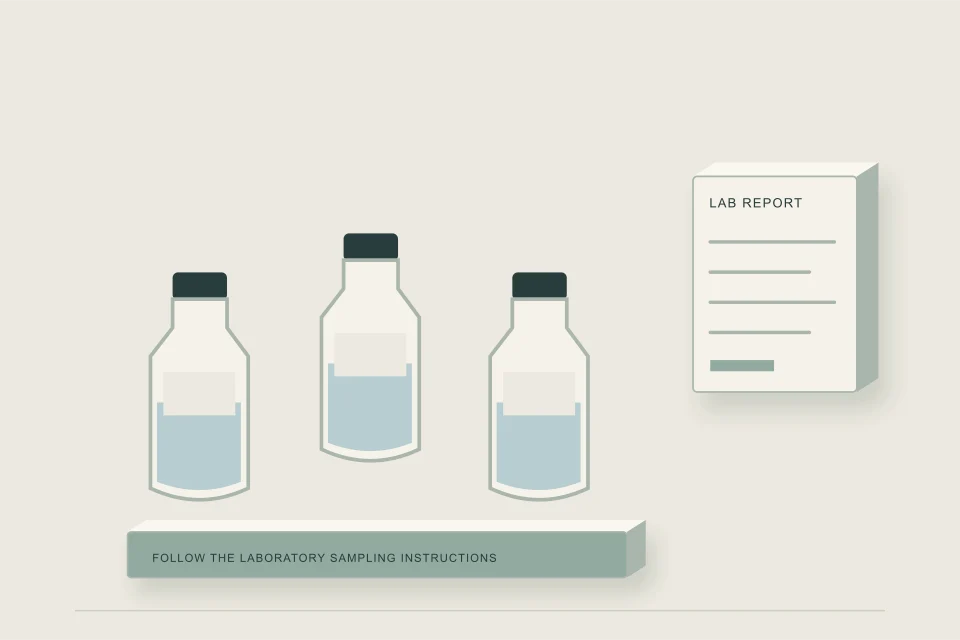
Next steps always include testing through your utility or an accredited laboratory. Unless the result is "unlikely", they also include Health Canada's interim advice: after water has sat for a few hours, run the cold tap until it is cold, about one minute, and use only cold water for drinking, cooking and infant formula; and use a filter certified to the NSF standard for lead reduction. The testing guide explains the sampling methods, and the lead service line guide explains why lead matters most for children and during pregnancy.
06 /What are the limits of this check?
The biggest limit is that it cannot see underground. A service can change material at the property line, at an old repair, or at the foundation wall, and a copper riser inside can hide a lead line outside. The utility's record is often the only view of the public side; for the private side, a contractor can expose the line at the curb stop or at the wall during a quote visit.
- The scratch test only works on the bare pipe. Paint, tape or insulation hide the metal; scratch lightly and never cut or file a pipe.
- A magnet that does not stick rules out steel, not copper; read it together with the colour and the scratch.
- Build-year bands are broad. A house built on an older street may have been connected to an older main.
- The tool never overrides a laboratory result. A result above the guideline is a reason to act regardless of the pipe.
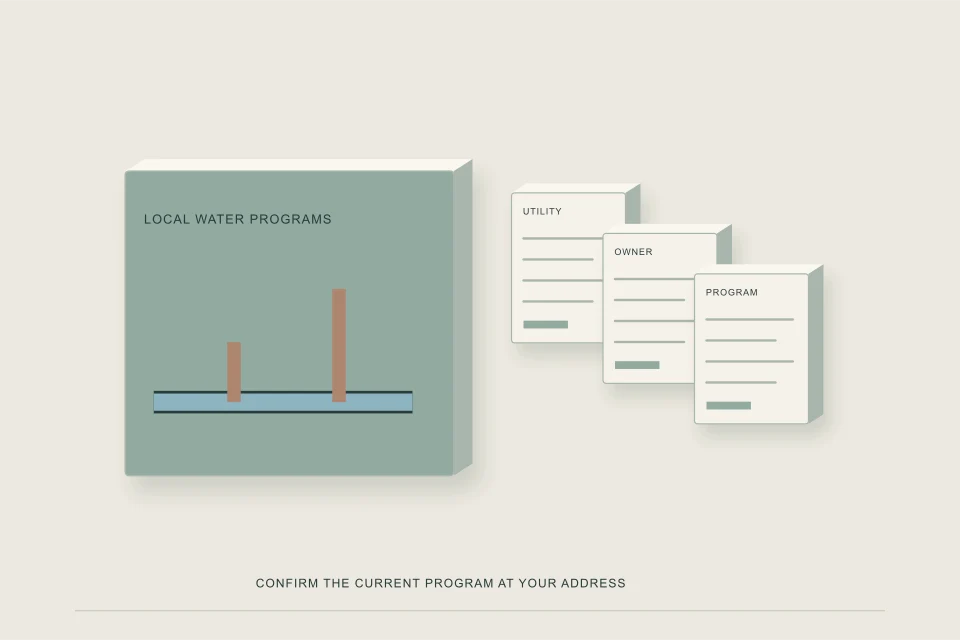
- Programs, amounts and deadlines change; the result tells you where to confirm them.
When you know the answer, the replacement guide explains full versus partial replacement, and the cost page sets out published figures. To get quotes for a replacement, send the details with a photo of the pipe at the meter.
FAQQuestions people ask
Can a magnet tell me if my water pipe is lead?
Only partly. A magnet sticks to galvanized steel, so if it sticks the pipe at that point is not lead. If it does not stick, the pipe could be lead or copper; the scratch colour tells them apart.
Why does the check ask what year my house was built?
Because each city stopped using lead at a different time. The tool compares your build year with the era your own city describes, or with the national 1975 marker elsewhere.
If my lead test is low, can I ignore a grey pipe?
No. Lead levels change with how long water sits in the pipe and with disturbance, so a single low result does not clear a lead service line.
Does this tool tell me who pays for the replacement?
It summarises your city's program in one line and links to the full city page, which covers ownership, grants and loans as each city publishes them.
Is my information sent anywhere?
No. The check runs in your browser and nothing you enter is stored or sent.
NETWORKGo deeper across the HAUSE Sewer network
Root Risk Calculator
Root Risk Calculator: enter tree species, distance to the sewer line, pipe material, age and root history to get a risk band, the reasons and next steps.
SewerJetting.caIs hydro jetting worth it? Benefits, how long it lasts and when it is an upsell
Is hydro jetting worth it? The real benefits, how long a jetted line stays clear by cause, why it costs more than snaking, and signs it is being oversold.
SewerInspector.caHow long a sewer scope takes, from booking to the report
How long a sewer scope inspection takes: typical time on site, what adds time, how far ahead to book, and when to expect the video and the written report.