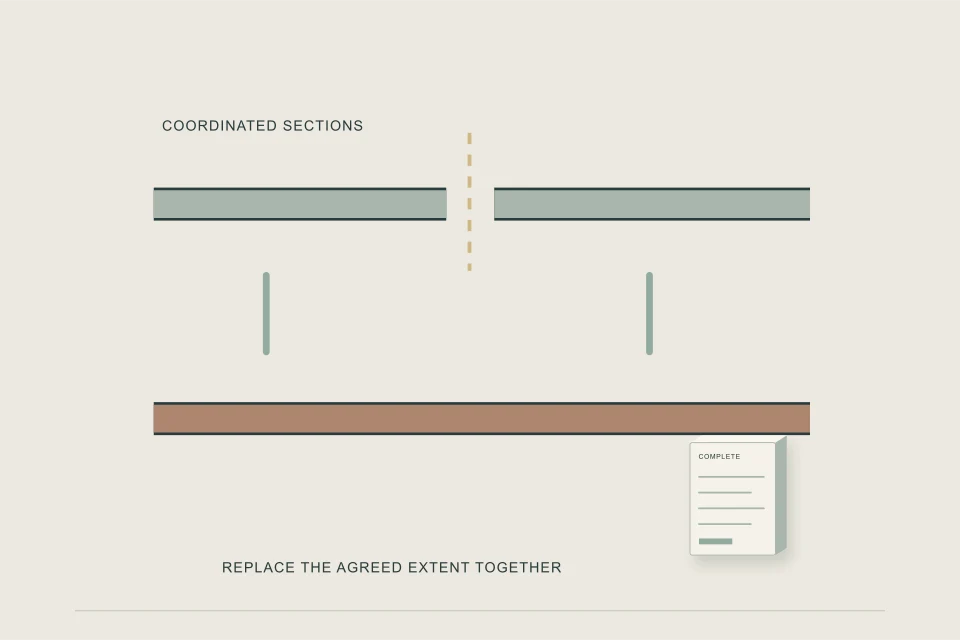
Lead service line replacement removes the lead pipe between the water main and the house and installs new pipe on both the public and private sides, ideally at the same time. Health Canada says partial replacements are generally not recommended, because lead left in place can keep shedding particles. Cities coordinate the two sides in different ways, so check your program before booking; then flush thoroughly and test afterwards.
- Full replacement means no lead from the main to the house; partial replacement leaves one side in the ground.
- Health Canada's guidance says any galvanized portion of the service should be replaced along with the lead.
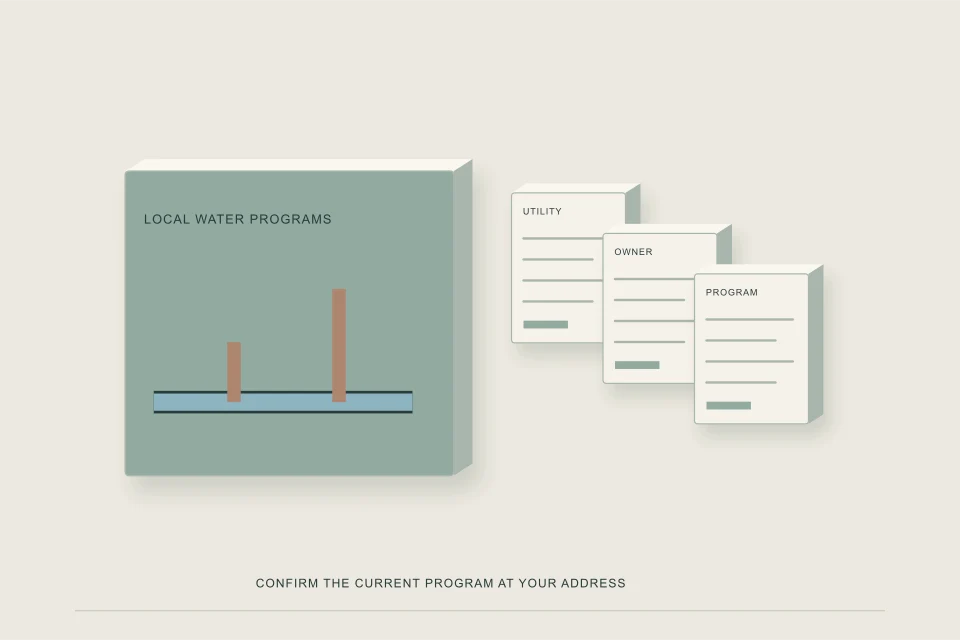
- Cities use four patterns: the utility does both, the owner goes first, the city waits for the owner, or replacement is mandatory.
- Several programs require approval, a permit or an inspection before or during the work to qualify for help.
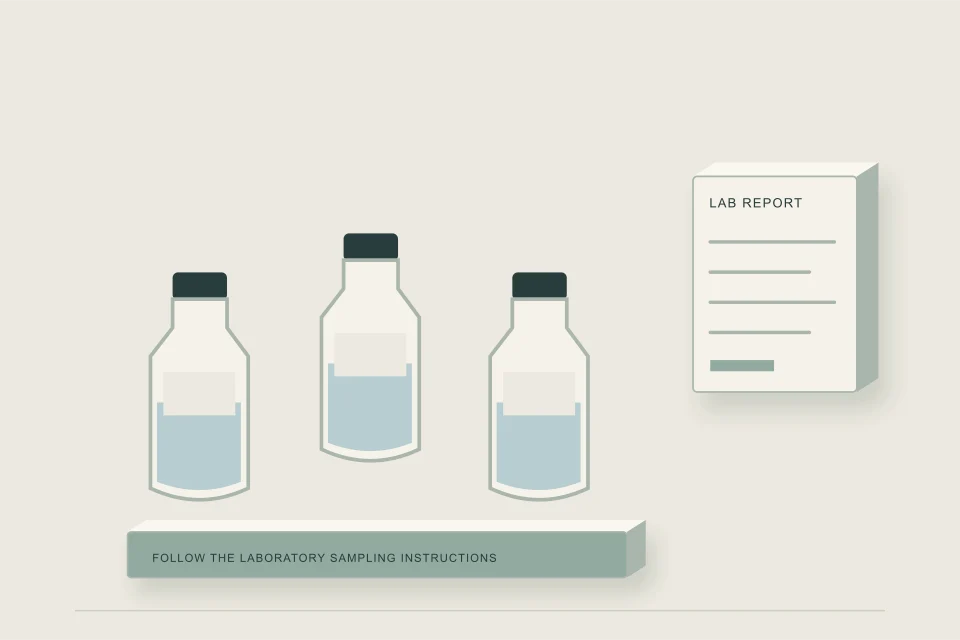
- After replacement, flush extensively and keep testing until lead levels settle.
01 /Why does full replacement matter so much?
Because cutting a lead pipe disturbs it, and whatever lead is left behind can keep releasing particles. Health Canada's guidance on controlling lead corrosion says partial lead service line replacements are generally not recommended. Its public advice explains the mechanism: if only part of a lead line is replaced, for example only the municipal part, some lead particles may detach from the remaining lead pipe for two to three months because of the disruption. EPCOR says the same thing from the utility's side: replacing only one section of a lead service line can temporarily increase lead levels.
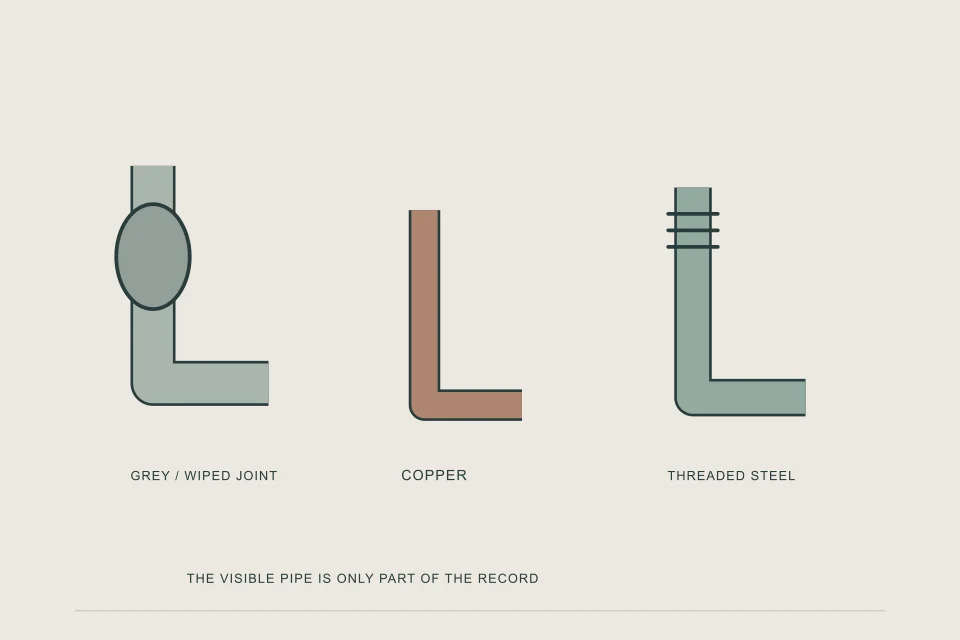
A partial replacement also creates a joint between new pipe and old lead. Joining two different metals in water can speed up corrosion at the joint, which is one more reason programs aim to remove both sides together. Health Canada adds that any galvanized steel in the same service should be replaced as well, because galvanized pipe can hold lead released upstream; the City of Calgary says the same about galvanized piping downstream of old lead lines.
02 /How do cities coordinate the two sides?
Every Canadian program we checked is built to avoid a lasting partial replacement, but they get there in four different ways. Knowing which one your city uses tells you who books the work, who pays, and in what order.
| Pattern | How it works | Examples |
|---|---|---|
| Utility does both sides | The utility replaces public and private together, funding some or all of the private side | Halifax (no owner cost up to $20,000), Saskatoon (owner pays 40%), Toronto route one (owner pays private side) |
| Owner goes first | The owner replaces the private side under permit; the city then replaces its side | Toronto route two, Hamilton (12–16 weeks), London, Regina (free city side after), Winnipeg, Guelph |
| City waits for the owner | The city holds its replacement until the owner is ready, then both are done together | Calgary |
| Mandatory replacement | The owner must replace the private side, often when the city replaces its side on the street | Montréal, Québec City (within 4 years), Regina (with city work) |
The "owner goes first" pattern leaves a short partial period, between the owner's replacement and the city's. Hamilton gives 12 to 16 weeks, and Toronto aims for 12 weeks after an application. Filter drinking water through that gap. The rules, grants and contacts for each city are on the city programs page.
03 /What do I need to do before the work starts?
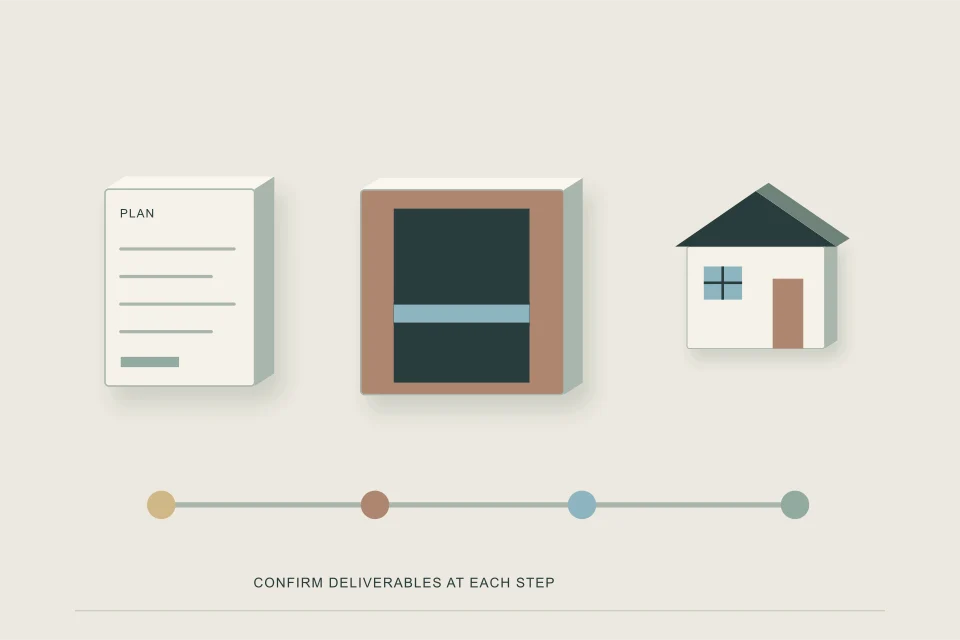
More than people expect, because the paperwork decides whether you get help. Guelph requires grant approval and a building permit before work starts, and work must start within 90 days of approval. London's loan does not reimburse lines already replaced. Halifax Water must inspect a private replacement before backfill for the rebate. Regina requires a three-way agreement and, with City financing, a contractor from its roster and at least three quotes. Winnipeg requires a City-licensed water contractor and a water connection service permit. Hamilton requires a permit, a properly installed meter and removal of any shared-service interconnection.
- Confirm lead
Utility record, a look at the pipe, and a water test. See how to identify a lead water pipe.
- Read your program
Order of work, eligibility, approvals, contractor rules and deadlines.
- Get quotes
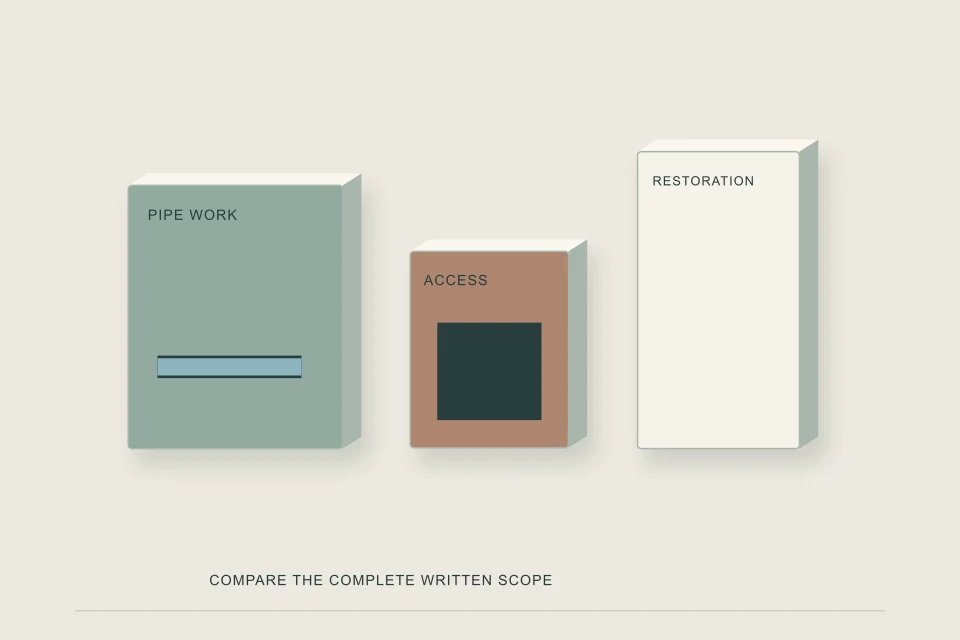
At least two or three, each naming the method, pipe, length, depth, entry point and restoration.
- Apply and permit
Apply for help before work where required, and obtain the permit.
- Book both sides
Agree dates with the utility so the partial period is as short as possible, or zero.
04 /What happens on replacement day?
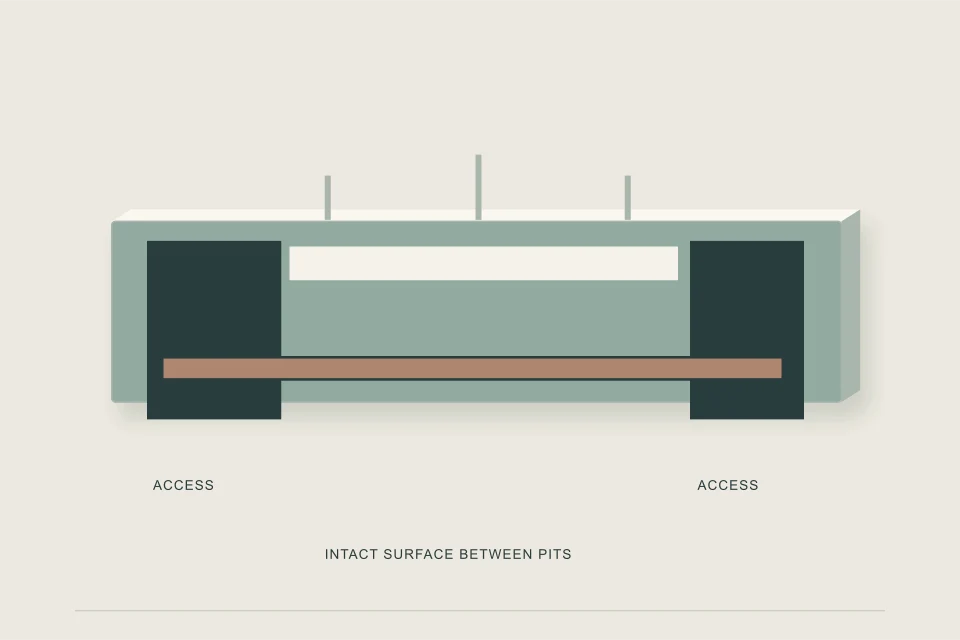
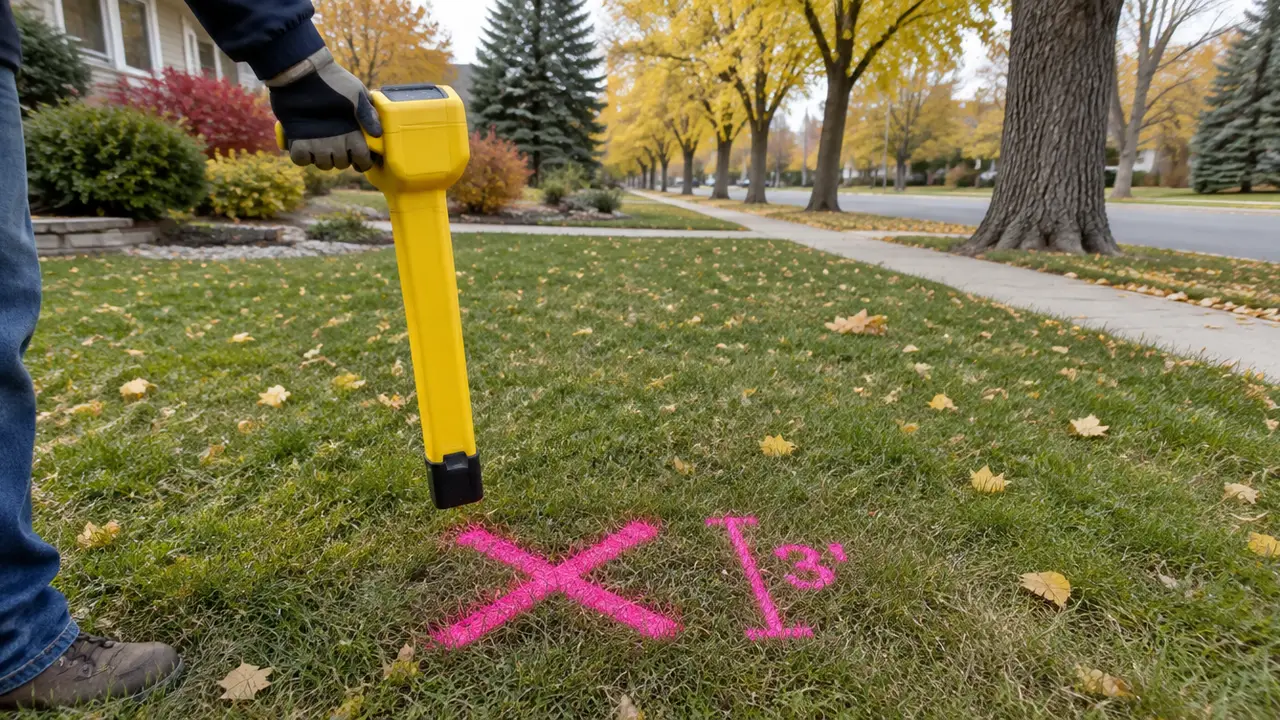
For a typical house, the work takes place from a pit at or near the curb stop and a pit or opening at the foundation, with the old line either dug up in a trench or replaced trenchlessly between the two. The water is off for part of the day. Public utilities are located beforehand through the provincial one-call service, and the private line may need its own locate.
- Locates marked, the curb stop confirmed working, and the work area set up.
- The utility or its contractor shuts the water off at the curb stop.
- The old lead is cut out; the new pipe, usually type K copper or polyethylene, is laid in a trench or pulled, split or bored into place.
- The new pipe is connected at the curb stop, brought through the foundation and fitted with a new main shut-off valve.
- The line is tested for leaks and flushed before the water is used.
- If a metal service was replaced with plastic, an electrician confirms the house's grounding.
- Pits are backfilled and restored as the contract or program says.
The full sequence, including permits and restoration, is in the replacement process guide. Methods are compared in trenchless water line replacement.
05 /What should I do after a lead service is replaced?
Flush, keep filtering for a while, and test. Health Canada's guidance says that when lead service lines are replaced, extensive flushing of the cold water should be encouraged, and weekly or biweekly sampling at the tap should continue until lead levels stabilise. Follow any flushing instructions your utility gives; they may be specific about which taps and for how long.
- Flush the cold taps as instructed, starting nearest the entry.
- Clean aerators, where loosened particles collect.
- Keep using a certified filter for drinking until test results settle, and longer if only one side was done.
- Test on the schedule your utility or program sets; Calgary samples within a month and again at three to six months.
- Keep the paperwork: permit, inspection, invoice and test results, for grants, loans and a future sale.
Remember that the service is not the only lead source in older homes. Health Canada says the plumbing code allowed lead solder until 1986, and brass fittings can contribute. The testing guide explains how sequential samples separate the sources.
06 /How much will it cost me?
It depends far more on your city than on anything else. In Halifax the owner may pay nothing up to the funding limit; in Saskatoon the owner pays 40 percent; in Montréal the City bills an average of $1,200 to $1,400 per metre of private pipe, payable over up to 15 years; in Toronto the owner pays the private side, which a 2020 council report put at typically $2,000 to $3,000. The cost page sets out the drivers and the help in one place.
For a first read on your home and your city, run the Lead Water Line Check. For quotes on the private side, send your details.
FAQQuestions people ask
Why is partial lead service line replacement not recommended?
Because disturbed lead left in place can shed particles; Health Canada says this may continue for two to three months, and its corrosion guidance says partial replacements are generally not recommended.
Do I replace my side first or does the city go first?
It depends on the city. Toronto, Hamilton, London and Regina let the owner go first; Calgary waits for the owner; Halifax and Saskatoon do both sides together.
How long is the water off for a lead service replacement?
Usually part of a day for a house service, while the line is cut, replaced and connected. Ask the contractor for the planned shut-off window.
Do I still need a filter after the lead line is replaced?
Keep using one until follow-up tests show lead has settled, and longer if only one side has been replaced.
Should galvanized pipe be replaced along with lead?
Yes. Health Canada's guidance says any portion of the service containing galvanized iron should also be replaced.
Can I replace my lead line before the city is ready?
In many cities, yes: Toronto, Hamilton, London, Regina and Winnipeg let owners go first and then replace their side. Calgary waits for the owner to be ready. Check your program first.
NETWORKGo deeper across the HAUSE Sewer network
Backwater valve installation cost and municipal subsidies
Backwater valve installation cost in Canada for 2026: CAD ranges for unfinished and finished basements, line items, subsidy program patterns and insurance angles.
SewerInspector.caLateral defect map: plot your sewer inspection findings
Turn a sewer camera report into a strip map: enter footage-counter distances, defect types and depths to see where each finding sits and how urgent it is.
SewerJetting.caHow to use a drain jetter: a safety-first walkthrough for rental units
How to use a drain jetter or rented sewer jetter: setup, nozzle choice, feeding and pulling hose, and the stop rules that help prevent injection injuries.