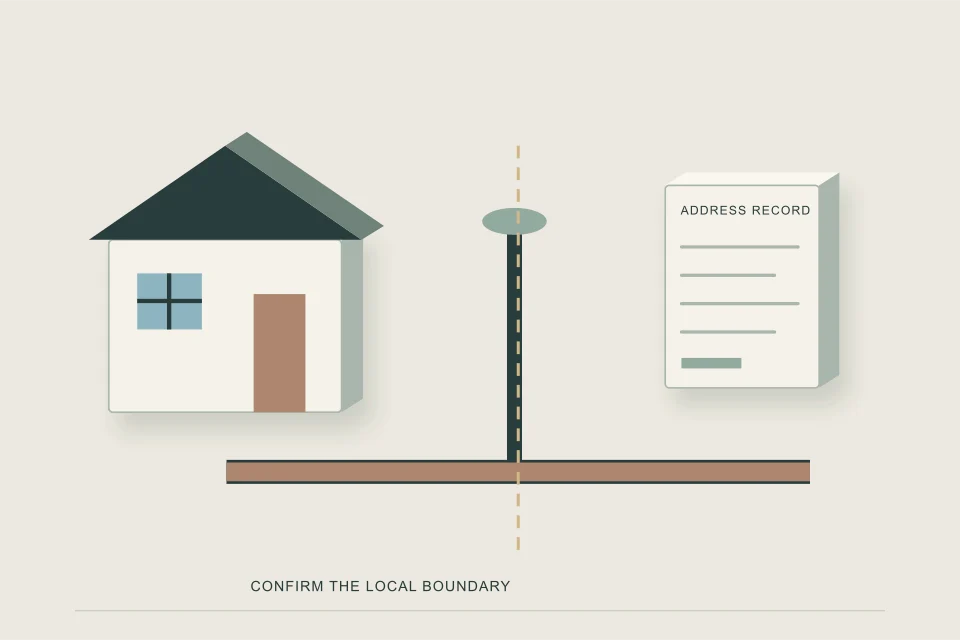
In Calgary the City owns the water service from the main to the property line and the homeowner owns it from the property line to the house. Lead services were used mainly between 1939 and 1947, and most services, including pre-1950 homes, are copper. The City is accelerating removal of remaining lead lines but waits to replace its side until the homeowner is ready to replace theirs (as checked September 2026).
- Ownership changes at the property line; the service valve near it belongs to the City even when it sits on private land.
- Calgary says lead services date mainly from 1939–1947, when copper was scarce during the Second World War.
- The City replaces public and private lead together, and follows up with water sampling within a month and again at three to six months.
- Calgary's infill rules call for 8.5 ft of earth cover over water services and a minimum 1 in (25 mm) service.
- Free tap water sampling runs May 1 to September 30 through 311, and a rebate is offered for certified filters.
01 /Who owns the water service in Calgary?
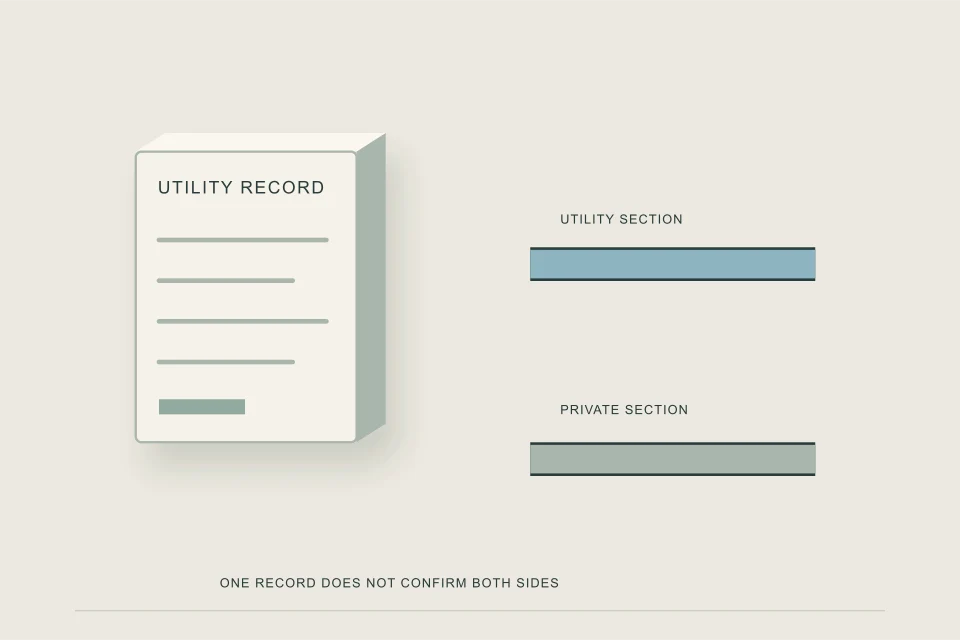
The City of Calgary owns and maintains the pipe from the water main to the property line, and the homeowner owns and maintains it from the property line to the house. The City adds two details that matter in practice. The service valve, usually at or near the property line, is owned by the City even though it is not always on the City's side. And the property owner pays for all repairs to the service on private property, except the water meter.
The City also notes that in most cases the property line ends a few metres from the edge of the curb or sidewalk, so the owner's part is often longer than people assume. The public side's material is published in the City's Public Water Service Lines open dataset, which lists what the City has on record for its portion at each address.
02 /Which Calgary homes have lead service lines?
Calgary's lead era is short. The City says lead service connections were used primarily between 1939 and 1947, during the Second World War, when copper was not readily available, and that the majority of Calgary water service pipes, including those of homes built before 1950, are copper. A 1940s house is the one to check first. The identification guide shows the checks, and the Lead Water Line Check weighs Calgary's era in its score.
Galvanized steel is the more common old material. The City says galvanized waterline piping was commonly installed in homes before 1960, corrodes from the inside out and reduces pressure and flow, and has been found to accumulate lead released from old lead service lines, then release it back into the water as it corrodes. The galvanized guide covers that case.
03 /How does Calgary replace lead service lines?
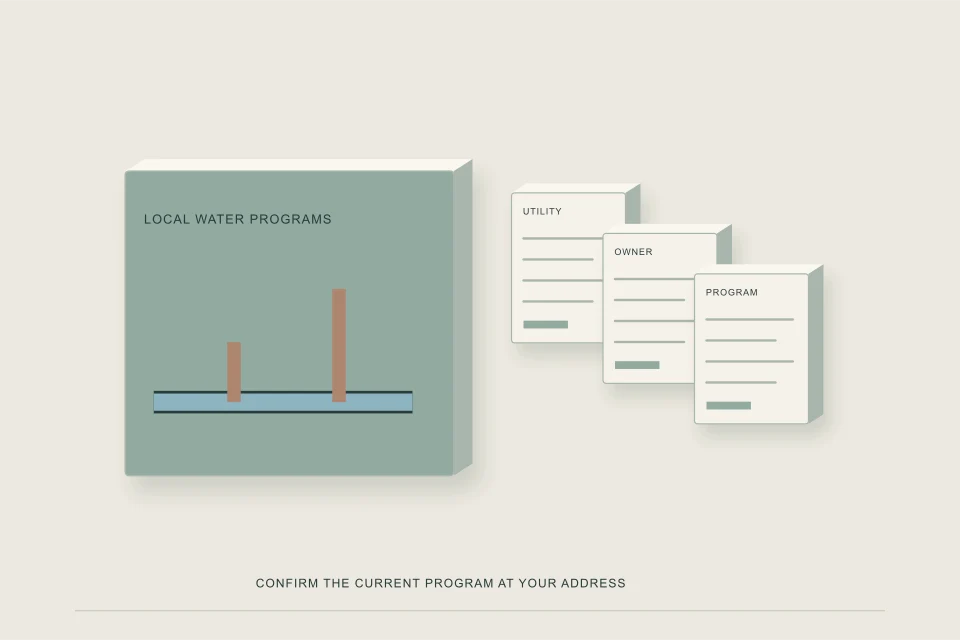
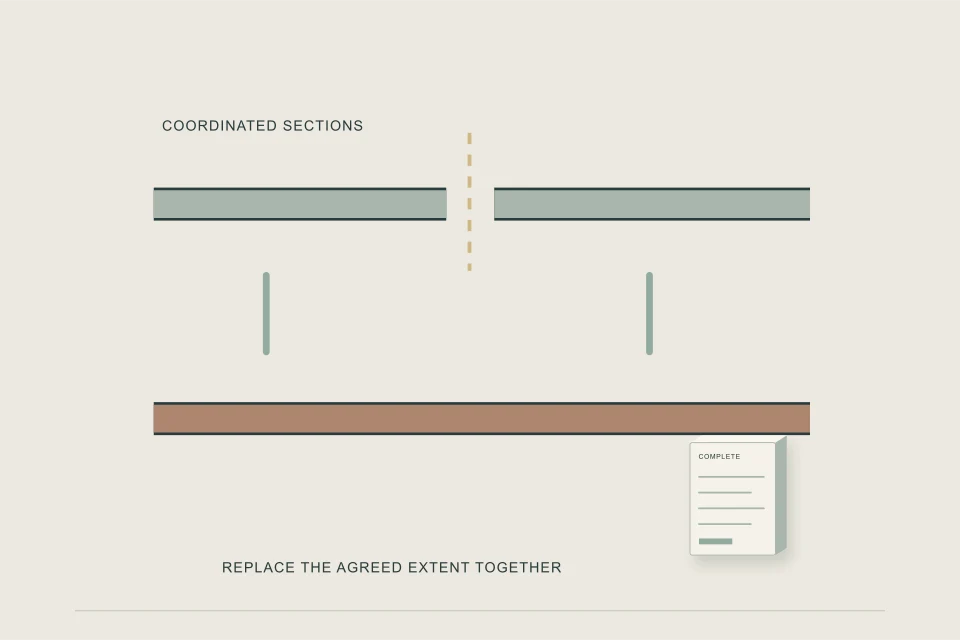
The City describes lead removal as a shared responsibility and says it is best to replace the public and private lines at the same time, because a partial replacement may increase the amount of lead in the water. It therefore waits to replace the public line until the homeowner is prepared to replace the private line. It also says its plan to accelerate the removal of all remaining public and private lead service lines is under way; the page did not state a target date when checked.
- Confirm
Call 311, check the open data record for the public side, and look at the pipe at your meter.
- Plan the private side
Get written quotes and confirm the permit the work needs with the City before booking; the contractor usually applies.
- Coordinate
Arrange with the City so both sides are replaced together.
- Follow-up sampling
The City samples within one month of replacing the public service pipe and again after three to six months.
The cost page sets out what drives the private-side price, and the replacement process guide covers locates, permits and the day of the work.
04 /How deep is a Calgary water service?
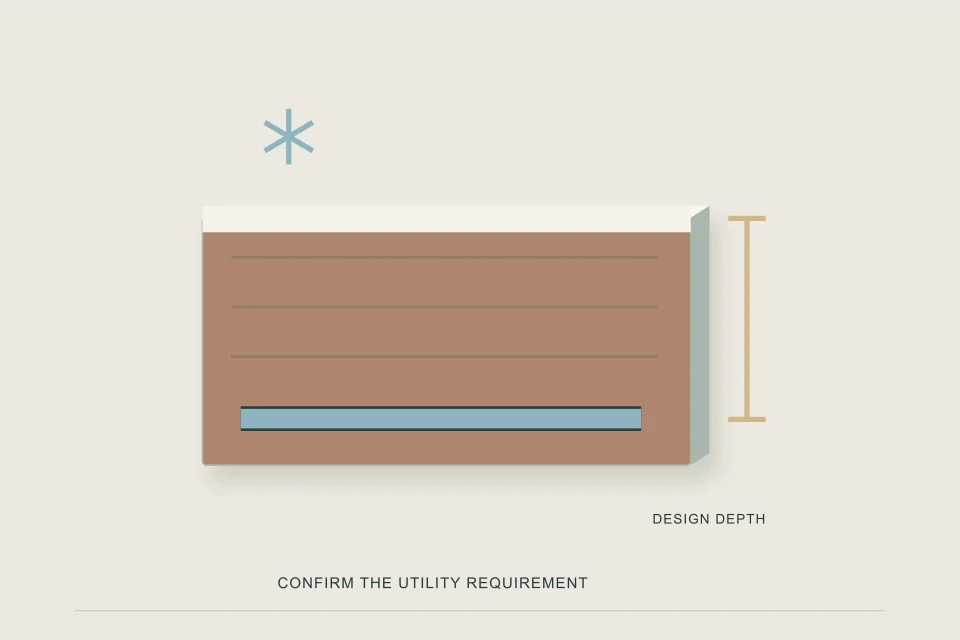
Deep. Calgary's infill plumbing rules say trench depth and earth cover must meet the City requirement for frost protection of 8.5 feet for water services, about 2.59 metres, and 4.5 feet for sanitary services. The same page sets a minimum water service size of 1 inch (25 mm). A service that has to rise over an obstacle, or that runs under a cleared driveway where frost goes deeper, is where freezing starts. The frost depth guide explains.
That depth is also why trenchless replacement is attractive here: a 2.6-metre trench across a front yard needs shoring and moves a lot of soil, while pits at each end keep the dig small. See trenchless water line replacement.
05 /What about testing and water pressure?
Calgary runs a free annual tap water sampling program. Contact 311 and ask to register in the Tap Water Sampling Program; sampling runs from May 1 to September 30 and an appointment takes about 45 minutes. The City also offers a rebate for an NSF 53 certified kitchen-tap or built-in filter, an NSF 58 reverse osmosis system or an NSF 62 distillation system; the page did not list an amount when checked.
On pressure, the City says homes built after 1990 in areas over 80 psi have a pressure-reducing valve, and that a PRV over five years old may need service. Calgary spans an elevation range of almost 300 metres, managed with pressure zones, and valves are installed where pressure begins to exceed 100 psi. Its troubleshooting list starts with the aerator, the main shut-off and fixture valves. The Low Water Pressure Diagnosis uses those steps. For quotes on a Calgary service, send your details.
FAQQuestions people ask
When were lead water lines used in Calgary?
Mainly between 1939 and 1947, when copper was scarce during the Second World War. Most Calgary services, including pre-1950 homes, are copper.
Will Calgary replace its half of my lead service line?
Yes, when you are ready to replace your half. The City waits so both sides are done together, avoiding a partial replacement.
How deep must a water service be in Calgary?
The infill rules require 8.5 feet of earth cover, about 2.59 metres, over water services for frost protection.
Does Calgary test tap water for lead for free?
Yes, through the annual Tap Water Sampling Program, May 1 to September 30. Register through 311.