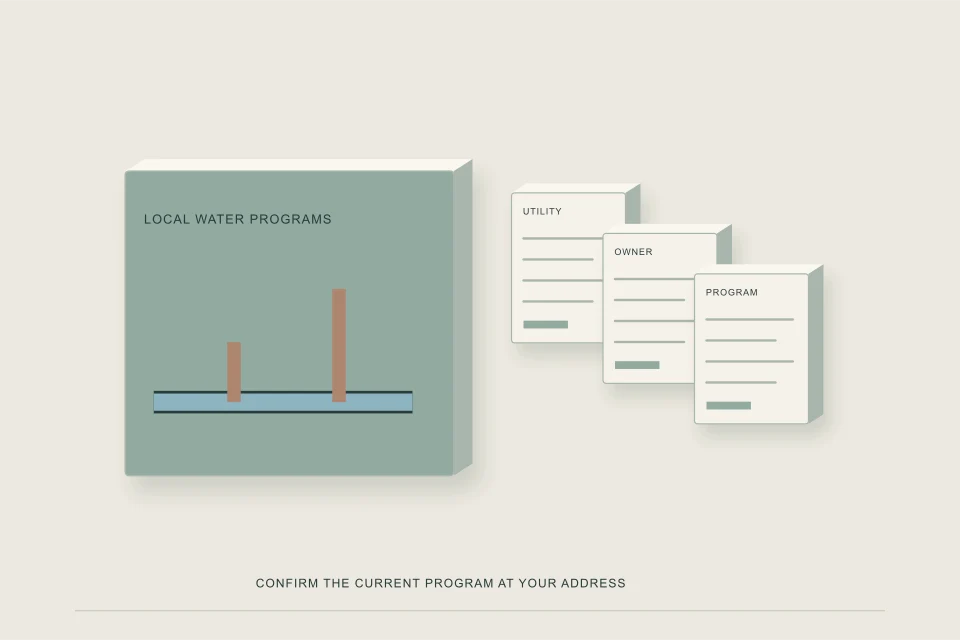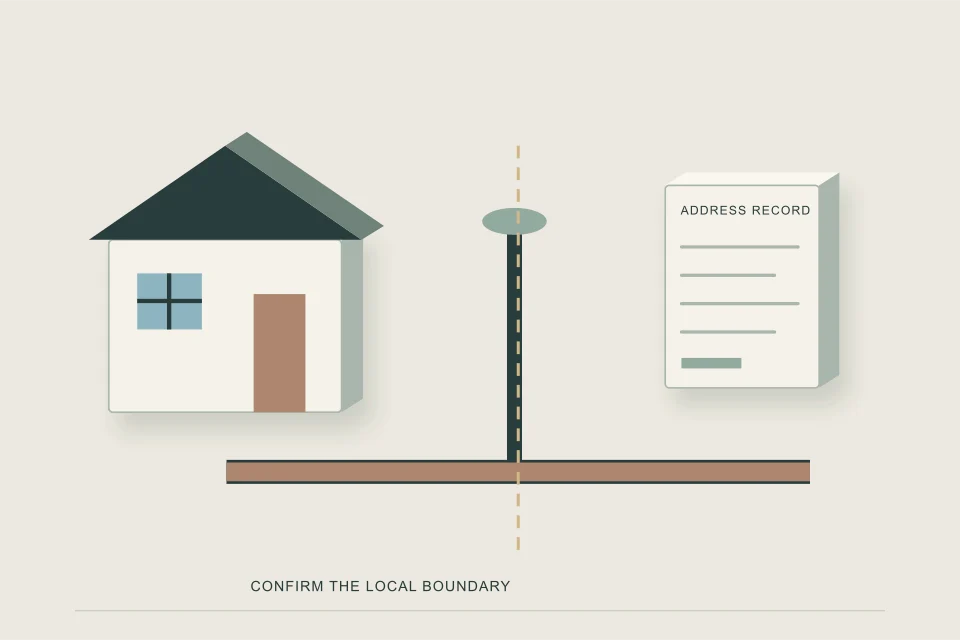
In Toronto the City owns the water service from the main to the property line and the homeowner owns it from the property line into the house. If you commit to replacing your private lead pipe, the Priority Lead Water Service Replacement Program lets you ask the City to replace its side on a priority basis. The private side is paid by the owner; there is no City grant or loan for it (as checked September 2026).
- Toronto splits ownership at the property line: City side to the property line, owner side from there into the home.
- The Priority program replaces the City side, which the City aims to do within 12 weeks, once the owner commits to the private side.
- Toronto's 2020 council report put typical private-side replacements at about $2,000 to $3,000, with outliers either way.
- Water testing for lead is free through Toronto Water, and some households qualify for a faucet filter rebate.
- Houses built before the mid-1950s are the ones the City says may have a lead service.
01 /Who owns the water service in Toronto?
The City of Toronto says the part it owns runs from the watermain on the street to the property line, and the part the homeowner owns runs from the property line into the home. That split decides who pays for which length of pipe and who books the work. It also means a house can have a copper City side and a lead private side, or the reverse, so checking one end does not answer the question for the other.
According to the City, a house built before the mid-1950s may have a lead water service pipe. Toronto Water's 2025 annual lead mitigation report counts about 437,000 residential connections and estimates roughly 13,664 City-side lead services were left at the end of 2025, down from about 38,000 in 2014 and 65,000 in 2007. Those figures describe the City side only; the City does not publish a count of private lead pipe. You can start by identifying the pipe at your meter.
02 /How does the Priority Lead Water Service Replacement Program work?
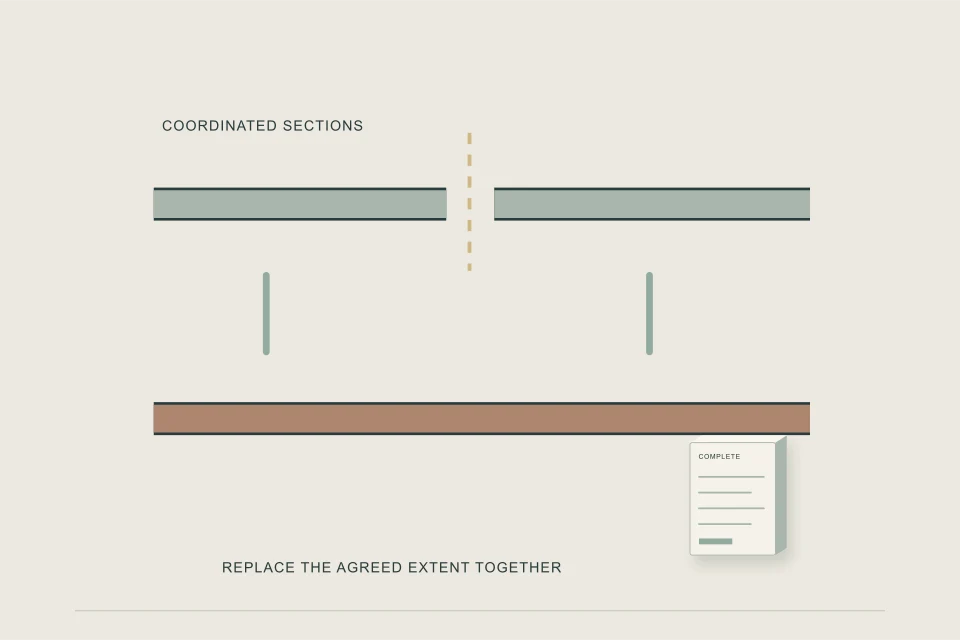
The program is built around one condition: the owner commits to replacing the private portion. Residents who do can apply to have the City replace its side on a priority basis, rather than waiting for the street to come up in a capital project. The City describes two routes, and both end with no lead left between the main and the house.
- Route one: the City's contractor does both sides
The owner arranges to have the City's contractor replace the private side at the same visit as the City side, and pays for the private portion.
- Route two: replace your side first, then apply
The owner hires a contractor or licensed plumber for the private side, then applies with proof: an invoice from the contractor or plumber, or a home inspector's report.
- Processing
The City says applications may take up to two weeks to process.
- City-side replacement
The City aims to replace its portion within 12 weeks.
- Restoration
The City says permanent restoration of its work is made within 18 to 24 months, so a temporary patch on the boulevard or sidewalk is normal in the meantime.
Toronto states plainly that the cost of replacing the private side is the homeowner's responsibility. Route two gives you control over the contractor and the date, and it lets you compare quotes; route one keeps both sides in one excavation. Either way, you avoid the partial replacement problem Health Canada warns about.
03 /What if my street is already scheduled for work?
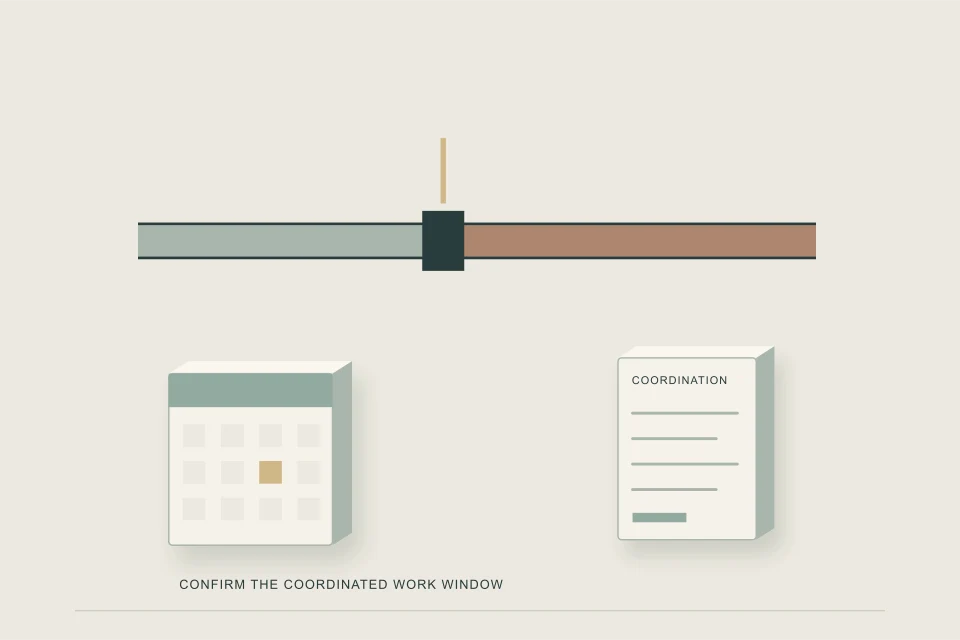
The Capital Water Service Replacement Program replaces City-side pipe during planned capital construction; the City says it replaces approximately 3,000 substandard water service pipes a year this way. When the City side is replaced in a capital project, the City strongly recommends that owners of homes built before the mid-1950s replace the private portion too. If you get a construction notice for your street, that is the moment to price your side, because a trench or pit on the boulevard is already planned.
Toronto Water's annual report also describes emergency replacement of the City side when a service is broken or when flow falls below 7 litres per minute. If your whole house has very weak flow, the low water pressure diagnosis walks through the checks before you call 311, including how to measure flow at a tap.
04 /What does private-side replacement cost in Toronto?
The only Toronto figure published by the City is in a June 2020 council report, which says private-side lead service replacements typically cost in the range of $2,000 to $3,000, with outliers on both the lower and higher side. That figure is six years old, it describes a typical case rather than yours, and it does not include interior changes such as moving a meter or replacing a seized main shut-off.
Toronto does not offer a grant or loan for the private side. The 2025 annual report records that council studied loan and grant options between 2014 and 2020 without adopting one, and that the Toronto Renovates program may consider private-side lead replacement on a case-by-case basis under a 2017 decision. The network's planning ranges across cities are on the water line replacement cost page.
| What | Who qualifies | Amount |
|---|---|---|
| Priority City-side replacement | Owners committing to replace the private side | City side at the City's cost |
| Faucet filter rebate, lead City side | Child under six and/or pregnant person, single, duplex or triplex, household income under $50,000 | $100 per year |
| Faucet filter rebate, after City-side replacement | Same criteria, City side replaced in the past six months | $50, one time |
| Free faucet filters | Homes just after City-side replacement, homes where meter staff cut into a lead service, accepted Priority applicants | Filter certified to NSF/ANSI 53 |
| Lead testing | Any resident | Free sample analysis at an accredited lab |
05 /How do I get my water tested for lead in Toronto?
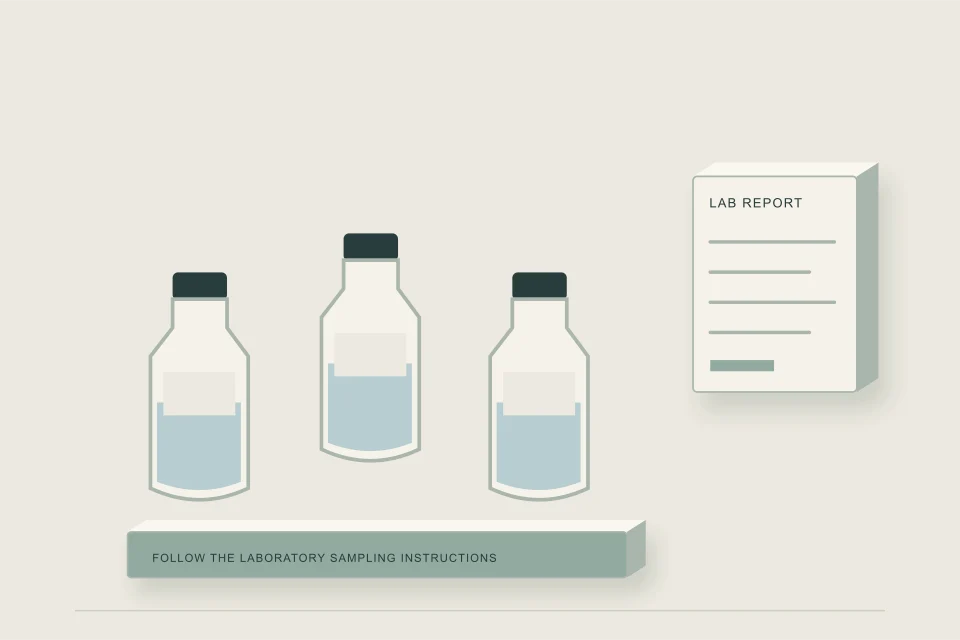
Toronto Water says residents can submit a drinking water sample to be tested for lead free of charge at one of its accredited labs. Collect the sample exactly as the kit instructions describe, because lead results depend on how long water sat in the pipe before sampling. Toronto has added phosphate to the water for corrosion control since December 2014, which lowers but does not remove the risk from a lead service. The lead testing guide explains how to read a result against Health Canada's guideline.
- Call 311 for service questions, program applications and test kits.
- Toronto Public Health (416-338-7600) for health questions, especially with young children or during pregnancy.
- Use a certified filter or bottled water for drinking and formula while a lead service is still in place.
06 /What should a Toronto homeowner do first?
- Look at the pipe where it enters the basement, before the meter, and run the checks in the Lead Water Line Check.
- Order the free lead test either way; it tells you about lead solder and fixtures too.
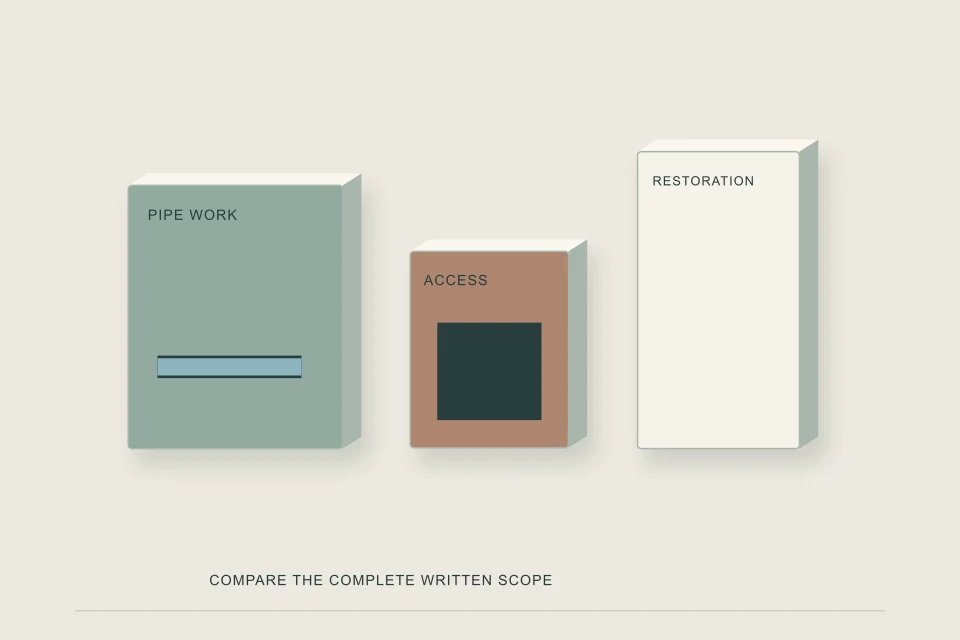
- If the private side is lead, get at least two written quotes that state the method, length, entry point and restoration.
- Choose a Priority route: the City's contractor for both sides, or your own contractor followed by an application with the invoice.
- Flush and filter after the work, following the City's instructions.
If you want quotes for the private side, send the details with a photo of the pipe at the meter.
FAQQuestions people ask
Does Toronto pay to replace the private part of a lead service?
No. The City replaces its side; the private portion is the owner's cost. No grant or loan was offered for it as checked September 2026.
How long does Toronto take to replace its side after I apply?
The City says applications take up to two weeks to process and it aims to replace the City-owned portion within 12 weeks.
Is lead testing free in Toronto?
Yes. Toronto Water tests a submitted drinking water sample for lead at no charge through an accredited lab.
Which Toronto homes may have a lead water service?
The City says houses built before the mid-1950s may have one. Newer homes on older streets can still have a lead City side in some cases, so check the pipe.