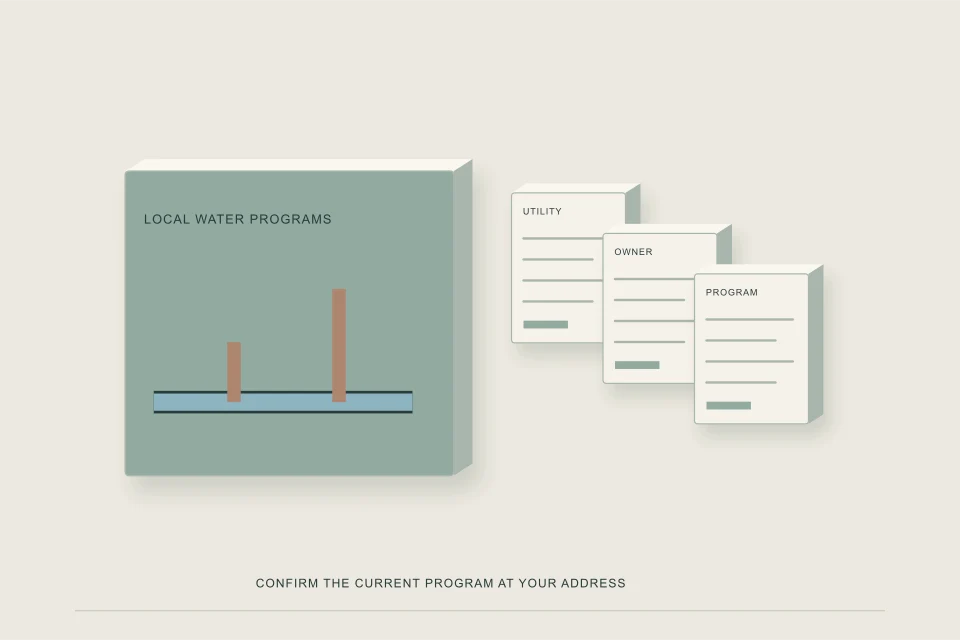
Québec City requires owners to replace a private lead water connection (branchement privé en plomb). When the City finds lead during its own work, it replaces the public connection immediately, provides a filter pitcher, and the owner must then replace the private part within four years at their own expense. A City grant covers 100 percent of eligible costs up to $2,500 per private connection for buildings built before 1980 (as checked September 2026).
- By-law R.V.Q. 2884, adopted July 6, 2020, makes replacing private lead connections mandatory.
- After the City replaces the public connection, the owner has at most four years to replace the private part.
- The grant pays 100 percent of eligible costs up to $2,500 per private connection, first come, first served.
- Eligible costs include excavation, backfill and landscaping restoration.
- Water sampling and analysis are paid by the City; results can take up to 60 working days.
01 /Which Québec City buildings are concerned?
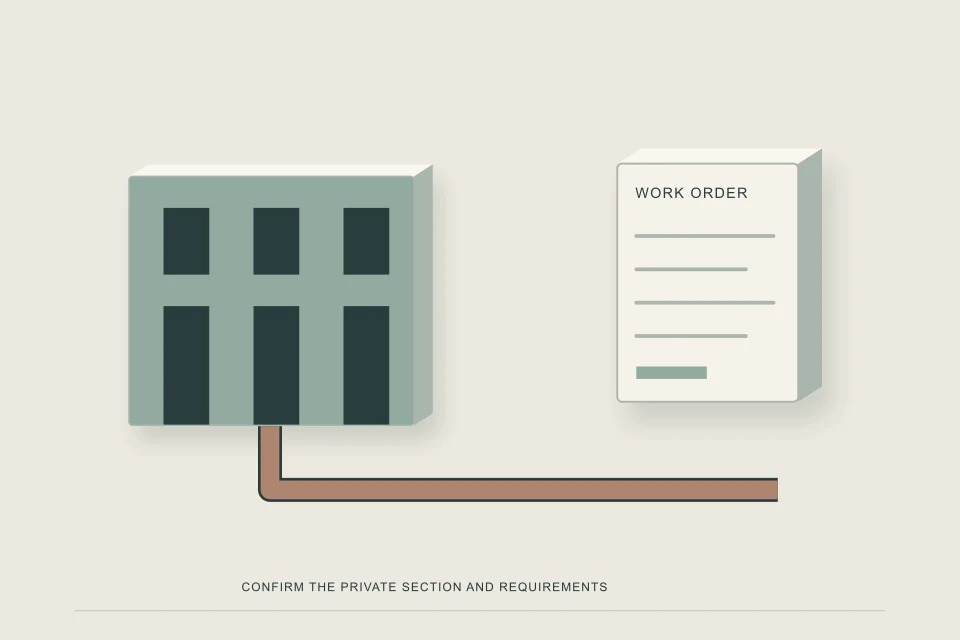
The City's lead program is aimed at buildings built before 1980. Its March 2026 action plan estimates about 2,500 private lead connections among roughly 80,000 pre-1980 buildings, so most older buildings do not have lead, but the ones that do are spread across the older housing stock. The City's pages describe a public connection and a private connection without stating the exact point where one becomes the other, so ask the City where the split sits for your address before pricing work.
You can look for the signs of lead yourself at the point where the pipe enters the building, before the first valve. The identification guide shows the scratch and magnet checks and explains why the pipe inside can differ from the buried one.
02 /What does the by-law require of owners?
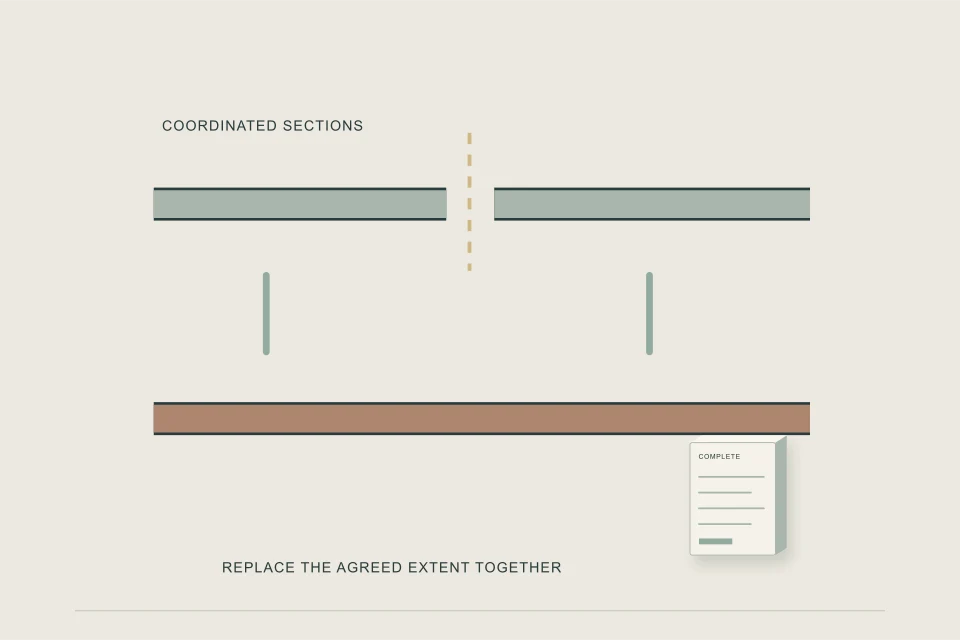
By-law R.V.Q. 2884, adopted July 6, 2020, makes the replacement of private lead connections mandatory. The sequence is set by the City's work: when crews find lead during City work, they replace the public connection immediately and give the household a filter pitcher certified to NSF 53. From then, the owner has a maximum of four years to replace the private part, and the City states that all work on the private part is at the owner's expense.
- Lead found
During City work on the street or through sampling.
- Public connection replaced
Right away, by the City, with a filter pitcher provided to the household.
- Owner's four-year window
The private part must be replaced within at most four years.
- Grant application
Apply for the City grant for eligible costs, subject to available funds.
In the meantime the building is in the partial-replacement situation Health Canada warns about: new public pipe joined to lead that remains. Keep using the filter for drinking and cooking until the private part is done, and do not wait out the full four years if there are young children or a pregnancy in the home. The lead replacement guide explains why.
03 /How much does the Québec City grant cover?
The grant for replacing private drinking water connections pays 100 percent of eligible costs, up to a maximum of $2,500 per private connection, for buildings built before 1980. Eligible costs include excavation, backfill and restoration of landscaping, which are often a large share of a small job. The grant is first come, first served and depends on available funds; the action plan projects a program budget of $50 million.
| Item | What the City says |
|---|---|
| Rule | Private lead connections must be replaced (R.V.Q. 2884, July 6, 2020) |
| Deadline after public replacement | At most four years |
| Grant | 100% of eligible costs, up to $2,500 per private connection |
| Eligible buildings | Built before 1980 |
| Testing | Sampling and analysis paid by the City; up to 60 working days for results |
| Filter | NSF 53 filter pitcher when lead is found during City work |
Compare the grant with help offered elsewhere in Canada on the cost page, and see the neighbouring approach in Montréal, where the City bills the private work per metre.
04 /How do I get tested and start the work?
The City says it pays for sampling and analysis, and results can take up to 60 working days. That delay is a reason to use the filter from the start rather than waiting for the result. Lead levels also vary with how long water has stood in the pipe, which the testing guide explains.
- Contact the City's housing service (Habitation@ville.quebec.qc.ca, 418 641-6186) to confirm your building's status and the grant's availability.
- Check the pipe at the entry, or use the Lead Water Line Check for a first read.
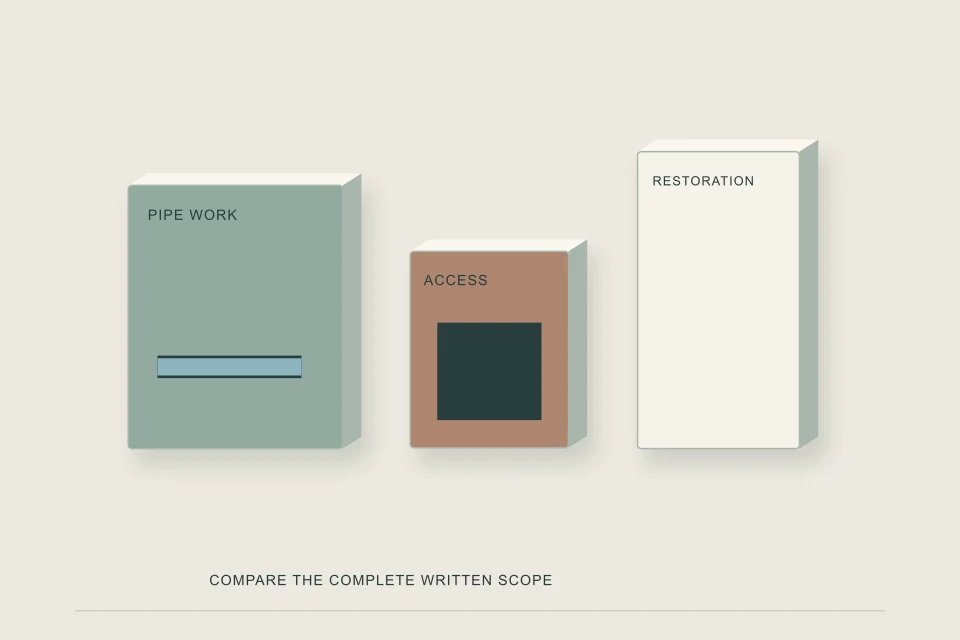
- Get written quotes that itemise excavation, pipe, backfill and landscaping.
- Apply for the grant before committing if funds are limited, then book the work.
For contractor quotes on a private connection, send your details.
05 /Should I wait the full four years?
The four years is a limit, not a target. During that time the building has new public pipe joined to lead that remains, the partial situation Health Canada says is generally not recommended. The grant is first come, first served and depends on available funds, which is another reason not to leave it late. Book the private replacement as soon as quotes and the grant allow, and keep using the filter until follow-up testing is clear.
FAQQuestions people ask
How long do I have to replace a private lead connection in Québec City?
At most four years after the City replaces the public connection, under By-law R.V.Q. 2884.
What does the Québec City lead grant pay?
All eligible costs up to $2,500 per private connection, including excavation, backfill and landscaping restoration, for buildings built before 1980.
Does Québec City charge for lead testing?
No. The City pays for sampling and analysis, though results can take up to 60 working days.
Does Québec City give out lead filters?
Yes, an NSF 53 filter pitcher when lead is found during City work on the public connection.